
If you live in Green Run, you already know the perks of our community—established neighborhoods, great parks, and a classic Virginia Beach feel. However, because our homes were primarily built between the 1970s and 1980s, they have reached a prime age for a silent, destructive threat: Subterranean Termites.
In our coastal environment, it’s not a matter of if your property will cross paths with termites, but when. Understanding how these pests operate in our local neighborhoods can mean the difference between a simple preventative treatment and thousands of dollars in structural repairs.
The Perfect Storm: Why Green Run is a Termite Hotspot
Our neighborhood features a mix of townhomes, single-family homes, and mature landscaping. This layout creates an ideal environment for termites for a few specific reasons:
- Age of Construction: Wood-to-soil contact can develop as homes settle, crawl space vapor barriers degrade over time, and older expansion joints in concrete slabs begin to widen.
- Moisture and Foliage: Green Run’s beautiful tree canopy and standard drainage setups mean moisture often accumulates near home foundations. Termites require constant moisture to survive.
- High Density Living: In areas with closely connected properties or townhomes, an active termite colony in a neighbor’s yard can easily forge underground right into your framing.
The Warning Signs of Termite Activity
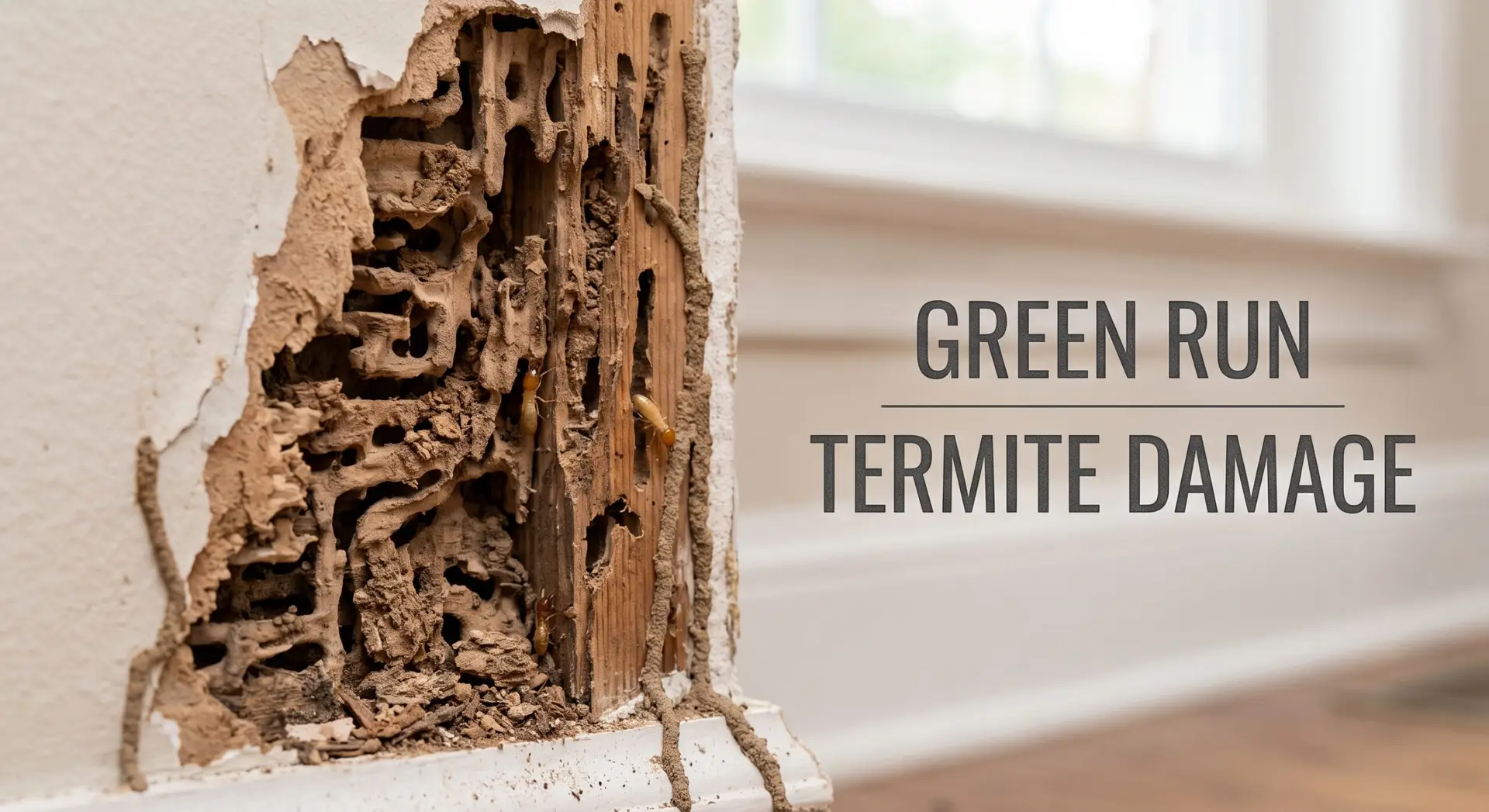
Termites are known as “silent destroyers” because they eat wood from the inside out, leaving the outer layer completely intact. Often, homeowners don’t realize they have a problem until severe damage has already occurred. Keep an eye out for these red flags:
1. Mud Tubes on the Foundation
Subterranean termites build pencil-thin tubes made of mud, saliva, and feces to travel from their underground nests into your home without drying out. Look for these along your exterior brick, concrete slabs, or inside your crawl space.
2. Springtime Swarmers
During the spring, mature colonies send out winged “swarmers” to find new locations to nest. If you see hundreds of discarded, translucent wings on your windowsills or near light fixtures, a colony is already nearby.
3. Hollow-Sounding Wood or Blistering Drywall
If baseboards, windowsills, or door frames sound hollow when tapped, termites have likely carved out the interior. Sometimes, their moisture management causes paint or drywall to blister and mimic water damage.
Why “Wait and See” is an Expensive Mistake
Unlike a leaky roof or a broken HVAC unit, termite damage doesn’t happen with a loud bang. They work 24/7, quietly devouring the structural headers, floor joists, and wall studs keeping your home upright.
Because standard homeowners insurance policies do not cover termite damage, the financial burden of structural repairs falls entirely on you. Attempting to spot-treat an area with store-bought liquids only causes the colony to shift to another part of your structure.
Defending Your Green Run Home
Protecting your investment requires a proactive strategy rather than a reactive battle:
- Eliminate Soil-to-Wood Contact: Ensure mulch, firewood, and soil sit at least six inches below the bottom edge of your siding or framing.
- Redirect Water: Keep gutters clean and ensure downspouts direct rainwater well away from your foundation.
- Schedule Regular Inspections: A professional eye can spot microscopic entry points and early signs of mud tubes long before the damage manifests inside your living spaces.
Don’t wait for your floors to sag or swarmers to take over your living room. Implementing a professional liquid defense barrier or specialized baiting system is the only way to establish permanent peace of mind in Green Run.