
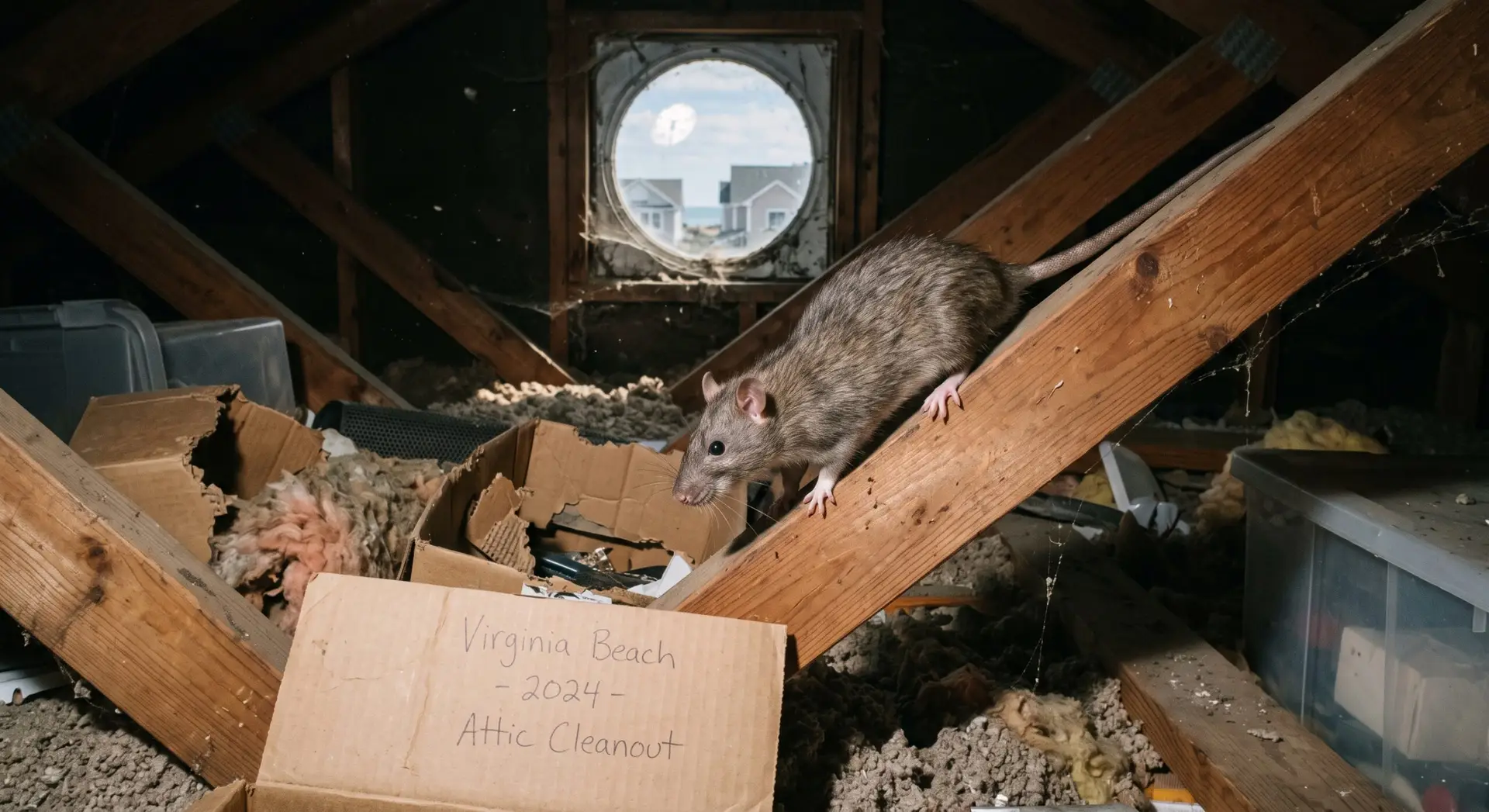
When most people think of a rodent problem, they picture cold winter nights. It makes sense—mice and rats seek warmth when the temperature drops. But here in coastal Virginia Beach, our summers bring a unique and intense surge in rodent activity that catches thousands of local homeowners completely off guard.
From the dense neighborhoods of Oceanfront and North End down to the marshy borders of Sandbridge and Pungo, summer isn’t just tourist season—it’s prime time for rats and mice to invade our properties.
The Big Players: Roof Rats vs. Norway Rats
In our coastal ecosystem, we primarily deal with two distinct species of invasive rodents during the summer months:
- Roof Rats (Black Rats): True to their name, these pests are exceptional climbers. They love the dense tree canopies, creeping vines, and tall palm trees found in our coastal neighborhoods. They use overhanging branches as a direct bridge to leap onto your roof, squeezing into your attic through soffits, ridge vents, or gaps in your fascia boards.
- Norway Rats (Brown Rats): These are heavier, burrowing rodents. They prefer to stay low, nesting under concrete slabs, backyard decks, and marshy riverbanks. They typically enter homes through lower vulnerabilities like damaged crawl space doors, foundation vents, or unsealed utility lines.
The Summer Influx: What Triggers the Move Indoors?
Why do rodents suddenly decide your home is the perfect summer getaway? It boils down to three primary environmental pressures unique to a coastal Virginia summer:
1. The Search for Fresh Water
While we have plenty of ocean water, rodents need fresh water to survive. During our hottest July and August stretches, local ditches, marshes, and puddles dry up completely. Dehydrated rodents are driven directly toward your home, attracted by air conditioning condensation lines, leaky outdoor spigots, pet bowls, and lawn irrigation systems.
2. Intense Heat and Coastal Storms
Just like us, rodents can only handle so much oppressive humidity and heat. Your air-conditioned home or insulated attic space offers a highly desirable escape from the blazing summer sun. Furthermore, sudden, heavy coastal summer storms and tropical depressions saturate the ground, flooding underground burrows and forcing Norway rats to flee upward into dry crawl spaces and garages.
3. An Abundance of Seasonal Food
Summer in Virginia Beach means outdoor living. Backyard barbecues, overflowing trash cans at rental properties, bird feeders, and ripened fruit dropping from backyard trees create an endless, high-calorie buffet that draws rodents right up to your foundation.
Why Summer Infestations Are Unique Risks
A summer rodent infestation presents specific challenges that differ from a winter invasion:
- Accelerated Breeding: Rodents breed year-round, but the abundance of food and warm weather in the summer supercharges their reproductive cycles. A single pair of mice or rats entering your home in June or July can easily balloon into a massive infestation by August.
- Destructive Nesting: To build nests for their rapidly growing litters, rodents will tear up your attic insulation, chew through drywall, and gnaw on flexible ductwork. This destroys your home’s energy efficiency and forces your air conditioning system to work twice as hard to keep you cool.
- The Fire Hazard: Rodents have teeth that never stop growing, which means they must constantly chew to keep them filed down. If they choose to chew through the protective coating of your electrical wiring hidden inside your walls, they create a major fire hazard.
Hardening Your Home Against Summer Rodents
Protecting your coastal home requires a strict focus on “exclusion”—sealing them out completely rather than just relying on traps after they’ve already made themselves at home.
- Cut Back the Canopy: Trim all tree branches and thick ornamental vines so they sit at least six to eight feet away from your roofline. If a branch touches your roof, it’s an open highway for roof rats.
- Inspect Your Crawl Space and Vents: Check your crawl space door and foundation vents. If wire mesh screens are torn or missing, replace them with heavy-duty hardware cloth.
- Manage Your Trash: Use heavy-duty plastic or metal trash cans with tight-fitting lids. Periodically rinse your outdoor bins to eliminate lingering food odors that attract pests from blocks away.
- Seal the Gaps: Mice can squeeze through a hole the size of a dime, and rats only need a gap the size of a quarter. Walk your perimeter and seal any gaps around HVAC lines, plumbing penetrations, or exterior siding.
Because coastal rodents are incredibly resourceful, setting a few plastic traps in the garage rarely solves a subterranean or attic-level infestation. True protection requires an ironclad, structural perimeter defense that cuts off their food, shuts down their entry points, and ensures your home stays yours all summer long.