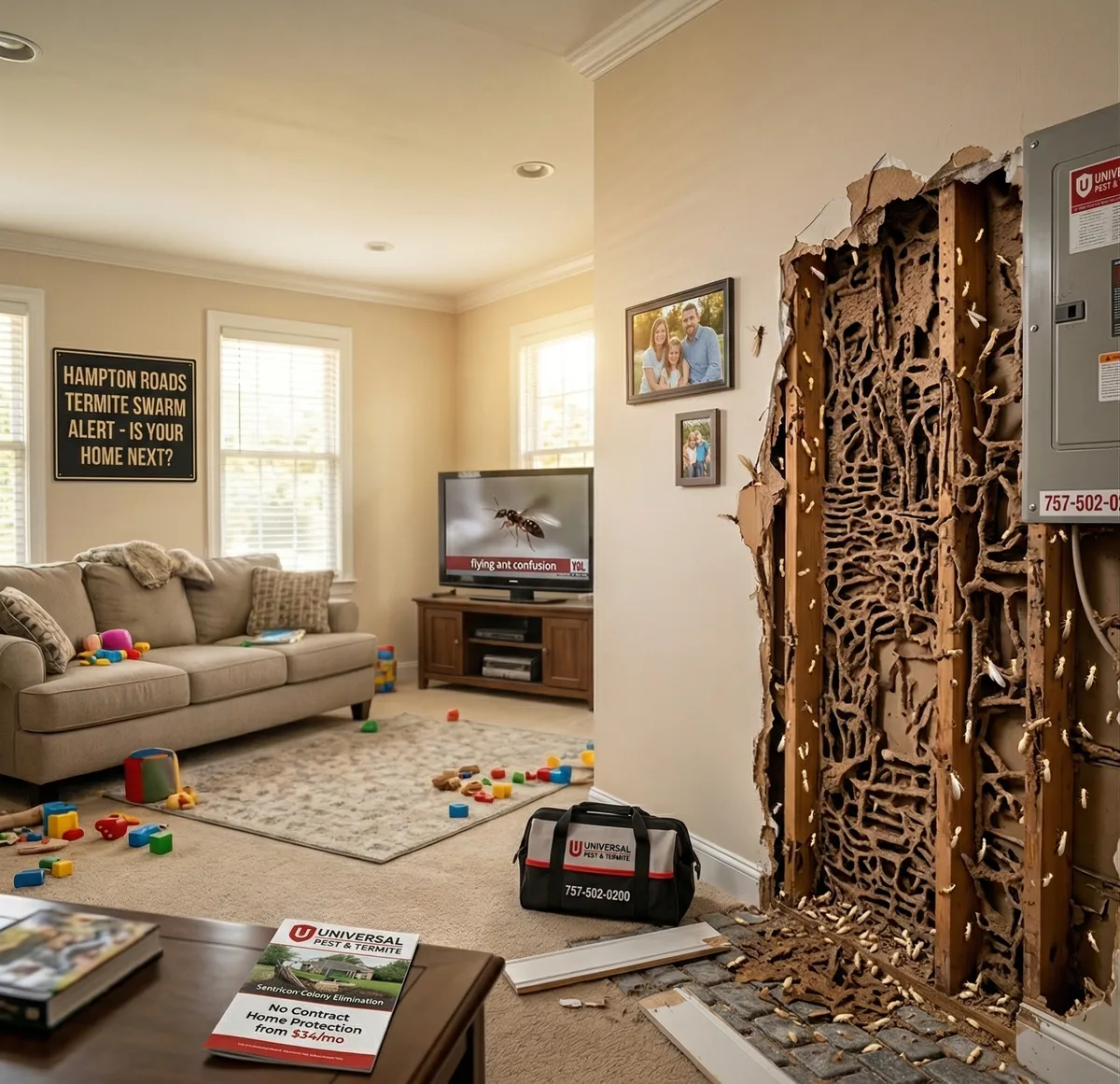
Living in Hampton Roads means enjoying our beautiful coastlines and mild climate. Unfortunately, it also means dealing with pests that love our environment just as much as we do. This year, the termite forecast for our region is sounding a major alarm, making it a critical time for homeowners to stay vigilant.
Norfolk Ranks Nationally: A High-Pressure Zone
For 2026, Norfolk remains the only Hampton Roads city to consistently rank in the National Top 50 for termite treatments, coming in at a concerning #37. This ranking highlights the intense subterranean pressure Norfolk homeowners face, but the threat isn’t isolated.
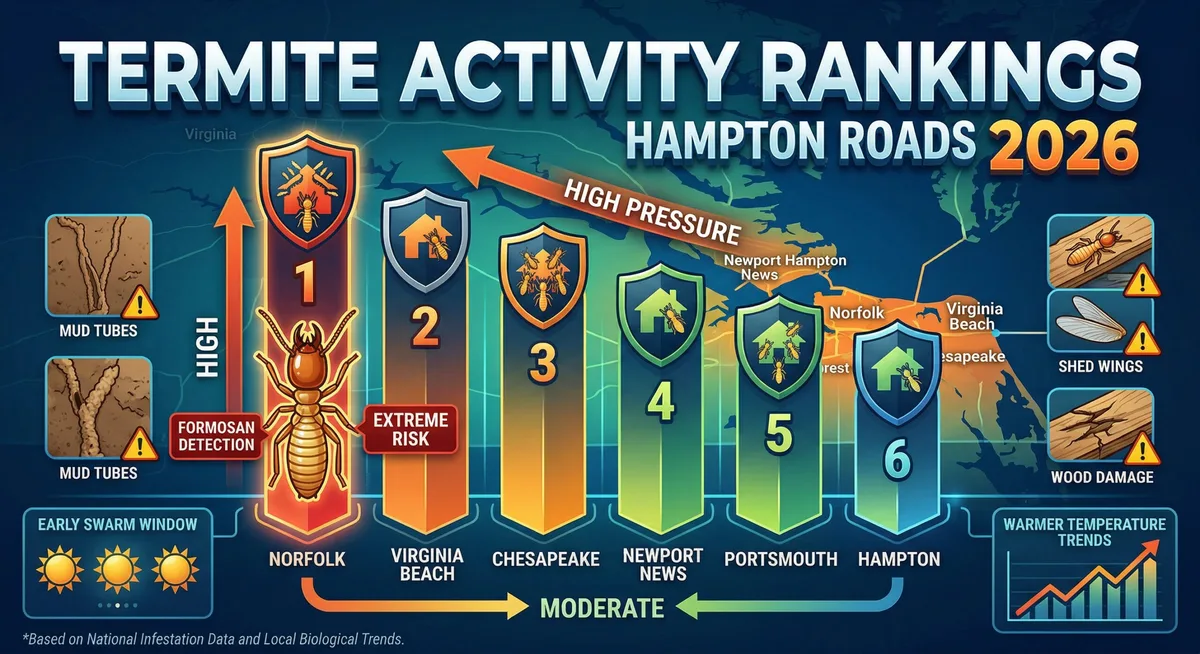
The 2026 Hampton Roads Termite Activity Rankings
While precise damage dollar amounts for each city aren’t publicly released, we’ve used national infestation data and local biological trends to rank termite activity across Hampton Roads. Knowing where your city stands is the first step in protecting your investment.
| Rank | City | Pressure Level | Primary Concern |
| 1 | Norfolk | Extreme | High density of older wooden structures and proximity to the international port (a known entry point for invasive species). |
| 2 | Virginia Beach | High/Extreme | High coastal humidity and sandy soils. Recent forecasts show an early “swarm window” due to warmer-than-average summer temperatures. |
| 3 | Chesapeake | High | Large areas of wetlands and new construction in formerly wooded areas, which provides ample food sources for subterranean colonies. |
| 4 | Newport News | High | Significant activity in older residential districts; ranked as a high-risk expansion zone for Formosan termites. |
| 5 | Portsmouth | Moderate/High | Higher concentrations of activity in historic areas with direct wood-to-soil contact. |
| 6 | Hampton | Moderate/High | Consistent subterranean pressure, particularly in coastal neighborhoods. |
What’s Driving the Surge in Termite Activity?
1. The “Formosan” Factor: The Most Aggressive Species
The Formosan subterranean termite—the most aggressive species in the world—has been officially documented in Norfolk. These colonies are much larger than native subterranean termites, allowing them to cause structural damage significantly faster. The presence of this invasive species significantly elevates the threat level in the region.
2. The Atlantic Corridor Pressure: A Warming Climate
Recent data for 2026 suggests the “Atlantic Corridor” is experiencing temperatures well above historical averages. This has accelerated the “pest awakening,” meaning termites are active earlier and for longer periods throughout the year.
3. Age of Infrastructure: Older Homes, Bigger Risks
Cities like Norfolk and Portsmouth have a higher volume of older homes. Older timber and settled foundations often provide the perfect “silent entry” points termites prefer to enter undetected.
4. New Development: Disturbed Soil and Disturbed Colonies
In rapidly growing cities like Chesapeake and Virginia Beach, clearing wooded land for new homes often leaves behind buried stumps and roots. This provides ample food sources that can sustain large colonies, which eventually move toward and infest the new structures.
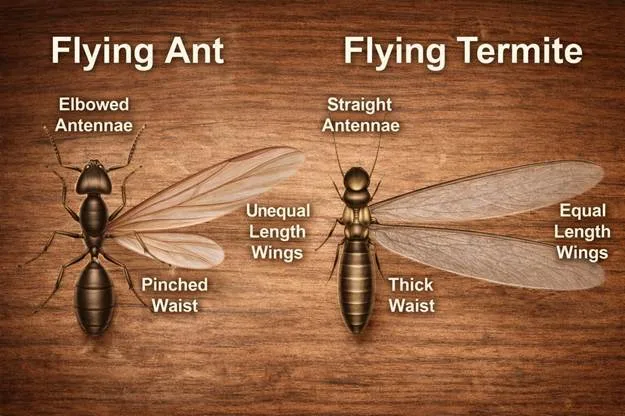
Silent Destroyers: What to Look For
Termites often go unnoticed until significant damage is already done. Homeowners across all of Hampton Roads, but especially those in higher-ranked cities, should be on the lookout for these signs:
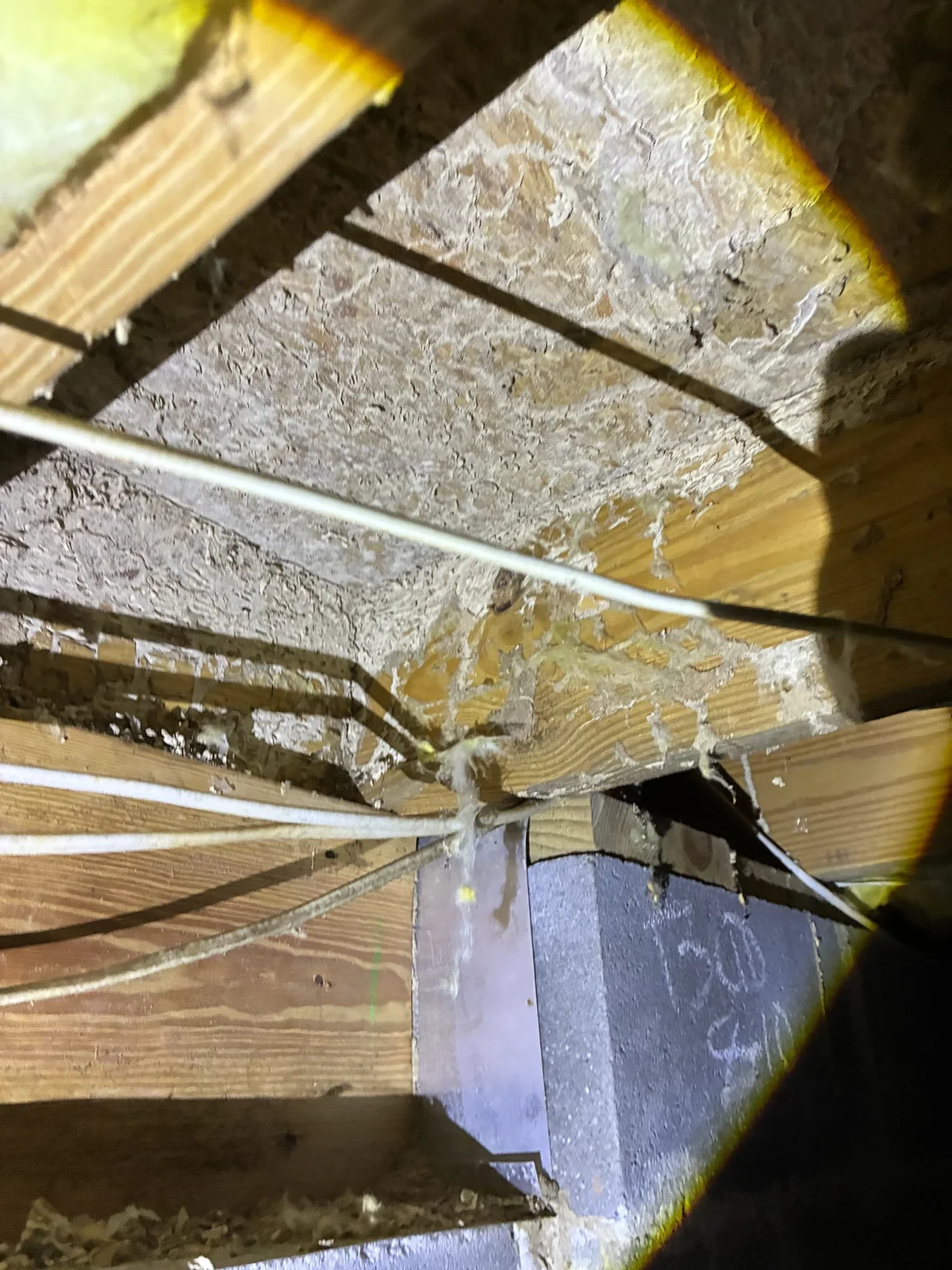
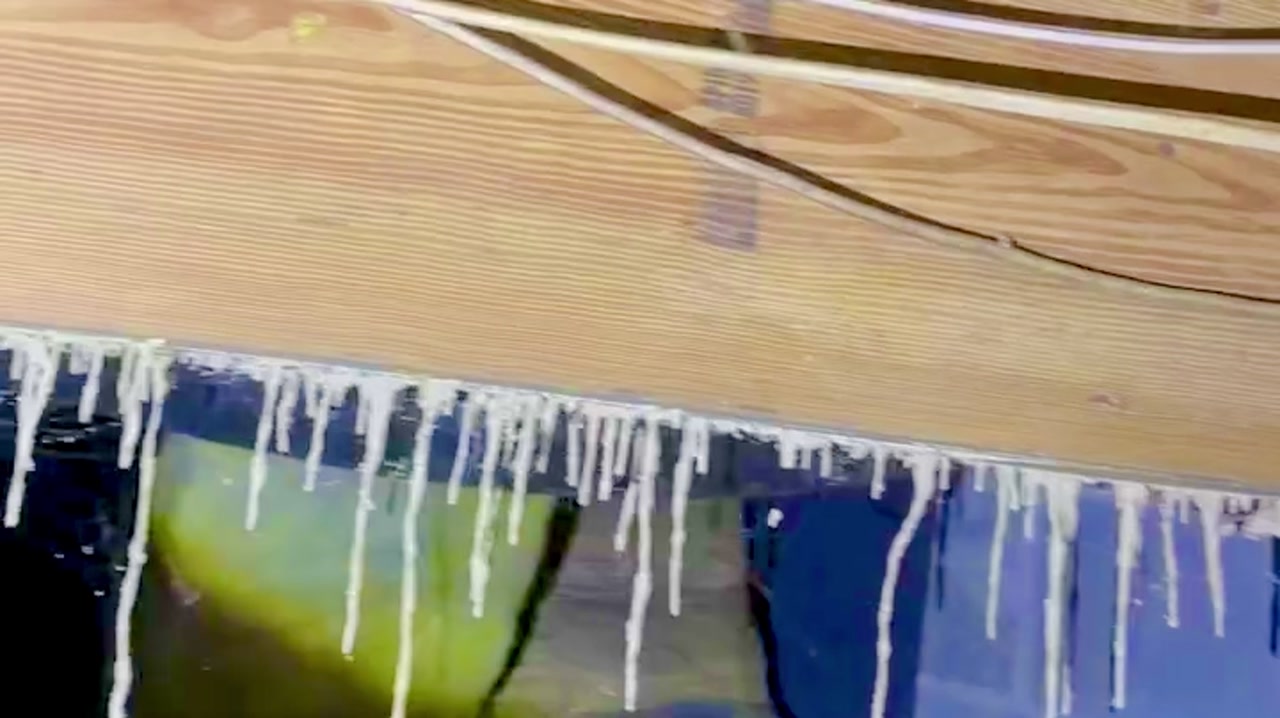
- Mud Tubes: Pencil-sized tubes on foundation walls, crawl spaces, or visible wood. These act as protected pathways for termites traveling from the soil to the wood they are eating.
- Shed Wings: Found on windowsills, near light fixtures, or near vents after a swarm (especially after a warm summer rain).
- Hollow-Sounding Wood: Pay close attention to wood near the soil, door frames, baseboards, and windowsills. Give it a gentle tap—if it sounds hollow, investigate further.
Protecting Your Property: Take Action Now
Don’t wait for signs of an infestation before taking action. Here are essential preventative measures:
- Maintain Wood-to-Soil Clearance: Ensure there is a gap between wooden siding, trim, or stairs and the soil.
- Fix Moisture Problems: Divert water away from the foundation with functioning gutters and downspouts. Repair leaky faucets or pipes immediately.
- Remove Stumps and Debris: Keep the area around your home free of dead wood, firewood, or excessive mulch piled against the foundation.
- Schedule Annual Inspections: For high-risk areas like Hampton Roads, a professional annual inspection is critical for early detection before massive damage occurs.
Hampton Roads Termite FAQ: 2026 Edition.
1. Why is Norfolk ranked so high for termite activity this year?
Norfolk’s combination of historic wooden structures, high water tables, and proximity to the international port makes it a “gateway” for aggressive species. In fact, Norfolk is currently the only city in our region in the National Top 50 for termite pressure. Because the risk is so high, we’ve structured our local termite treatments to start at just $395 on qualifying homes, ensuring homeowners can protect their property without a massive upfront burden.
2. I live in a newer neighborhood in Chesapeake or Virginia Beach. Am I still at risk?
Actually, new construction can be a magnet for termites. When land is cleared, subterranean colonies are often displaced or left with buried wood debris (stumps and roots) to feed on. As that food source disappears, they move toward the nearest structure: your home. Our Sentricon System, starting at just $39 per month, provides a proactive “ring of protection” around your foundation that stops these colonies before they reach your walls.
3. What makes Formosan termites different from the “normal” ones we see in Virginia?
Formosan termites are often called “Super Termites.” A single colony can contain millions of members and consume wood much faster than native species. They are particularly active in the Hampton Roads coastal corridor. To combat this aggressive threat, our monthly Sentricon plan includes a full termite warranty, giving you a $0-deductible safety net against one of the most destructive pests in the world.
4. How does the humid Hampton Roads climate affect my termite risk?
Termites thrive on moisture. Our local humidity and frequent coastal rain soften the wood in your home’s crawlspace and rim joists, making it an all-you-can-eat buffet. Standard homeowners insurance almost never covers termite damage because it’s considered “preventable.” Think of our $39/month Sentricon program as your private insurance policy—it monitors for activity 24/7 and includes the warranty to cover you if they ever strike.
5. Is a one-time treatment enough, or do I need a monthly plan?
In a high-pressure zone like Virginia Beach or Portsmouth, a one-time treatment (starting at $395 on qualifying homes) is great for knocking out an immediate threat. however, termite pressure is constant in Virginia. A monthly plan like our $39/month Sentricon System is the gold standard because it is “Always Active.” It doesn’t just kill the termites that find your house; it eliminates the entire colony, and the included warranty means we stay on the hook for your home’s protection so you don’t have to.