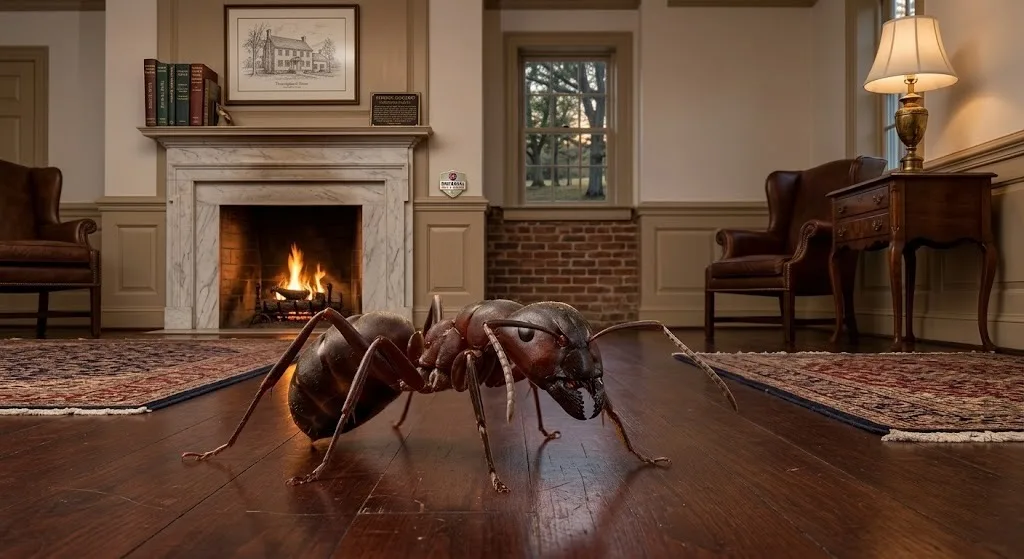
Ants move into termite bait stations because the station gives them exactly what a colony wants: a dark, moist, hollow box sitting in warm sand a few inches below the surface. Pull the cap on a colonized monitor in a neighborhood like Kempsville and the colony is right there in the wood — brood, workers, the works. It looks alarming, but it is a predictable reaction to how these yards are built and watered, not a sign the termite system failed.
Why a Bait Station Reads Like a Hollow Log to an Ant
A subterranean termite station is a plastic sleeve driven into the soil with a soft wood or cellulose monitor inside. To a termite that is a food cue. To an ant it is real estate. The sandy coastal-plain soil that runs under most of Kempsville drains fast on top but stays damp a few inches down, and the plastic sleeve traps that dampness like the inside of a rotting stump. Add the heat the black cap holds in the afternoon, and you have created the warm, humid, defensible cavity that odorous house ants and acrobat ants look for when a queen is ready to split off a satellite nest.
The irrigation is what tips it over the edge. Around Princess Anne, where lawns are large and sprinkler systems run on timers through the summer, stations sit in soil that is watered whether or not it rained. That steady moisture keeps the monitor swollen and soft, and a soft monitor is easier to tunnel and easier to hold humidity. We see more colonized stations on irrigated corner lots than on the dry, unwatered edges of the same property.
What the Yard Is Doing Above the Station
The pine canopy matters more than most homeowners think. The mature loblolly stands around Great Neck drop a constant layer of needles and shed bark, and that litter mats down over the mulch beds where stations usually get placed — near the drip line, out of the mower's path. Under that mat the ground never fully dries. A station buried in shaded, needle-covered ground stays two or three degrees cooler and far damper than one in open turf, and that is where we find the heaviest nesting.
In the older brick ranches around Thoroughgood, the stations sit right against block-pier foundations with crawl-space vents a few feet away. Warm, moist air pushing out of a vented crawl space in October follows the same path the ants do — along the foundation, into the mulch, into the station. When the yard slopes toward the Lynnhaven River and the water table sits close to the surface, that foundation soil almost never dries out, and a permanently damp perimeter is a permanently attractive one.
Does a Colonized Station Mean a Termite Problem?
Usually the opposite. Ants and termites compete, and a colony that has taken over a monitor will often chase termites out of that spot. The catch is that ants inside the station can chew up the monitor and clog the sleeve, which makes the termite reading harder to trust. So a colonized station is not a termite emergency — it is a maintenance flag. We clear the ants, replace or reset the monitor, and note the moisture that drew them there in the first place.
See our termite protection in Virginia Beach
| What you see | What it means | What fixes it |
|---|---|---|
| Ants pouring out when you lift a station cap | A satellite colony has claimed the damp, hollow monitor | Reset the monitor and treat the surrounding soil, not the visible ants |
| Stations stay wet and the wood monitor is spongy | Irrigation or a high water table is keeping the ground saturated | Move the sprinkler head or adjust the timer to dry the perimeter |
| Needle and leaf litter matted over the beds around stations | Shaded, humid ground that holds ant colonies year-round | Rake back litter and keep mulch pulled off the foundation |
| Ant trails on the counter with no nest indoors | The colony is outside — often in a bed, wall void, or station | Bait the exterior trail so workers carry product back to the queen |
Why Spraying the Station Makes It Worse
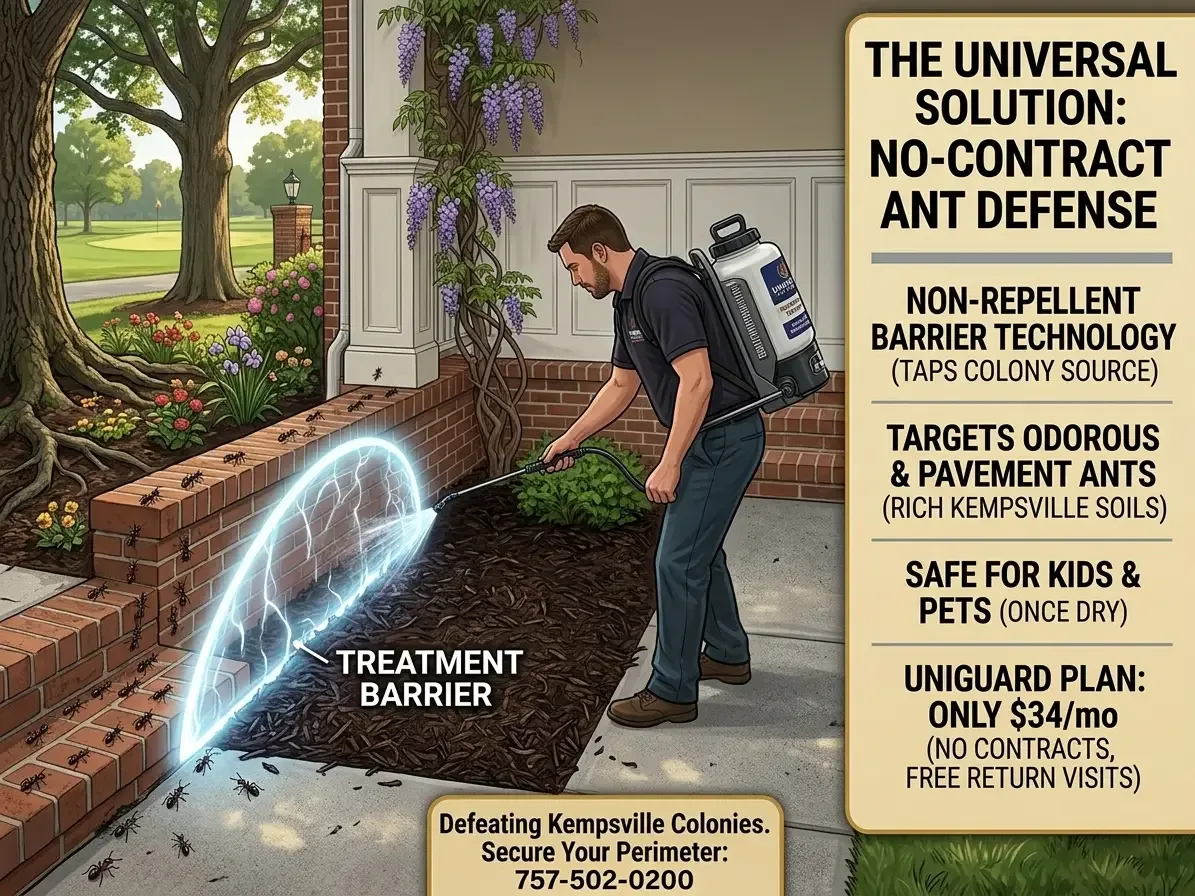
The instinct is to soak the station with a repellent spray. That kills the workers you can see and signals the colony to bud — the queen and brood scatter into new pockets nearby, and now you have three problems instead of one. Repellents also foul the monitor for termite reading. We use non-repellent products and bait that workers carry back down the tunnel, which reaches the queen you cannot see. On sandy, irrigated lots the follow-up matters as much as the first visit, because the same damp ground that pulled ants in once will pull them in again.
Hampton Roads Ant Control Pages
Learn more about local ant control services near you:
- Virginia Beach Ant Control
- Chesapeake Ant Control
- Norfolk Ant Control
- Newport News Ant Control
- Hampton Ant Control
Frequently Asked Questions
1. Why would ants nest inside a termite bait station?
The station is a dark, hollow box holding moisture a few inches down in sandy soil — the same conditions ants look for in a rotting log. On irrigated Kempsville and Princess Anne lots the ground around the station rarely dries out, so a colony sees the soft wood monitor as a ready-made nest.
See ant control options in Virginia Beach
2. Does this mean my termite protection failed?
No. Ants and termites compete, so a station full of ants often means termites were pushed out of that spot. The real issue is that nesting ants can clog the monitor and make the termite reading unreliable, which is why we reset it during service.
See our termite protection in Virginia Beach
3. Why do I see ants under my pines but not in open lawn?
The loblolly canopy around Great Neck drops needles that mat down over beds and hold moisture, keeping the ground below cool and damp. Open, sun-baked turf dries out and pushes colonies toward that shaded, humid litter instead.
See ant control options in Virginia Beach
4. Should I spray the station myself?
Spraying a repellent usually makes it worse — it kills visible workers and causes the colony to split into new pockets, and it fouls the monitor for termite reading. A targeted bait that workers carry back to the queen is the reliable fix, especially where a high water table near the Lynnhaven River keeps the foundation soil wet.