The Hidden Danger Beneath Your Feet: Why Subfloor Moisture Readings Matter for Hampton Roads Homeowners
Living in Hampton Roads means enjoying the best of coastal Virginia life—from the shores of Virginia Beach and the historic streets of Portsmouth to the riverfronts of Norfolk, Chesapeake, and Newport News. But our geographic blessing comes with a structural curse: relentless atmospheric humidity, high water tables, and frequent tidal flooding events. While we meticulously paint our siding and landscape our yards, a silent threat often goes unnoticed directly beneath our feet: subfloor moisture accumulation.
The Coastal Conundrum: Understanding Subfloor Moisture
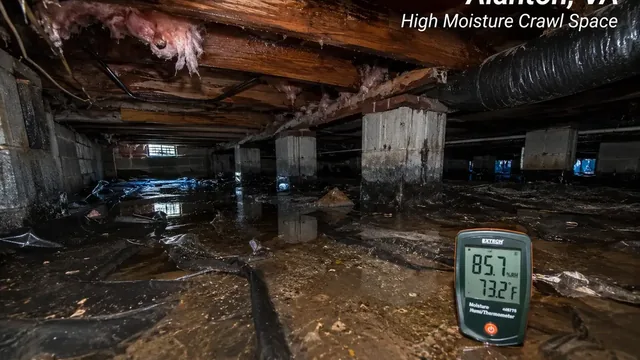
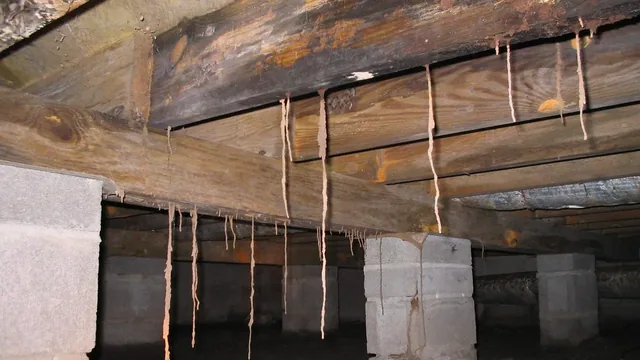
Most traditional homes in the Hampton Roads region are built on crawl space foundations. This architectural style elevates your living spaces above the damp soil but creates an enclosed cavern underneath your home. Throughout the summer and summer, warm, moisture-laden air from the Atlantic Ocean and the Chesapeake Bay flows through foundation vents. When this hot, humid air hits the cooler air-conditioned subfloor above, it reaches its dew point, leading to heavy condensation.
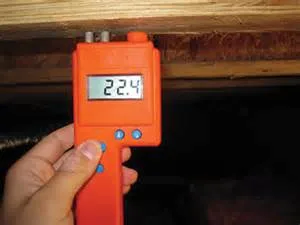
To accurately measure this risk, structural experts rely on the Wood Moisture Content (WMC) metric. WMC represents the weight of water in a piece of wood compared to the weight of the wood when completely dry, expressed as a percentage. For a healthy home, subfloor readings should consistently hover between 10% and 14%. When regional humidity drives these numbers higher, your home transitions into a danger zone that threatens both structural integrity and indoor air quality.
📊 The Moisture Reading Thresholds:
- 10% – 14%: Ideal structural baseline. Wood is stable and safe.
- 16% – 19%: Elevated risk. Surface molds can begin to colonize, and wood fibers begin swelling.
- 20% and above: The Critical Hazard Zone. At this saturation point, wood-decay fungi wake up from dormancy and actively begin devouring structural timber.
Wood Decay Fungi: The Silent Structural Destroyers
Wood is primarily made of cellulose and lignin—organic compounds that provide incredible structural strength. However, wood-decay fungi view these compounds as a primary food source. Fungal spores exist naturally everywhere in our environment, but they require a specific catalyst to germinate and thrive: a sustained Wood Moisture Content of 20% or higher, oxygen, and moderate temperatures. Unfortunately, a standard Hampton Roads crawl space provides these exact conditions for eight to nine months out of the year.
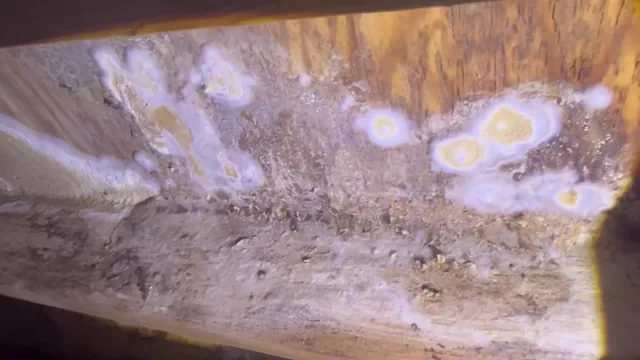
As these micro-organisms mature, they grow fine, thread-like structures called hyphae. These hyphae penetrate deep into joists, insulation, beams, and subfloor sheathing, secreting specialized enzymes that break down the chemical bonds of the wood. This biological consumption permanently destroys the load-bearing capacity of your home’s framing.
The Worst-Case Scenario: Brown Rot (Deconstruction Fungi)
While there are various types of decay, none are more feared by structural engineers than Brown Rot, historically referred to as “dry rot”. This name is a dangerous misnomer; the wood is only dry after the damage has already occurred. Brown rot thrives in damp environments and attacks the wood’s cellulose and hemicellulose—the foundational building blocks that give timber its tensile strength.
As the brown rot fungi consume the cellulose, they leave behind the brown lignin framework. This process causes the wood to shrink rapidly, darken significantly, and crack into distinctive cube-shaped fragments. This structural phenomenon is known as cubical fracture.
⚠️ The Threat of Brown Rot
Once brown rot takes hold, the affected wood loses its structural integrity with terrifying speed. Timber becomes brittle, crumbles into powder under minimal pressure, and can lead to sagging floors, cracked drywall upstairs, and eventual catastrophic structural collapse. Repairing brown rot requires physically cutting out and replacing major structural framing—an incredibly expensive and disruptive process.
The Modern Solutions: Dehumidifier Packages vs. Encapsulation
Historically, building codes dictated that crawl spaces should be vented to allow airflow. However, modern building science has proven that in humid coastal areas like Hampton Roads, venting only invites more moisture inside. To protect your investment, homeowners must choose a proactive moisture management system.
Option 1: Heavy-Duty Supplemental Dehumidification
A standalone crawl space dehumidifier package involves installing a commercial-grade, low-temperature dehumidifier directly under the home. Unlike residential units, these systems are built to extract dozens of pints of water per day in harsh conditions and drain the water automatically out of the crawl space via a condensate pump. This solution keeps the air dry enough to draw moisture out of the wood, dropping WMC levels back into the safe 10-14% zone.
Option 2: Full Crawl Space Encapsulation
The gold standard for modern home preservation is full encapsulation. This comprehensive process transforms your crawl space from a damp subterranean cave into a clean, conditioned, and sealed environment. The process includes:
- Laying a heavy-duty, puncture-resistant vapor barrier (12 to 20 mil thick) across the entire dirt floor and sealing it several feet up the foundation walls.
- Completely sealing all foundational vents to block external coastal humidity from entering.
- Insulating foundation walls or the subfloor using moisture-insensitive materials.
- Installing a dedicated commercial dehumidifier to permanently maintain relative humidity beneath 55%.
Frequently Asked Questions (Hampton Roads Edition)
1. How often should I check my subfloor moisture readings in Hampton Roads?
Given our local climate, it is highly recommended to test your subfloor moisture readings at least twice a year: once in the late summer (as humidity rises) and once in the late summer (when crawl space moisture peaks). Many local foundation companies offer free annual or bi-annual inspections, or you can purchase a pin-type moisture meter to keep an eye on it yourself.
2. What is the average price for a commercial crawl space dehumidifier package locally?
In the Hampton Roads market (including Norfolk, Virginia Beach, and Chesapeake), a professional commercial dehumidifier package typically ranges from $2,200 to $3,800. This price generally includes a high-capacity, energy-efficient unit (such as an AprilAire or Santa Fe unit), professional electrical wiring, a dedicated condensate pump, drainage piping routed away from the foundation, and a digital remote monitor for your living space.
3. What does a full crawl space encapsulation install cost in Virginia Beach or surrounding cities?
The cost of a full crawl space encapsulation varies based on the footprint of your home and the condition of the crawl space. On average, homeowners in our region pay between $3,000 and $10,000. Small ranch-style homes or townhomes may fall on the lower end, while larger homes or homes requiring extensive debris removal, mold remediation, or structural joist sistering before installation will reach the higher end.
4. Can I just rely on my standard crawl space vents to dry out the wood?
No. While venting works well in dry climates, it has the exact opposite effect in coastal Virginia. When warm, humid air from a October afternoon in Hampton Roads enters your cooler crawl space, its relative humidity shoots up to 100%, causing water to pool on wood joists and fiberglass insulation. Relying on open vents actively accelerates mold and brown rot growth.
5. Will encapsulating my crawl space help lower my local Dominion Energy electric bill?
Yes, absolutely. Studies by advanced energy organizations show that a properly encapsulated crawl space can lower a home’s heating and cooling costs by 15% to 18%. By sealing out the humid summer air and cold winter drafts, your HVAC system doesn’t have to work nearly as hard to condition the air inside your living spaces, leading to tangible monthly savings on your Dominion Energy bill.
Protect Your Coastal Home Today
Don’t wait for your floors to sag or allergy symptoms to flare up. If you live in Virginia Beach, Norfolk, Chesapeake, Portsmouth, or the Peninsula, contact a local certified crawl space specialist to get an accurate subfloor moisture reading before the next high-humidity season arrives