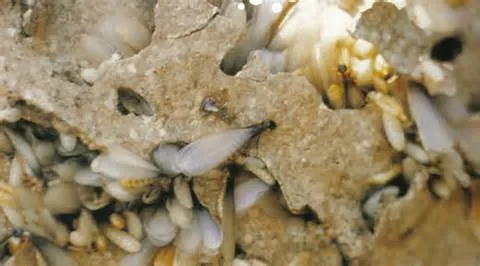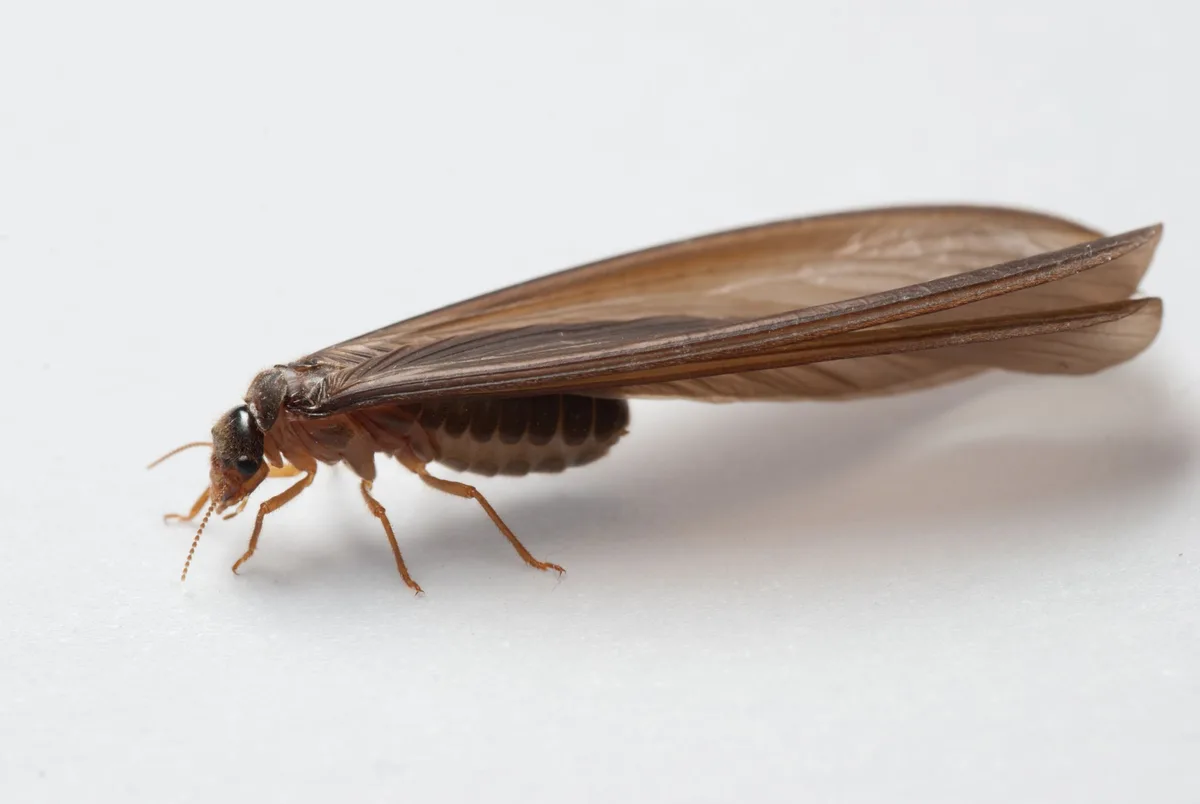
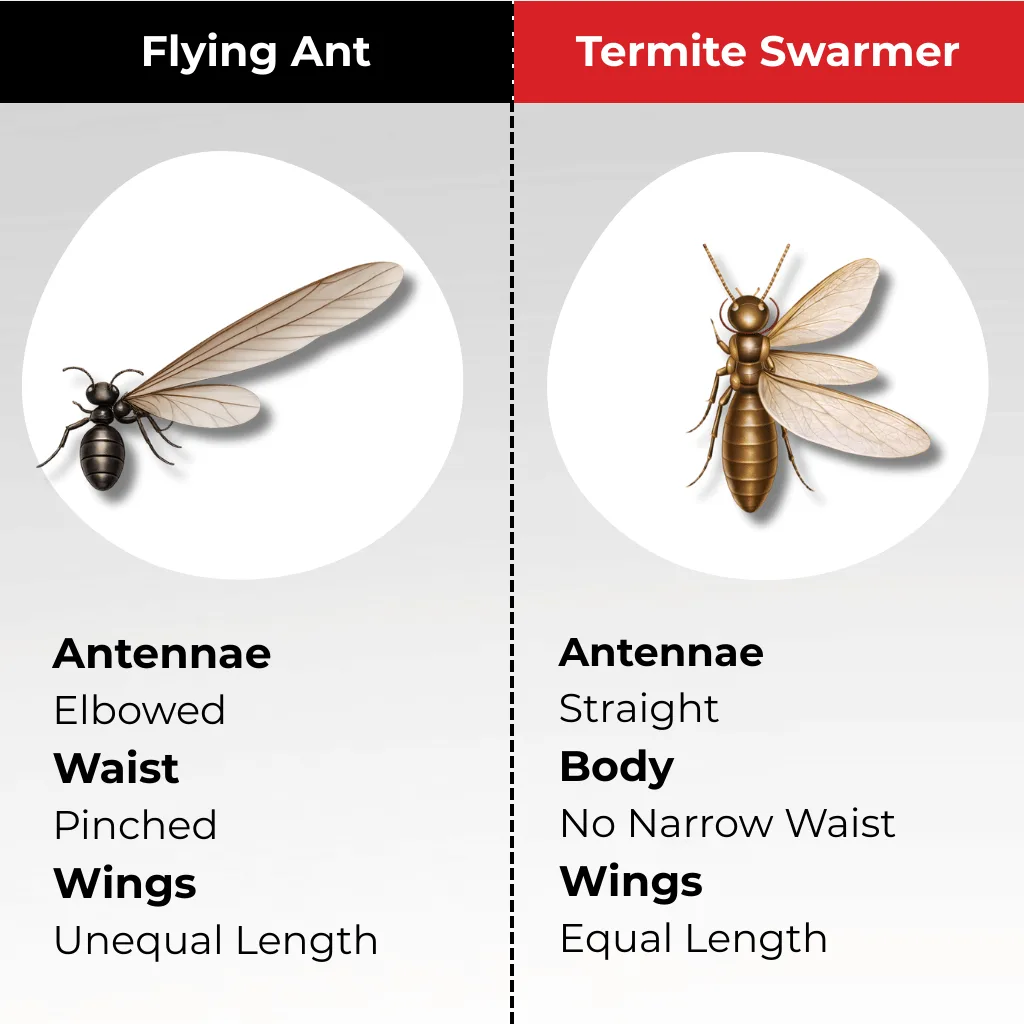
Swarming Termites are the termites in reproductive form. These typically have black bodies and milky white wings and are mistaken for a flying ant. The member of the termite colony that can cause thousands of dollars of damage to homes.
Subterranean Termites & Swarming Termites
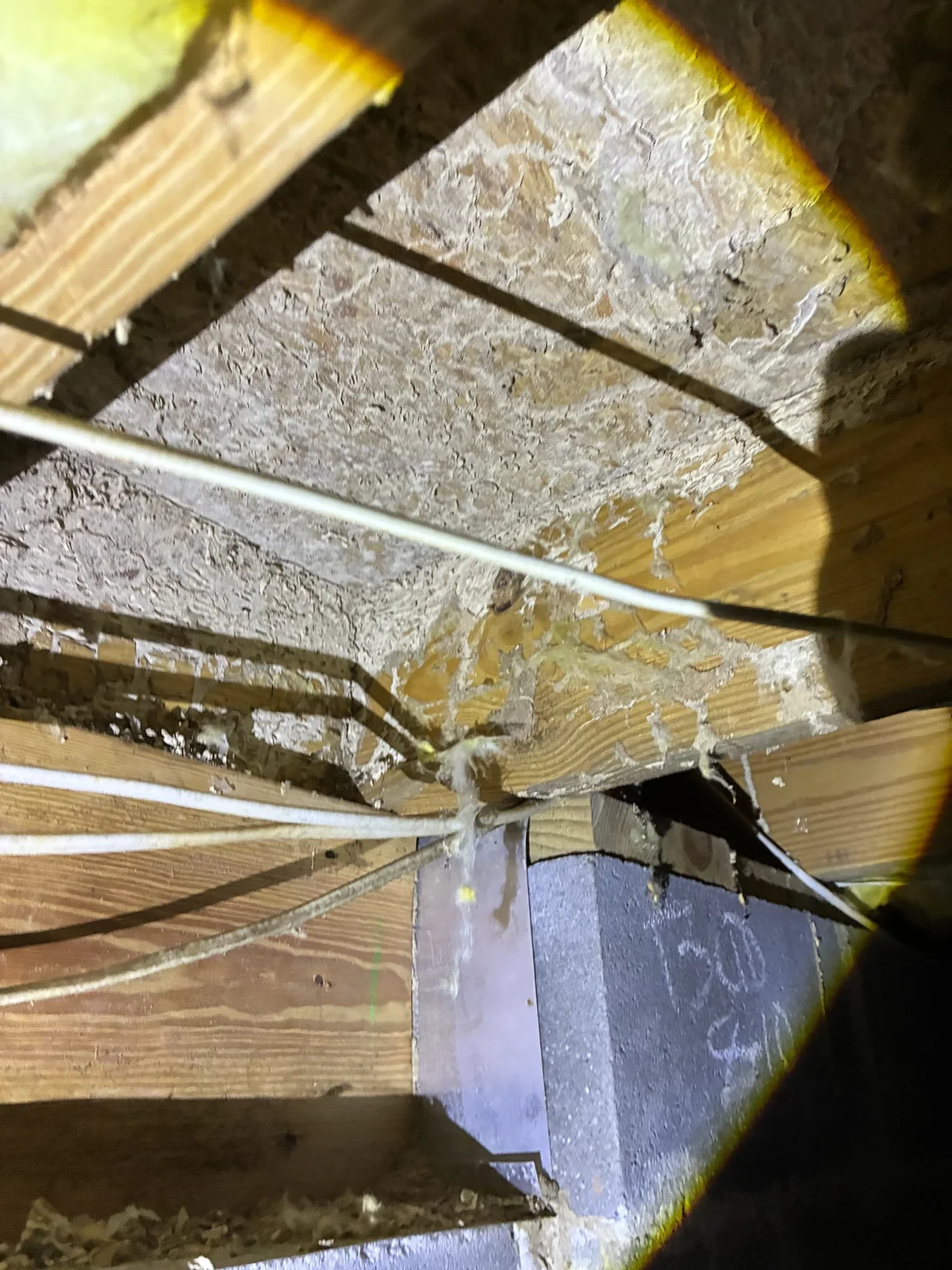
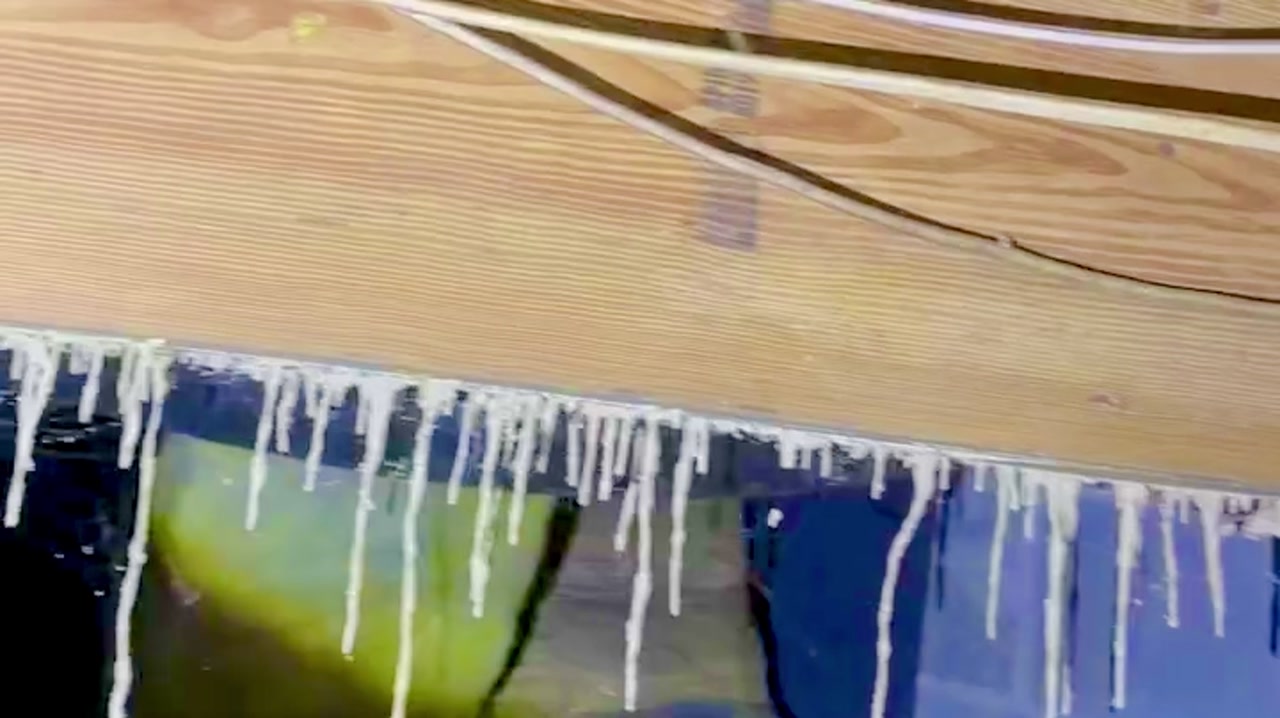
Subterranean termites are approximately ½-inch in length. As seen under homes and in walls, Subterranean termites build distinctive tunnels, often referred to as tubules, to reach food sources. The tubules also protect them from open air. They use their scissor-like jaws to eat wood 24/7. Like other termite species, subterranean termites feed on products containing cellulose.
Many people didn’t know that Subterranean termites nest in the soil to obtain moisture, but they also nest in wet wood. They easily attack wood in contact with the ground. If the wood does not meet the soil, termites build mud tunnels or tubes to reach wood feet above the ground. Also, they can enter a structure through expansion joints in concrete slabs or where utilities enter the house.
Swarming Termite Treatment
Our industry has used Liquid treatments for termites for years. This method applies a barrier around and under your home. The most popular active ingredient used today is fipronil. Fipronil causes hyperexcitation of contaminated insects nerves and muscles. This happens through a transfer effect. Each termite that comes in contact with fipronil will pass its effects to another as they come in contact with each other.
We like using Baiting programs and products because of the request for fewer materials. This typically is a method of installing cylinders around the foundation of the home that either has a simple cellulose material in them until termite activity is found or directly installing termite bait and waiting for an infestation to ingest and then carry the material back to the colony. This method can take longer to control an active colony than a liquid service.
Listen up. When the phones start ringing because someone saw “flying ants” in their kitchen, your team needs to be ready to shut down the DIY talk and get a technician on-site. In the home service industry, speed and local expertise are your biggest closing tools.
Here are five hyper-local FAQs designed to position your team as the authority in Hampton Roads.
1. Why am I seeing “flying ants” in my house right now?
In Hampton Roads, those usually aren’t ants—they’re Formosan or Eastern Subterranean termite swarmers. We see them most often between October and October, typically on those humid mornings right after a heavy Virginia rain. If you see them inside, it’s a red flag that a colony is likely established in or under your structure.
2. Is it true that Hampton Roads is a “high-risk” zone for termites?
Absolutely. Because of our high water table and sandy soil, Southeast Virginia is a breeding ground for termite activity. We live in what’s known as a “heavy-to-moderate” infestation zone. Between the moisture from the Chesapeake Bay and our aging housing stock, it’s not a matter of if termites will find a home, but when.
3. I just saw a swarm in my yard; should I be worried?
A swarm in the yard means there is a mature colony nearby. While they may not be in your floor joists yet, they are actively looking for new real estate. Given how quickly Subterranean termites can move through the soft soil in neighborhoods like Great Neck, Ghent, or Old Wythe, a swarm on your property is your early warning signal to get an inspection before they find a way into your crawlspace.
4. Do swarming termites actually eat my wood?
The swarmers themselves don’t eat wood—their only job is to reproduce and start new colonies. However, they are the “scouts” for the workers. If you see swarmers, the workers are already nearby doing the heavy lifting. In our area, termites can cause significant structural damage to a home’s foundation and sill plates in a surprisingly short amount of time.
5. What does a professional termite inspection cost in Virginia Beach?
While some might offer a “quick look” for free, a comprehensive, professional inspection for peace of mind is $0. This covers a full evaluation of the exterior, interior, and that critical crawlspace area where most of our local problems start. It’s a small investment to protect what is likely your largest asset from the most destructive pest in Virginia.
Universal Pest & Termite Control
We take pride in our A+ rating with the BBB. Trust Universal Pest & Termite for control of swarming termites.
Universal Pest & Termite offers termite control services in Chesapeake and Virginia Beach region. We offer our Uni-Guard Program which consists of an initial liquid treatment where needed, then servicing with a granule product around the perimeter of the home on a quarterly basis. This program comes with a standard full pest control program so swarming termites, ants, rodents and other pests are treated with one simple and easy service. This service saves money and offers a higher level of coverage than a standard termite service. Give Universal Pest a call today! (757) 502-0200