The termite you almost certainly have is the eastern subterranean termite: it nests in the soil, climbs to the house through mud tubes, and drives nearly every active job in the city. The Formosan termite is a heavier-hitting subterranean cousin worth watching near the Southern Branch of the Elizabeth River and the shipping corridors that feed it. Drywood termites, the ones people fear from Deep South stories, are essentially a myth here because the climate and construction give them nowhere to hold. Which one you have decides how it gets treated, so naming it comes first.
Most infestations run silent until a swarm hits a windowsill or a floor turns spongy over a crawl space. By then the framing, a sill, or a support beam has usually paid for it. Pinning the species early is what keeps a plank-sized problem from turning into a beam-sized one.
This guide covers which termites actually live on this flat, wet ground, how to tell them apart, where they hide, and when to call for termite control in Chesapeake, VA.
Key Takeaways
- Eastern subterranean termites drive almost every case; the wet peat along the Dismal Swamp Canal and the ground near the Great Bridge locks keeps them fed.
- Formosan termites are the higher-risk species to watch near the Southern Branch of the Elizabeth River and the port traffic that moves infested wood.
- Drywood termites are not established here; most reports turn out to be subterranean activity or a misidentified insect.
- Swarmers, mud tubes, and hollow wood are the three signs that decide the treatment.
Video: How to Identify Termites | Pest Control
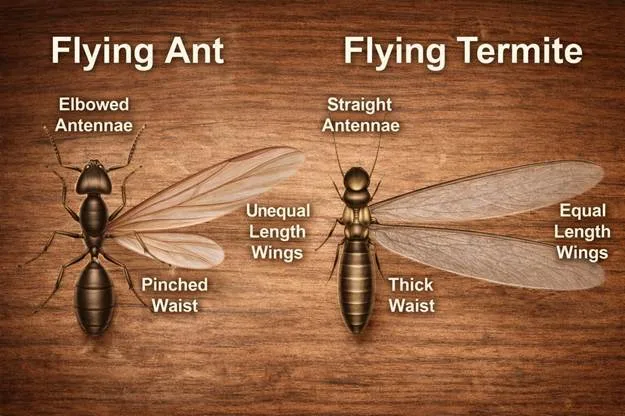
Visual identification separates a real termite from a flying ant. The clip walks through behavior and body traits, which explains why swarmers appear at a windowsill all at once. Confirm the species before you choose a treatment.
Which Termite Do You Actually Have?
Climate, soil moisture, and construction decide which species can live where. On the flats draining toward the Southern Branch of the Elizabeth River and out along the Dismal Swamp Canal, that mix points hard toward one answer. Understanding termite statistics and which species dominates this ground helps you respond faster.
See our termite protection in Chesapeake
Eastern Subterranean Termites
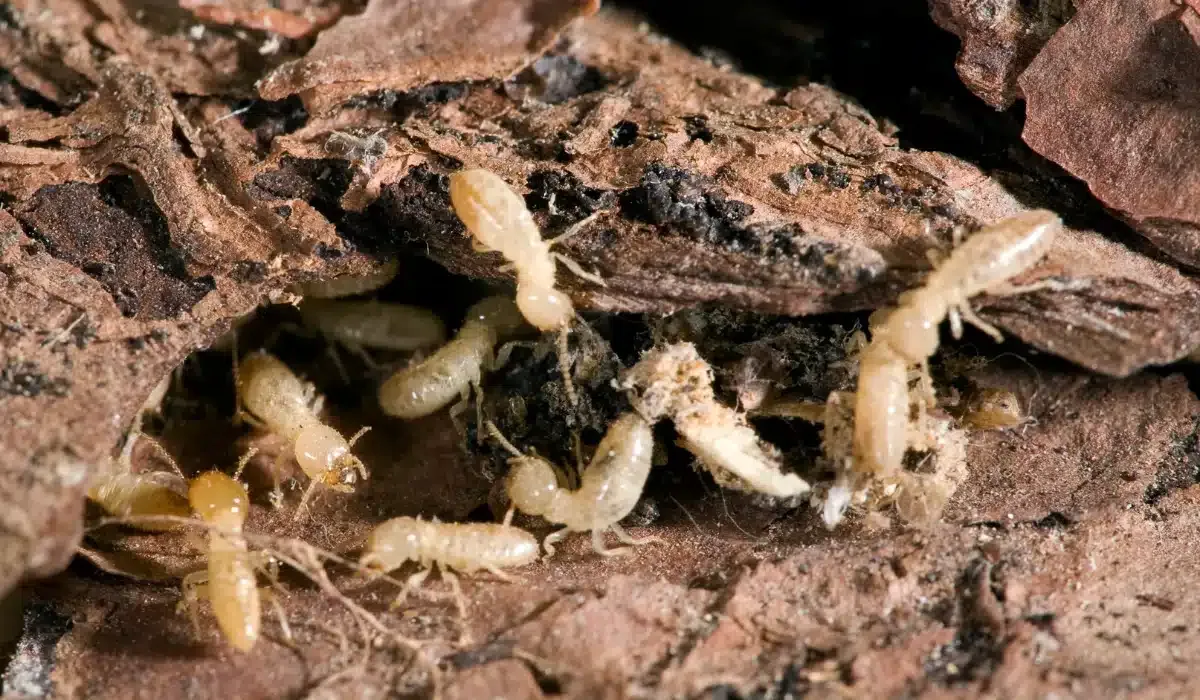
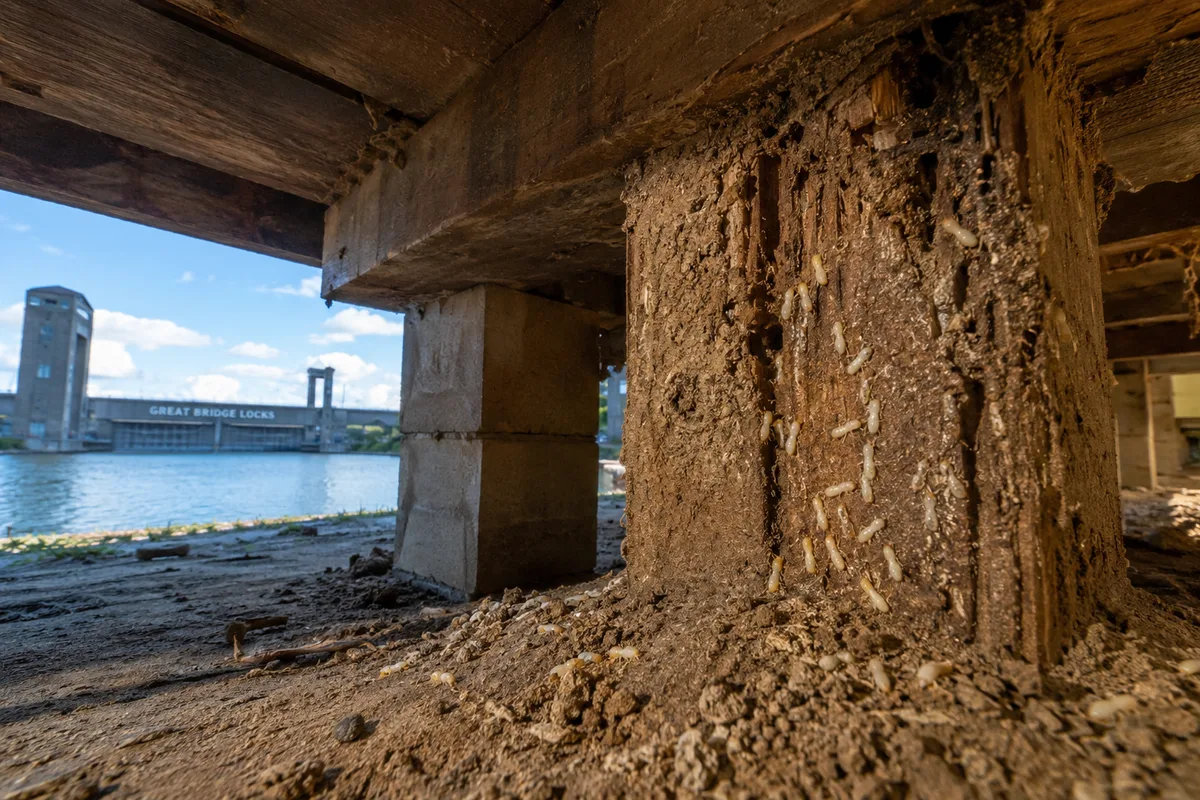
This is the termite in local homes. It nests underground, has to have constant soil moisture, and reaches the house through mud tubes on foundations, block piers, and crawl-space walls. The peaty, water-holding ground near the Great Bridge locks and along the Dismal Swamp Canal keeps that soil damp enough for colonies to stay active most of the year, which is why the low, poorly drained yards out that way rarely get a rest from them.
Once inside, it feeds on framing lumber and subfloor. Colonies grow large and often cause real damage before any sign shows. The flatter lots around Hickory, where water sits after a storm instead of running off, along with clogged gutters and grade that slopes toward the house, all push the odds up.
Formosan Termites
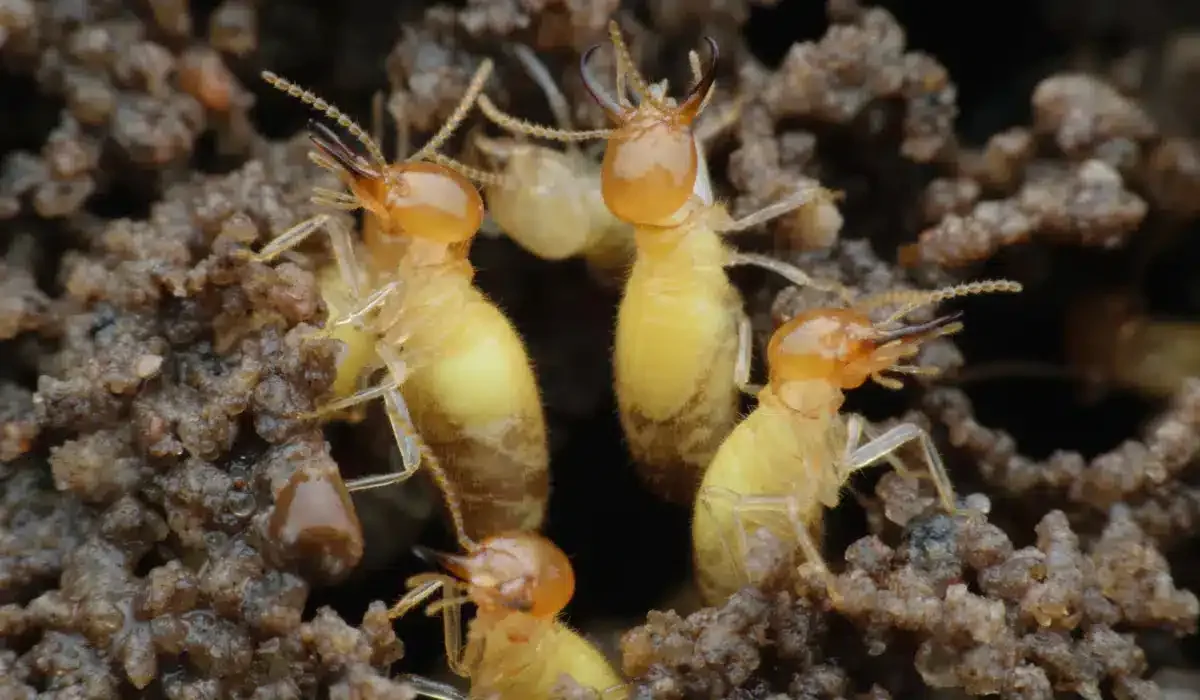
Formosan termites are the species to keep an eye on. They are also subterranean, but their colonies run far larger and chew through wood faster than the native kind. They travel in infested lumber and shipping material, which is why the water and rail corridors feeding off the Southern Branch of the Elizabeth River deserve the most attention here. Homeowners usually meet them during a swarm, when winged reproductives crowd lights and windowsills.
Their colony size means faster, heavier damage and calls for specialized treatment, sometimes including a baiting system rather than a straight soil barrier.
Drywood Termites
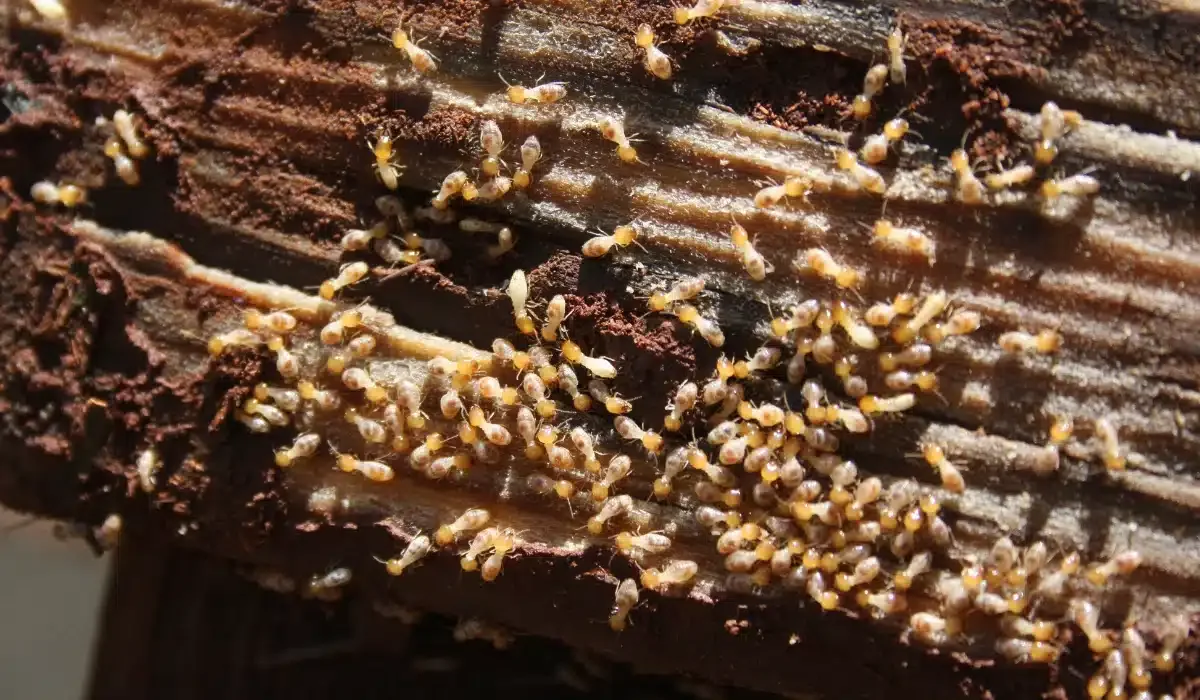
Drywood termites live inside dry wood with no soil contact, working through furniture, trim, and attic framing. They are established in the Deep South, not on the coastal plain, so a true drywood find on this ground is rare and usually traces back to a piece of wood carried in from somewhere else.
Because the pellet piles or hollowed wood of one insect get confused for another, the "drywood" a homeowner near Western Branch spots is far more often subterranean activity or a plain misread. Accurate identification settles it before anyone treats the wrong thing.
What the Different Termites Look Like
A handful of visual traits separate termites from flying ants and separate the species from one another. Those traits steer the treatment.
Eastern Subterranean
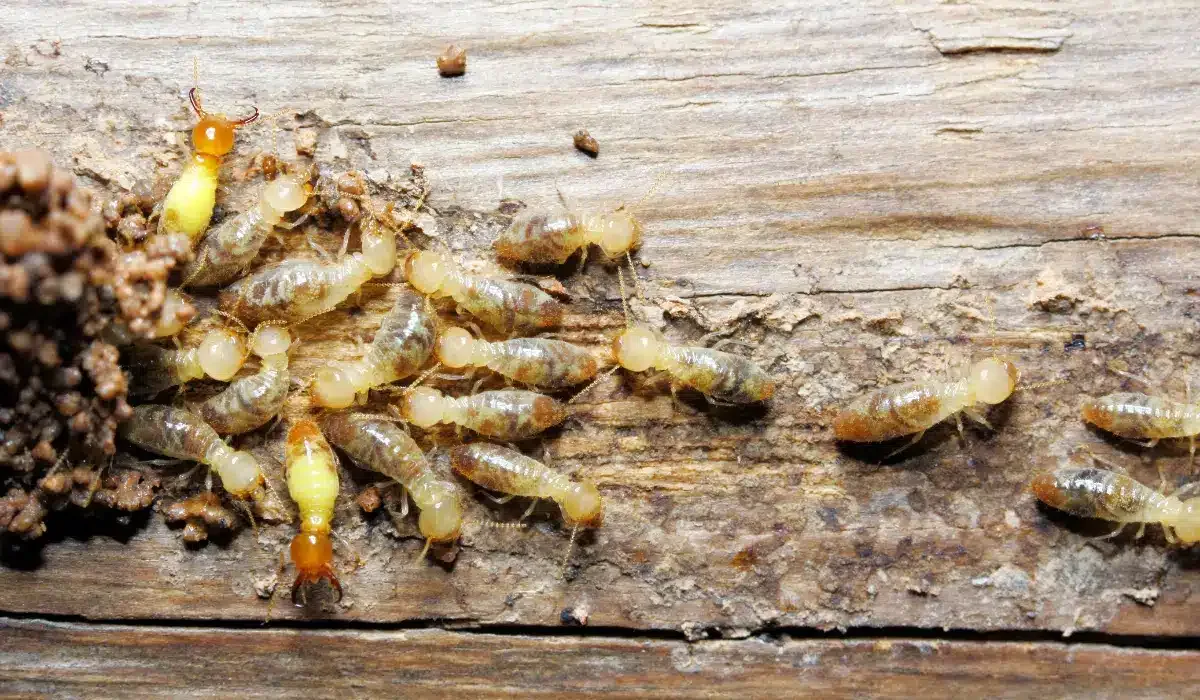
Workers are pale, soft-bodied, small, and they stay hidden. Swarmers are darker, with straight antennae and two pairs of equal-length wings. Homeowners around Western Branch often see swarmers at a windowsill in summer, which points to a colony sitting close by in the yard.
Formosan
Formosan termites resemble the native kind but run slightly larger. Their swarmers are yellow-brown and come out in big numbers, often indoors before any damage has been found. That heavy indoor swarm is the tell that sets them apart.
Drywood (for comparison)
Drywood swarmers are darker with larger heads and, unlike the subterranean kind, leave dry pellets beneath the wood they infest. Since they are not established here, seeing those traits is a reason for a professional inspection to confirm what you really have.
Signs to Species at a Glance
| What you see | What it likely means | What it points to |
|---|---|---|
| Mud tube on a foundation or block pier | Soil-nesting colony reaching up to wood | Eastern subterranean, the usual case here |
| Heavy indoor swarm, yellow-brown, large numbers | An oversized, fast-feeding colony | Formosan risk near the Southern Branch and the ports |
| Dry pellet piles under interior wood | Rare on this ground; often misread | Get it confirmed, not assumed drywood |
| Soft or hollow-sounding floor over a crawl space | Wood eaten from the inside out | Subterranean feeding along the joists |
Where Termites Hide in Homes and Yards Here
Termites pick spots with moisture, cover, and a path to wood. On this flat, wet ground many homes hand them all three at once.
Indoor Hiding Spots
Indoors, subterranean termites work inside walls, beneath floors, and through crawl spaces. Bathrooms, kitchens, and laundry rooms give them the leaks and damp they want. Windowsills and baseboards tend to show the first warning signs.
Outdoor Hiding Spots
Outside, they gather where wood meets soil: mulch beds, wood piles, stumps, and foundation edges. Drainage that pools near the Great Bridge locks, where the ground already holds water off the canal system, gives colonies a steady damp base to push from. Keeping a moisture-prone crawl space dry with crawl space moisture control takes that base away.
Which Termites Here Do the Most Damage?
Every termite eats wood, but the two subterranean species do the harm on this ground. The eastern subterranean is the constant threat because it is everywhere in this soil. The Formosan does more damage faster when it turns up, purely on colony size.
Get a free quote in Chesapeake
A true drywood infestation would stay small and local, but it is not the real concern here. Any subterranean feeding, left alone, weakens framing, drags down value, and snarls a home sale when the inspection comes.
Making the Right Termite Control Choice
The right plan starts with naming the species and reading the site. A home backing the Southern Branch of the Elizabeth River drains differently than one up in Western Branch, so the treatment should match the structure, the soil, the activity level, and whether a baiting system fits. A crew that already knows this ground moves faster on the next step. David Shafer, our lead inspector with more than 15 years of experience across Hampton Roads homes, works in a role that covers separating a Formosan swarm from a native one before anyone commits to a method.
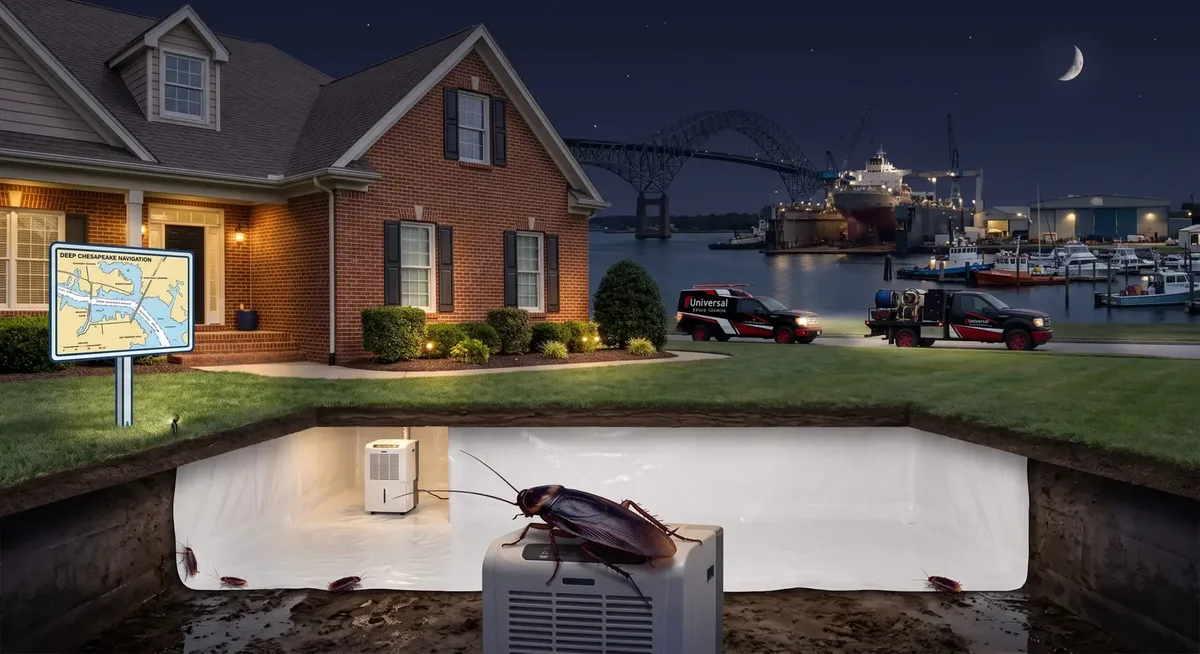
Termites are the structural threat, but the same inspection often turns up cockroaches or bed bugs. A trained technician can flag several issues in one pass and lay out what to handle first when more than one is present.
At Universal Pest & Termite, we run professional pest control, including inspections and clear recommendations built on local conditions and proven methods.
Contact us today or request a free quote to schedule an inspection and help keep your home pest-free.
FAQs
What is the most common type of termite in Chesapeake, VA?
The eastern subterranean termite. Warm weather and the constantly damp soil along the Dismal Swamp Canal and around the Great Bridge locks support underground nesting. Many homes also sit on vented crawl spaces with wood near the soil, which lets these colonies spread and stay active for long stretches unnoticed.
See our termite protection in Chesapeake
Do I need to worry about drywood termites in Chesapeake?
Rarely. Drywood termites are not established on the coastal plain; the climate and construction do not support them. Most "drywood" reports here turn out to be subterranean activity or a misidentified insect, so a professional inspection is the reliable way to confirm the species.
Get a free quote in Chesapeake
How can I tell a Formosan swarm from a native subterranean swarm?
Both are subterranean, but Formosan swarmers are slightly larger, yellow-brown, and emerge in unusually heavy numbers, often indoors. A big, sudden indoor swarm near the Southern Branch of the Elizabeth River or the ports is a reason to have it identified quickly.
Do certain termites only appear in certain seasons?
Swarmers usually appear in spring and early summer as colonies grow and split off reproductives. The colonies themselves stay active year-round in soil and wood. Watch for fresh mud tubes and winged insects at windowsills through the warmer months.