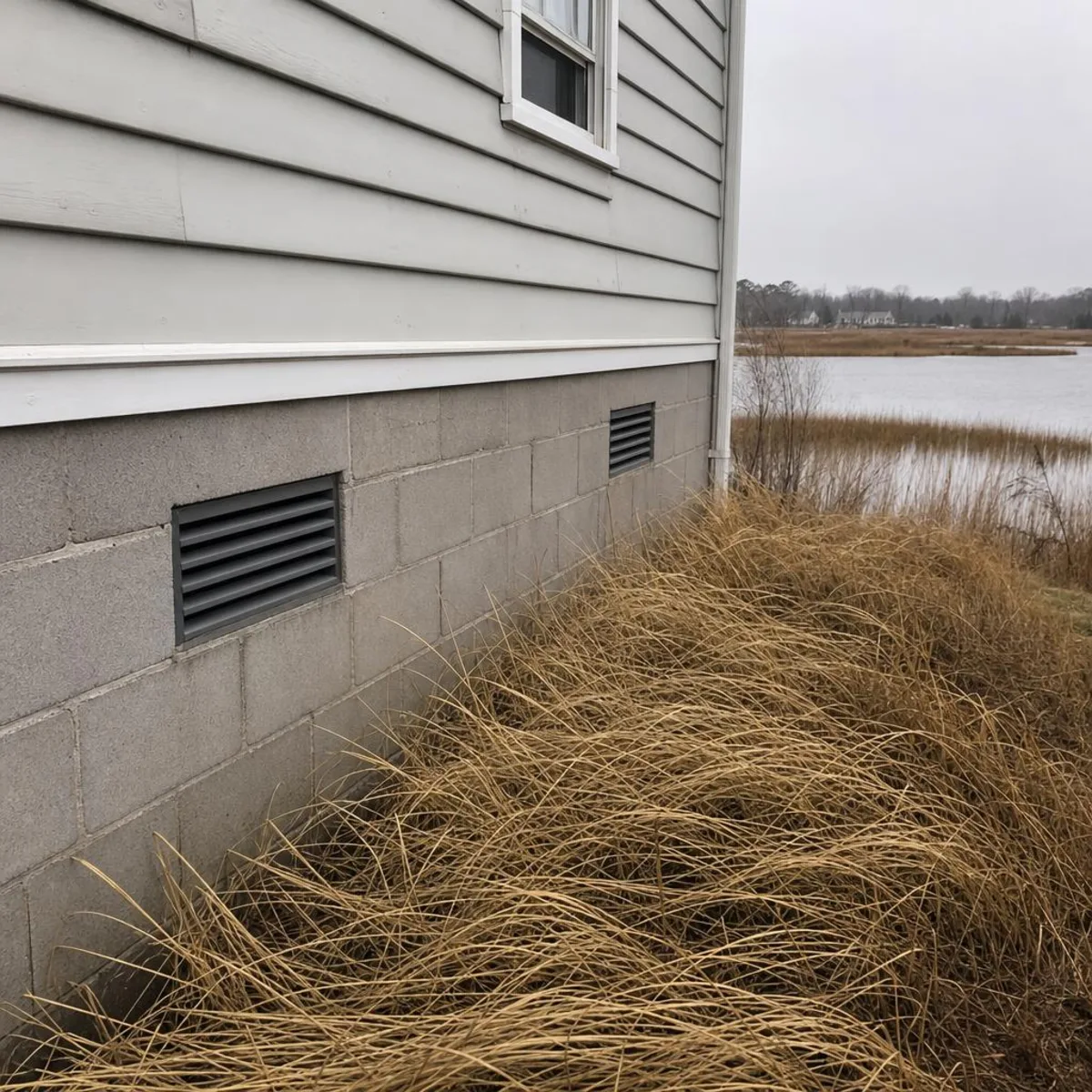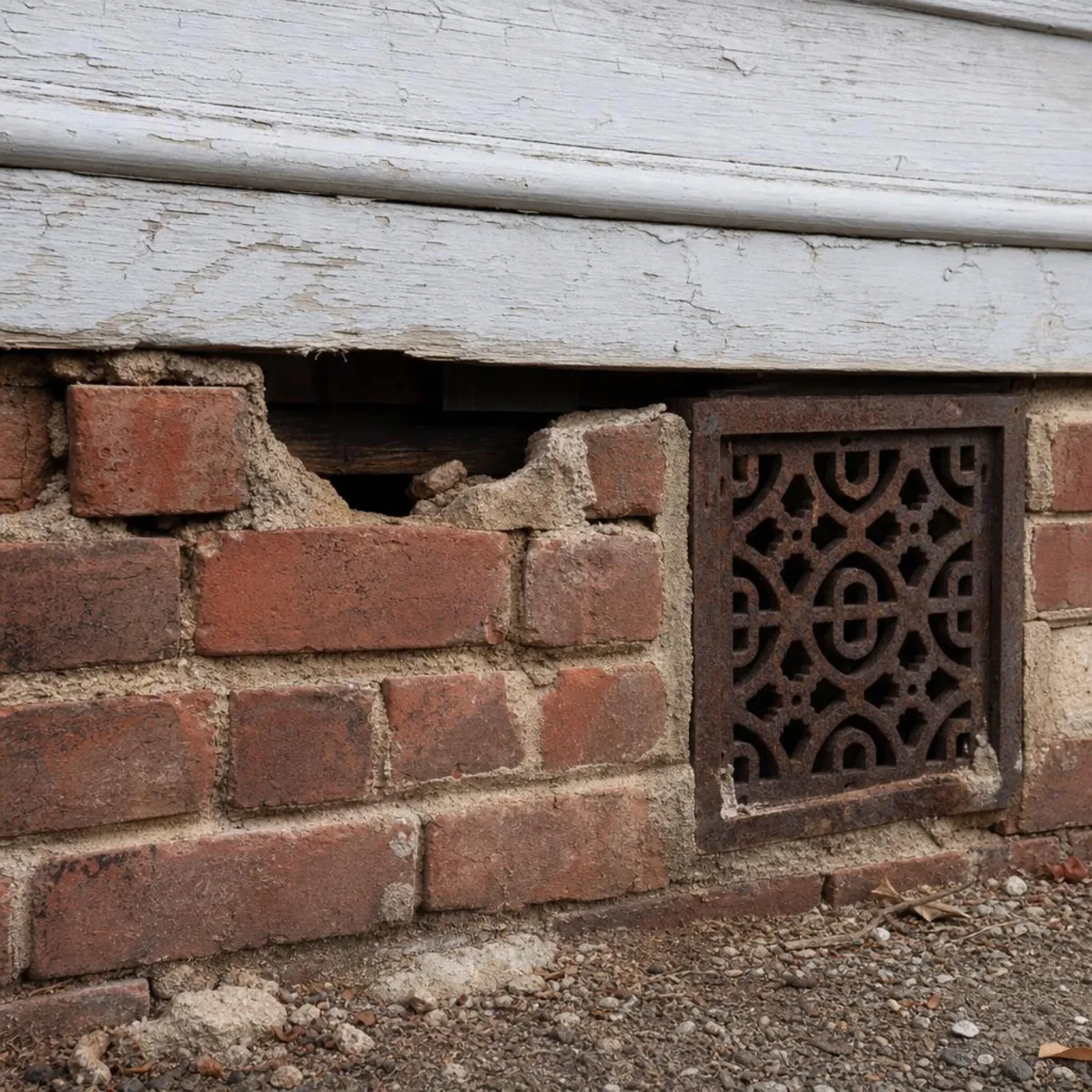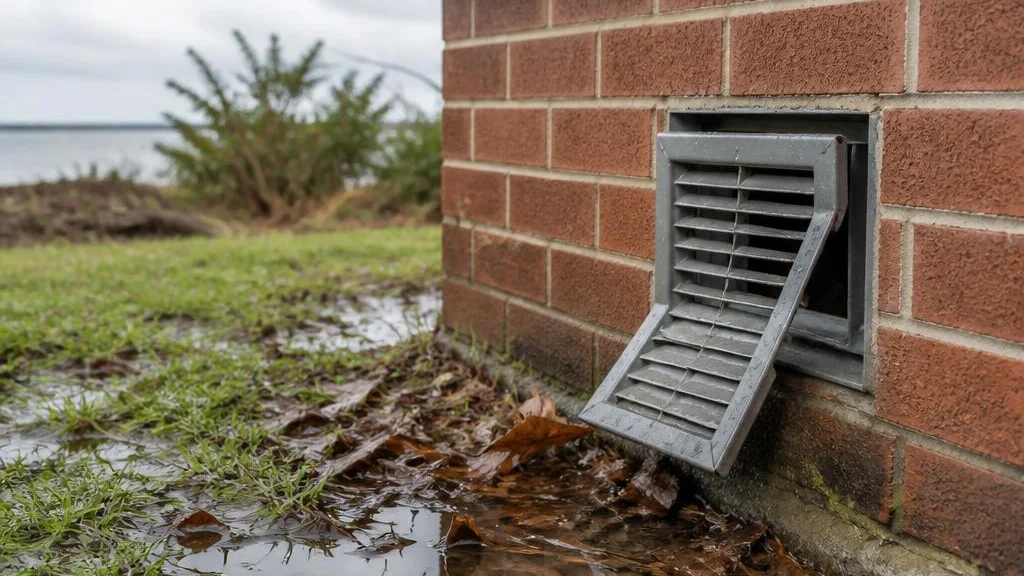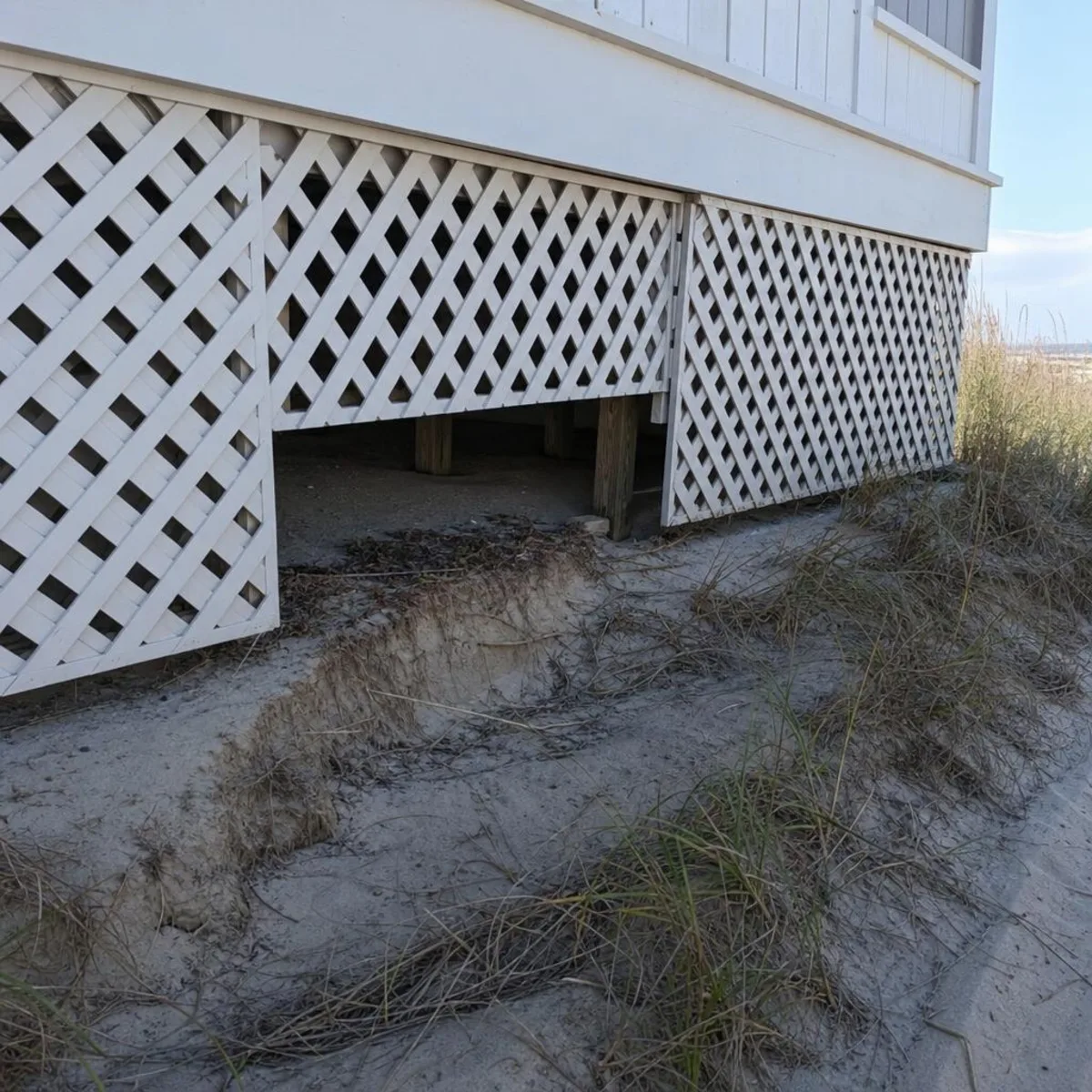
Beach cottages in Ocean View and East Beach sit raised on piers and skirting over sandy soil, and that sand is the problem. It shifts, washes and burrows easily, so mice open their own routes under the skirting faster than at almost any inland home — and a dime-sized gap is all one needs.
Why do mice get under Ocean View beach cottages so easily?
Sandy coastal soil does not hold a seal. It erodes around pier footings, washes out beneath skirting during storms, and lets a mouse scrape a burrow to daylight in minutes. A house mouse only needs a gap about the size of a dime, and the soft ground under a raised cottage gives it as many of those as the weather cares to open.
Explore rodent control in Norfolk
Unlike a slab home planted firmly on graded fill, a raised beach cottage relies on continuous skirting to keep the crawl closed. Sand undermines that skirting from below. Each nor'easter and high tide moves a little more soil, and a low edge that once sealed tight develops a shadow of open space a mouse can slip beneath.
House mice and deer mice both take advantage of it. Once under the cottage they are into the joist bays and insulation, and from there a dime-sized interior gap around a pipe or wire puts them in the living space.
How do storms and tides open new gaps under the skirting?
Storm surge and tidal flooding scour sand away from the base of the skirting and around pier footings, leaving voids the moment the water recedes. What was a buried, sealed edge becomes an undercut lip with open crawl behind it. Every significant blow along the bay reshapes the ground under these cottages, so exclusion here is something that has to be rechecked, not set once.
Get a free quote in Ocean View
Ocean View and East Beach face the Chesapeake Bay directly, and the same surge that floods a street pushes water and sand under the raised homes behind it. The crawl can take on water, float the vapor barrier, and wash out the grade all in one event.
After the water drops, the mice move into a crawl that is now damp and freshly opened. That is why a crawl space inspection after a storm season is worth doing — the entry map from a prior season is often no longer accurate, and mouse control works far better when it is matched to the openings that actually exist now.
What does it take to seal a raised beach cottage against mice?
Close the skirting to a hard, buried edge the sand cannot easily undercut, screen every vent and utility penetration with metal, and seal the interior gaps where pipes and wires enter the floor. Because the ground keeps moving, the outer seal has to extend down into the soil and be inspected each season, not just tacked flush to the surface.
Explore rodent control in Norfolk
On the crawl side, a proper skirting line paired with steel mesh at the vents keeps burrowers from finding the soft spots. Inside, every dime-sized penetration around plumbing and conduit gets closed with rodent-resistant material rather than foam, which mice chew through. This is the core of pest exclusion on a raised home.
Where surge has left the crawl damp and the liner disturbed, crawl space cleaning resets the space so nesting material and moisture are not inviting the next mouse straight back in.
| What turns up at the cottage | What the bay and the sand are doing | The seal or reset that holds |
|---|---|---|
| A washed-out gap under the skirting after a storm | Surge and tide scour sand from the base of raised homes | Rebuild the skirting to a buried edge and recheck each season |
| Fresh burrow holes at a pier footing | Loose sandy soil lets mice dig routes to the crawl quickly | Screen and grade around the footings with rodent-resistant material |
| Mice in a cottage between renters | Seasonal-rental turnover leaves the home quiet and food unattended | Seal the entries and set monitoring for the vacant stretches |
| Droppings in the kitchen of a raised cottage | Mice traveling up from the crawl through pipe and wire gaps | Seal the interior penetrations with metal, not foam |
| Torn or rusted crawl vent screens | Salt air on the bay corrodes older vent screening | Replace with heavy galvanized or stainless mesh |
| Damp, disturbed crawl after high water | Flooding floats the liner and dampens the insulation | Clean and reset the crawl so it stops harboring nests |
On a raised cottage the duct trunk usually hangs in the open crawl, so mice denning under the floor tend to nest right inside a run and leave the blower pushing that mess up into the bedrooms — a job that lands with Universal Duct Cleaning. The under-floor batts take a double hit here, salt-damp from surge and shredded for nesting at the same time, and swapping them out is where Universal Insulation Doctor comes in once the crawl is dried and sealed. A flooded, mouse-run crawl seldom leaves just one trade with work to do.
Frequently asked questions
Do skirting gaps under a cottage really have to be that tight?
Yes, because a dime-sized opening is all a house mouse needs to slip under a raised cottage, and the sandy edges around skirting and pier footings keep reopening to exactly that size with every tide and storm. The interior penetrations around plumbing and conduit run that wide or wider as well, so a real seal has to close both the crawl perimeter and the points where pipes and wires pass through the floor.
Get a free quote in Ocean View
Do I need to reseal after every storm season?
On a raised cottage over sand, rechecking is wise. Surge and tidal flooding move soil, scour out skirting edges, and can float a crawl liner, so an entry map that was accurate before a rough season October not be afterward. A seasonal look at the skirting line, the footings and the vents catches the new washouts before mice settle into the crawl the openings just created.
Get a free quote in Ocean View
Why do mice show up in my rental cottage when nobody is staying there?
A quiet, empty cottage is exactly what a mouse wants — no disturbance, and often crumbs or pantry items left behind between guests. Seasonal turnover means the home sits still for stretches, giving mice time to establish in the crawl and move up undetected. Sealing the entries and keeping monitoring in place through the vacant periods is what breaks that pattern.
Explore rodent control in Norfolk
Is foam enough to seal the gaps under a cottage?
No. Mice gnaw through expanding foam and caulk readily, so those materials do not hold as a rodent barrier. The gaps around skirting, vents and interior penetrations need rodent-resistant metal — steel mesh, hardware cloth or metal collars — to actually stop them. Foam can fill a void for air sealing, but on its own it is not a mouse barrier on a raised beach home.
Get a free quote in Ocean View
When traps keep filling in an Ocean View or East Beach cottage, the reason is almost always a washed-out skirting edge or an unscreened vent under the raised floor rather than anything in the kitchen. Our Ocean View pest control page describes how we handle these bayfront cottages, part of our wider Norfolk work, and the between-season checks that raised homes need sit inside our home health plans. Open a free quote with a note about your skirting and vents, and a technician can trace where the sand has let the mice under and seal it for the surge your cottage actually takes.