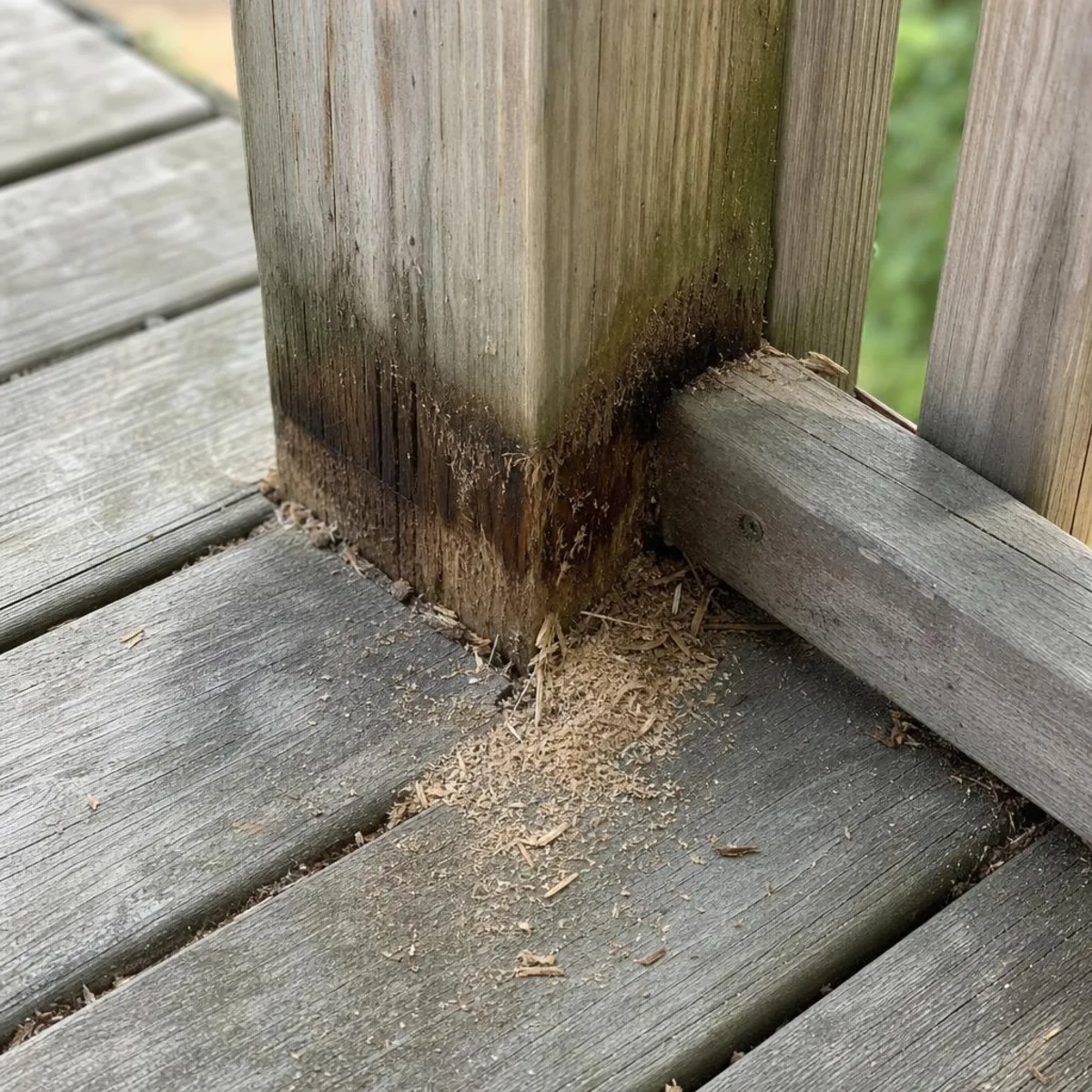
Run a screwdriver along a deck rail post out in Pungo and if the tip sinks into a hollow, smooth-walled gallery, you are looking at carpenter ants, not rot alone. In the wet exterior timber of rural south Virginia Beach, this is one of the most common calls we take once the weather warms.
Why is outdoor deck and fence wood such a target out here?
These ants tunnel wood for shelter rather than food, carving nesting galleries into timber that is already damp and softened. Decks, rail posts, fascia, pergolas and fence lines in Pungo and Red Mill stay wet from ground contact, sprinkler overspray and slow-clearing soil, which pre-softens the fibers into exactly the material these ants excavate.
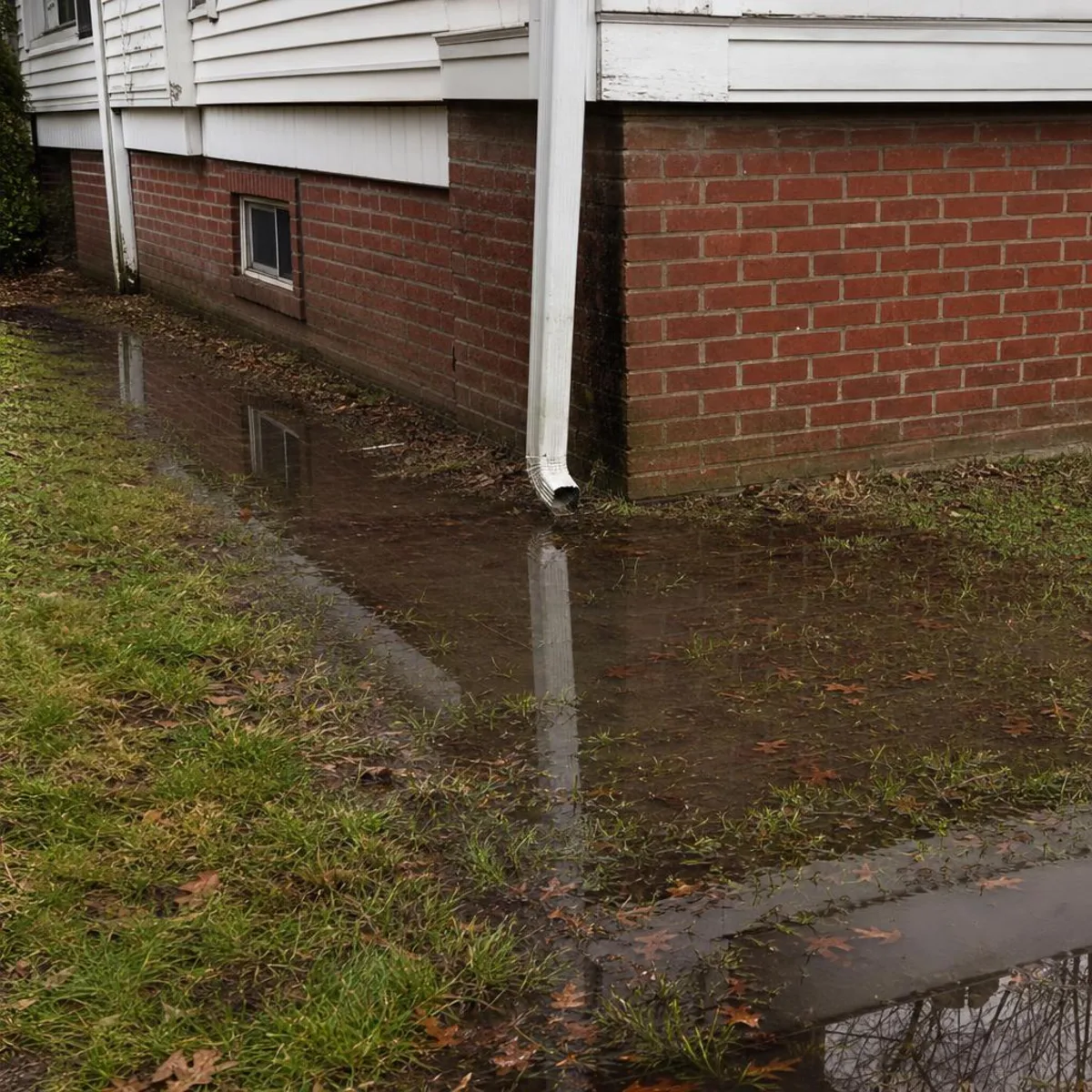
The rural south end of the city holds moisture differently than built-up neighborhoods. Larger lots, treelines and drainage ditches keep humidity high around a structure, and a deck footing set into damp ground wicks water up into the post above it. That first foot or two of a rail post, where it meets the soil, is prime nesting wood.
Fence lines are the quiet route in. A wooden fence that runs from a treeline back to the deck gives a colony a continuous, shaded, damp corridor of exactly the wood it likes, and the deck is simply the last leg of that trail. Our ant control work in these areas usually starts at the fence and the treeline, not the house.
How do you tell carpenter ant damage from termite damage in wet wood?
Look at the galleries and the debris. Carpenter ants leave smooth, clean tunnels that cut across the grain and push out coarse frass — sawdust mixed with insect parts. Subterranean termites leave galleries packed with mud and follow the soft grain, and they build mud tubes up from the ground. Ants keep their nests spotless; termites do not.
See termite damage repair in Virginia Beach
This distinction matters because the treatment is different for each. Carpenter ants are a colony you locate and eliminate, often nesting in one wet section of timber. Subterranean termites are a soil-to-wood problem that calls for a treated barrier, which is the domain of termite treatment rather than ant control.
The frass is the clearest tell in the field. Under an active carpenter ant gallery you find a small pile of what looks like pencil-shavings sawdust, sometimes with bits of dead ants in it. If instead the wood is streaked with dried mud and pencil-width tubes climb a footing, you have termites and want a proper pest control inspection to map it.
Which parts of a structure do they hit first?
They start where water collects. Deck ledger boards against the house, the base of rail posts, fascia behind a clogged gutter, the joints of a pergola and the bottom rail of a fence are the first casualties. These are the spots that stay damp longest after rain, and a colony works inward from there toward drier, sound wood it can also occupy.
A pergola is a favorite because its top joints trap water and dry slowly, and the posts often sit near watered beds. Fascia behind a gutter that overflows in a Pungo thunderstorm softens over a couple of seasons and becomes ideal. Once a colony is established in one of these, satellite nests can form in adjacent dry wood, spreading a deck problem into a fence and back to the eave.
The pattern holds across the properties we treat in Pungo and over toward Red Mill: exterior timber gives out first, and the structure is second in line only once the colony runs out of wet wood outdoors.
What actually stops carpenter ants in exterior timber?
Fix the water, find the nest, then treat it directly. Carpenter ants return to wood that stays wet, so redirecting gutters, sealing end grain, and keeping mulch and soil off the base of posts removes the invitation. From there, locating the main nest and treating it — rather than spraying the trail — is what ends the colony.
See ant control options in Virginia Beach
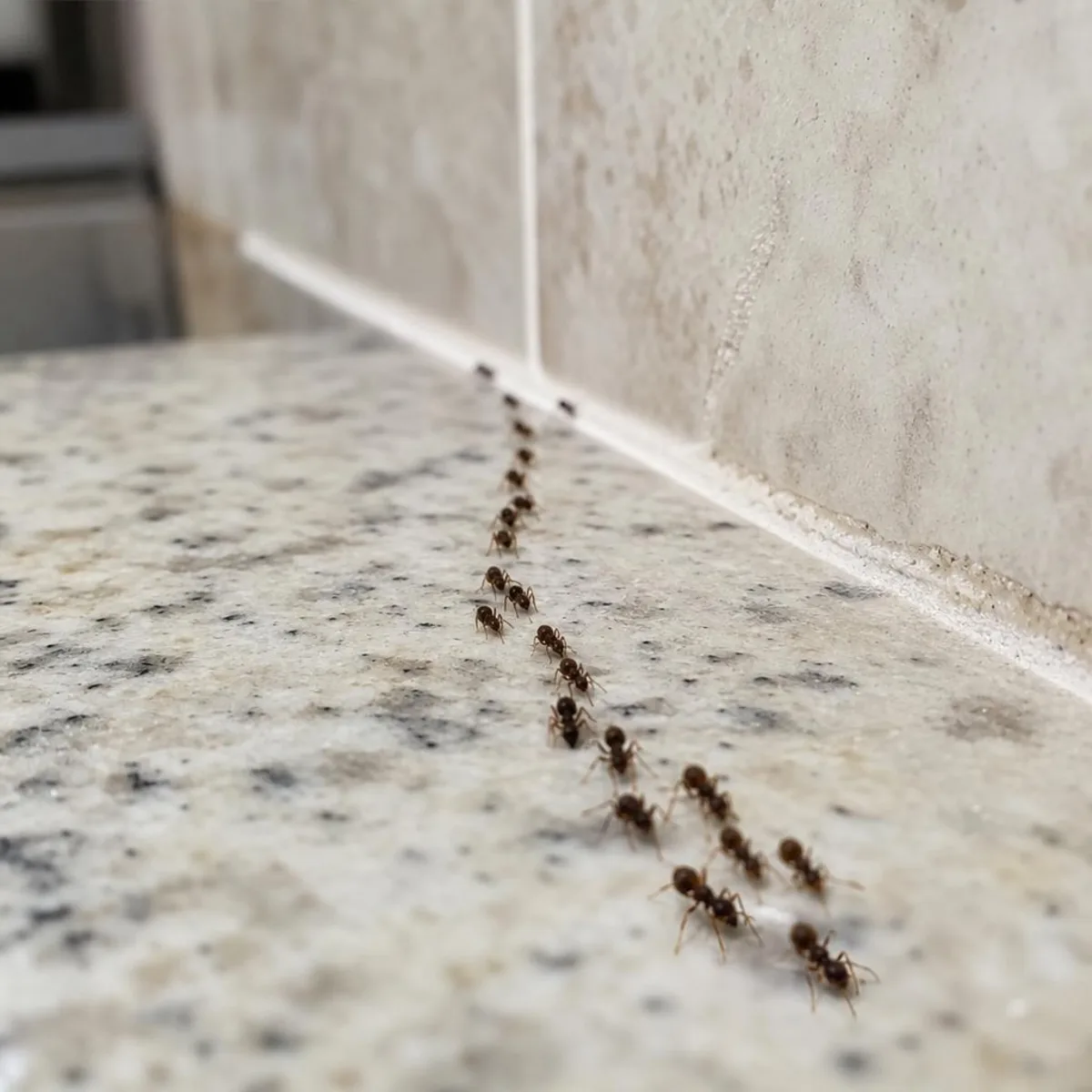
Spraying the ants you see clears the visible line and leaves the nest producing. The productive approach is to trace the trail back to the galleried wood, treat the nest, and correct the moisture that made the wood attractive so a new colony does not move in behind the last.
Where a rail post or ledger has been hollowed enough to lose strength, it is a repair question as much as a pest one. Structurally softened deck framing near the ground is worth having looked at before someone leans on a weakened rail.
| The sign in the timber | The rural south-VB reason for it | The correction that holds |
|---|---|---|
| Coarse sawdust piles under a deck rail | Ants clean their galleries and push out frass from damp post wood | Locate the nest above the pile and treat it directly, then dry the post base |
| Smooth hollow tunnels in a fence bottom rail | A wet fence line from the treeline gives a shaded, damp corridor of soft wood | Treat the colony and lift the fence base off wet soil where possible |
| Mud-packed galleries and pencil-width tubes on a footing | That is subterranean termites, not carpenter ants, working up from the soil | A soil-treated termite barrier, not ant bait — a different service entirely |
| Softened, dark fascia behind the gutter | An overflowing gutter keeps the fascia damp through the wet season | Clear and re-pitch the gutter, replace soft fascia, then treat any nest inside |
| Large black ants on the pergola at dusk | Trapped water in the top joints softens the timber into nesting wood | Seal the joints and end grain, treat the nest, keep beds below from staying soggy |
| Winged ants indoors from an attached deck | A mature exterior colony is producing reproductives near the house | Trace the trail to the exterior nest rather than treating the swarmers inside |
Frequently asked questions
Do carpenter ants eat the wood in my deck?
No. They chew through it to carve out nesting galleries and push the debris back out, which is why you find sawdust rather than see the wood consumed. The damage comes from the volume they hollow out over time in one damp section, not from digestion. A dry, sound deck rarely interests them, which is why moisture control is the real prevention.
How is this different from termite damage on the same deck?
Carpenter ant galleries are smooth and clean and cross the grain, with coarse frass beneath them. Termite damage follows the soft spring grain, packs the tunnels with mud, and comes with pencil-width mud tubes running up from the ground. Ants keep their nests immaculate; termites leave soil and moisture behind. The debris and the presence of tubes usually settle which one you have.
See termite damage repair in Virginia Beach
Can I just replace the rotten board and be done?
Replacing softened wood removes one nest site but not the colony, and it does nothing about the water that softened the board in the first place. New timber set into the same damp conditions will follow the same path. Correcting drainage and treating the colony is what keeps the replacement board sound rather than becoming the next target.
Why do I see them indoors if the nest is on the deck?
An attached deck shares framing and a wall with the house, so a colony working an exterior ledger can send foragers and, in spring, winged reproductives inside. Seeing them in the kitchen does not necessarily mean the nest is in the house — it often means the exterior nest is close and mature. Tracing the trail back outdoors is how you confirm where it lives.
When a Pungo deck post or a Red Mill fence rail starts shedding pencil-shaving frass, that hollow section needs the nest located and treated and the water source corrected before the timber loses more strength. Where a colony has worked its way from an attached deck into the eave, the soffit and any fascia insulation it soiled is a job for Universal Insulation Doctor, and if the trail reached ductwork running through the framing, Universal Duct Cleaning clears that. Pull a free quote, and reading the frass and the galleries tells us plainly whether the culprit is carpenter ants or termites.