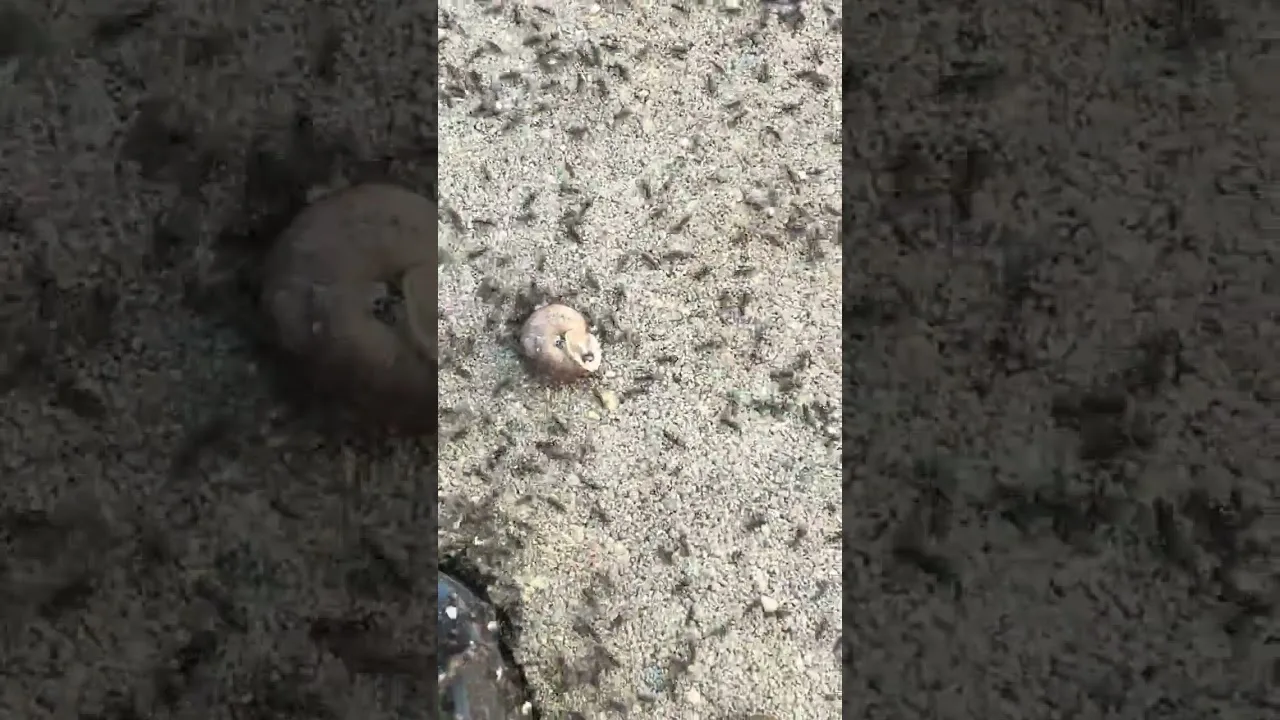
A Universal Pest & Termite employee found thousands of ants and eggs nesting inside a rodent bait station at a home in the Thoroughgood section of Virginia Beach. The video below documents that specific finding. It does not prove that the rodent bait attracted the ants, that rodents were active, or that nearby homes have the same issue.
Watch the Thoroughgood ant-colony video
What the video does—and does not—show
The footage shows a large ant colony and eggs inside a rodent bait station, according to the employee who found it. It is a useful reminder to look at pest-control equipment during an inspection, but a video alone cannot identify the ant species, explain why the colony settled there, or establish whether there was recent rodent activity.
One station is one observation. It does not establish an indoor ant nest, a rodent problem, or a neighborhood-wide infestation in Thoroughgood. A technician needs to assess the surrounding evidence before recommending treatment.
A rodent bait station is not a termite bait station
This finding involved a station used for rodent control. That is different from the termite-monitoring equipment discussed in our earlier article about ants nesting inside a termite baiting station in Virginia Beach. The two pieces cover separate observations and different equipment; neither video identifies the product or explains why ants were present.
What to do if you see ants in a bait station
- Do not open, move, or reach into the station. Keep children and pets away.
- If it is safe, take a photo from a distance and note the station's location and any visible label.
- Contact the pest professional who services the station, or follow the product label if you manage it yourself.
- Do not add another product or spray into the station unless its label or the servicing professional specifically directs you to.
- If ants are also appearing indoors, describe where you see trails and request an inspection rather than assuming the station explains every sighting.
These steps help preserve the station's condition and give a professional useful context without asking you to handle bait or disturb a colony.
Ant inspection and control in Thoroughgood
For local service information, see our Virginia Beach ant-control page and Thoroughgood pest-control page. An inspection can assess the station, nearby ant activity, and any trails or entry points at your home; the video by itself is not a diagnosis.
Other home services in the area
The ant finding does not indicate a duct or insulation issue. For separate home-maintenance needs, our sister companies serve the area with duct cleaning in Thoroughgood and crawl-space insulation service in Virginia Beach.
Seeing ants around a station or inside your home? Keep clear of the equipment and request a pest inspection or call (757) 502-0200.
What did the employee find in Thoroughgood?
The employee reported finding thousands of ants and eggs nesting inside a rodent bait station in the Thoroughgood section of Virginia Beach. The video documents that one location but does not identify the ant species.
Get a free quote in Thoroughgood
Does an ant colony in a rodent bait station prove rodents were active?
No. The presence of ants in a rodent bait station does not by itself establish recent rodent activity. A separate inspection would be needed to evaluate rodent evidence.
Explore rodent control in Virginia Beach
Is a rodent bait station the same as a termite bait station?
No. They are different types of pest-control equipment for different purposes. This video is about a rodent bait station, not the termite-monitoring equipment in the separate Virginia Beach article.
See our termite protection in Virginia Beach
Should I open or move a station if I see ants inside?
No. Keep people and pets away, leave the station in place, and contact the company that services it or follow the product label if you manage it yourself.
See ant control options in Virginia Beach
Does one ant-filled station mean my house has an indoor infestation?
No. One station documents activity at one location; it does not prove an indoor nest or a neighborhood-wide ant problem. Repeated indoor trails or other evidence can be assessed during an inspection.