A mouse, cockroach, or spider inside a Hampton Roads home in October deserves a closer look—but one sighting does not prove a hidden infestation, a crawl-space colony, or damaged ductwork. The useful next step is to identify what you saw and look for repeat activity, a likely entry route, or other evidence that fits the pest.
Cooler nights and the start of heating season can make homeowners notice indoor activity. That is not proof that every local pest is making a predictable fall migration into attics and crawl spaces. Check the evidence before choosing treatment, cleanup, or repairs.
Identify the pest before you decide what the sighting means
A clear photo, the room where you saw the pest, and whether you have seen it more than once are useful details. A nickname is not a species identification: “water bug” and “palmetto bug” can refer to different large cockroaches. Virginia Tech Cooperative Extension advises identifying cockroaches because species differ in where they live and how they should be managed. One large roach near an exterior door does not, by itself, prove an indoor breeding site.
The same caution applies to spiders. Photograph the spider if you can do so safely and note where it was found. One spider in a room does not establish a nest, a moisture problem, or a hidden cockroach population. Do not infer a whole crawl-space problem from a single animal.
Use a short evidence check—not a guess
- Record what you saw. Save a photo and note the date, room, and whether the sighting repeats. Avoid handling an unidentified pest.
- Look for a pattern. Repeated mouse sightings, droppings, gnawing, nesting material, or a visible opening are stronger reasons to investigate than a sound by itself. A furnace cycle or musty odor alone does not diagnose rodents.
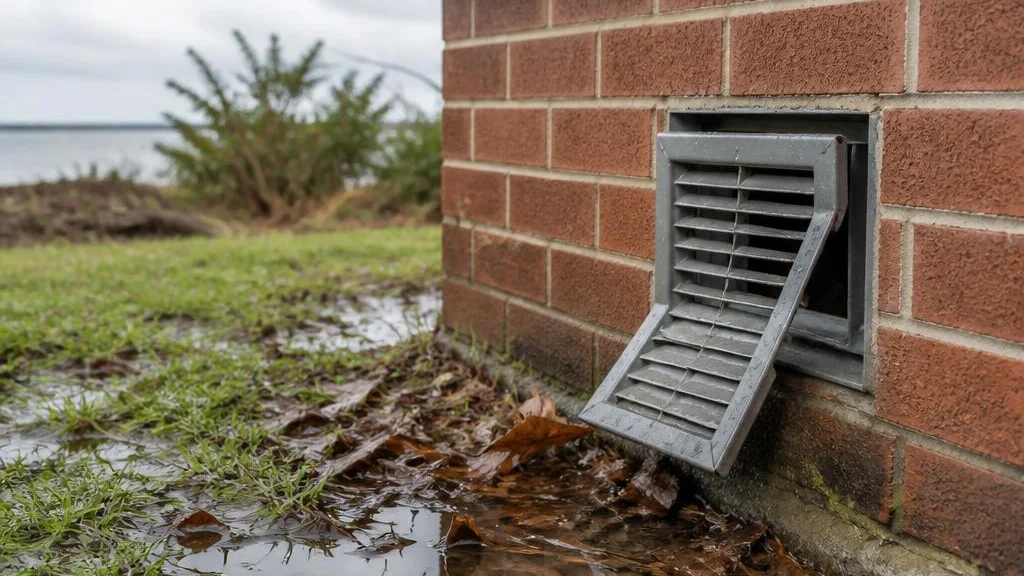
- Check accessible entry points. From a safe position, look at damaged crawl-space vent screens, gaps around pipes and cables, garage-door corners, and roofline edges. A mouse can fit through an opening about one-quarter inch wide; a dime is not a reliable sizing guide. Do not block required foundation ventilation or climb into an unsafe attic.
- Reduce outdoor shelter without hiding the building. Move leaf piles and stored firewood away from the foundation, and keep vegetation from obscuring the inspection area. Do not cover siding clearances, weep holes, or vents.
- Keep moisture concerns separate. If water is present under the home, document it and arrange an appropriate moisture assessment. Water or condensation alone does not prove pest activity and does not mean insulation or ductwork needs replacement.
What to check on a Hampton Roads home
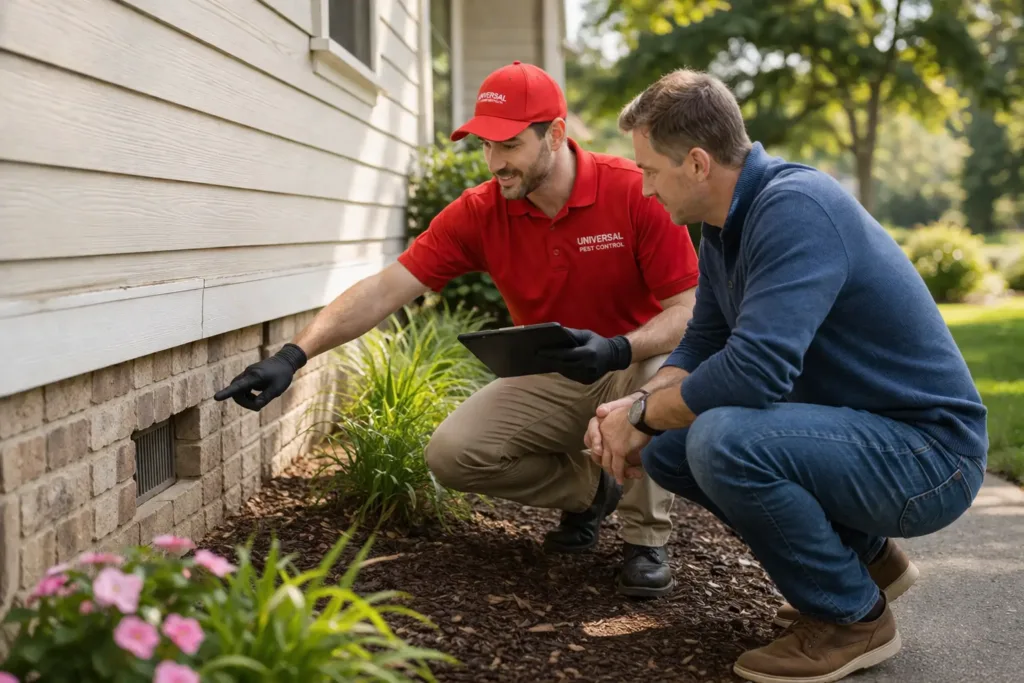
When a Norfolk or Portsmouth home has a vented crawl space, inspect the actual foundation vents, utility penetrations, and the places where a porch, garage, or later addition meets the original wall. Those transitions vary from house to house; do not assume a neighborhood name tells you what foundation or entry route your property has.
On lower-lying Hampton Roads lots, recent heavy rain can make water intrusion a separate concern. Check the condition of your own crawl space or foundation rather than assuming a wet area means rodents have moved in. A moisture finding and a pest finding call for different evidence and sometimes different specialists.
When an inspection is the right next step
Arrange a pest inspection when activity repeats, you find droppings or gnawing, or you can point to a possible opening. A useful assessment identifies the pest, documents the evidence, checks accessible routes, and explains which steps are necessary. For rodent-specific concerns, see how rodent control and exclusion work, along with local service information for Norfolk, Chesapeake, and Suffolk.
If an inspection documents damage to insulation or duct materials, ask for a separate assessment of the affected system. That is different from pest identification or exclusion; a sighting alone is not a reason to replace either. Universal Pest & Termite can help assess a pest concern at 757-502-0200. If a specialist review is warranted, see insulation services or duct cleaning.
Frequently Asked Questions
Does one mouse, cockroach, or spider mean I have an infestation?
No. One sighting alone does not establish an infestation; repeated activity or matching evidence such as droppings, gnawing, nesting, or a confirmed entry route is more informative.
Take a photo and note where and when you saw it. If the signs repeat or you find evidence you cannot identify, an inspection can help determine the pest and the next step.
How small an opening can a mouse fit through?
A mouse can fit through an opening about one-quarter inch wide, so check small gaps around vents, pipes, cables, and doors rather than using a dime as a size guide.
Look from a safe, accessible position and do not block foundation vents or other openings needed by the home. A pest professional can help assess a suspected entry route.
Does seeing a “water bug” prove cockroaches are breeding indoors?
No. “Water bug” is a loose common name, and one large cockroach sighting does not identify its species or prove an indoor breeding site.
A clear photo and the location of the sighting help with identification. Repeated sightings, especially in more than one room, are a stronger reason to request an inspection.
Does a spider indoors prove there is a moisture or insect problem?
No. An isolated spider is not reliable proof of a moisture problem, an insect infestation, or a hidden nest.
Photograph it if possible and note whether sightings repeat. Have the property checked when there is additional evidence, not solely because one spider appeared indoors.
Should I inspect my crawl space when I hear scratching or smell something musty?
Not on that clue alone. Scratching or a musty odor can have several causes, so look for corroborating signs and avoid entering an unsafe crawl space or attic.
Repeated sounds, droppings, gnawing, visible damage, or a suspected opening are reasons to arrange an inspection. Water intrusion or condensation should be assessed separately from pest evidence.