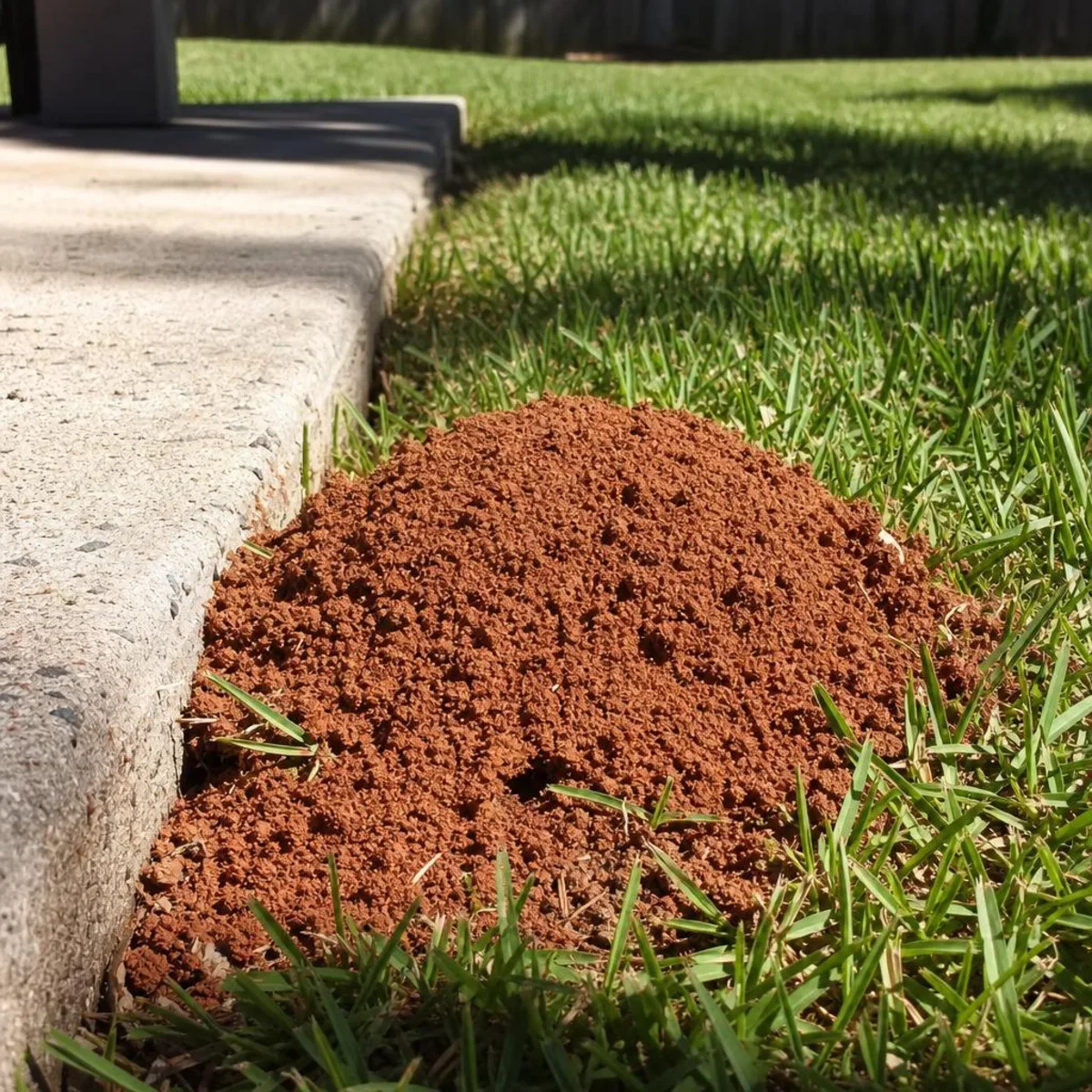
A raised dirt mound in the yard that stings when disturbed is almost certainly fire ants; a thin line of tiny ants crossing the kitchen counter is a sugar ant colony foraging for food. They look nothing alike up close, and they need entirely different treatments.
How do I tell a fire ant mound from a sugar ant trail at a glance?
Location and behavior separate them instantly. Fire ants build a domed mound of loose soil in open sunny yard and farmland, and they boil out and sting when you disturb it. Sugar ants — properly the odorous house ant — form no visible outdoor mound; you notice them as a thin moving line indoors, tracing baseboards and counters toward food.
See ant control options in Suffolk
Suffolk has more open ground than most of Hampton Roads — larger lots, farmland edges, pasture and ditch banks — and that sunny, disturbed soil is exactly what red imported fire ants colonize. Their mounds have no obvious central hole; the ants use side tunnels, which is why the mound seems to explode when a mower or a boot hits it.
Sugar ants tell a different story. Crush one and it gives off a faint rotten-coconut smell, which is where the "odorous" name comes from. They nest in wall voids, under slabs and outdoors under mulch, then send workers indoors along scent trails to whatever sweet or greasy food they have found. You will not find a fire-ant style mound for them.
Why do the two need completely different treatments?
You are solving two different problems. Fire ants are an outdoor stinging hazard treated at the mound and across the yard, because the goal is to reach the queen deep in the soil. Sugar ants are an indoor foraging problem treated with slow-acting bait the workers carry home, because spraying the visible line only scatters the colony into new trails.
With fire ants, spot-treating a mound with a contact product often just moves the colony a few feet and leaves the queen alive. A broadcast bait taken back into the nest, combined with mound treatment, is what actually reduces the yard population. This is genuine outdoor ant control work, and it is worth doing before children, pets or field workers get stung.
With sugar ants, the mistake is reaching for repellent spray. Repellents break a colony into satellite nests and multiply the number of trails you are chasing. Bait works with their behavior instead: workers carry it back and share it, so the nest you never see is the one that gets treated. The two species share a name in casual conversation and almost nothing else in practice.
What happens at the patio slab and foundation wall where they meet?
The concrete edge is the crossover zone. Fire ants nest in the warm soil right against a patio slab or foundation footing, and sugar ants run the expansion joint and the sill line as an indoor entry route. A single crack at the slab edge can host a stinging mound on the outside and a foraging trail on the inside within inches of each other.
Slab-on-grade homes in Suffolk's newer subdivisions give both species what they want at that edge. The soil beside a south-facing patio heats up and holds fire-ant mounds; the expansion joint between slab and house gives sugar ants a sheltered gap to travel. Sealing that joint and treating the perimeter soil handles both pressures at the same seam.
This is where identification pays off. Treat the edge as a fire-ant problem alone and the kitchen trail continues; treat it as a sugar-ant problem alone and the mound keeps producing stinging workers by the back door. The Suffolk page details how we handle yards and farmland edges like these, and the Hampton Roads hub ties in the rest of the region.
| Clue in the yard or kitchen | Which ant it tells you is present | The treatment that species needs |
|---|---|---|
| A domed dirt mound in a sunny yard | Fire ants colonize open, disturbed Suffolk soil and farmland edges | Broadcast yard bait plus direct mound treatment to reach the queen |
| A thin line of tiny ants on the counter | Sugar ants forage indoors along scent trails to food | Slow-acting bait the workers carry back to the hidden nest |
| Painful stings after mowing | A disturbed fire-ant mound sends workers up to sting in numbers | Treat and mark mounds before yard work; retreat the perimeter |
| A faint coconut smell when crushed | The odorous house ant gives off that scent — it is not a fire ant | Indoor baiting and sealing entry points, not outdoor spraying |
| Ants along a patio expansion joint | The slab edge is warm soil for mounds and a gap for indoor trails | Seal the joint and treat the perimeter soil at the same seam |
| Both mounds outside and trails inside | Two species sharing the foundation edge, mistaken for one | Identify each, then treat outdoor stinging and indoor foraging separately |
Odorous house ants often nest in the wall voids and the crawl space of a Suffolk farmhouse, and once they are moving through the building envelope they turn up in places the yard treatment never reaches. When a colony has been trailing along a duct chase and fouling the flex runs feeding the kitchen where you keep finding them, Universal Duct Cleaning clears that run out. Sugar ants also tunnel through crawl-space insulation to nest in the warmth, shredding it as they go; where that batting is spent, Universal Insulation Doctor strips and replaces it.
Frequently asked questions
Are red imported fire ants really a problem in Suffolk?
They occur in a limited part of southeastern Virginia, and Suffolk's open, sunny soil sits within that pocket, so they turn up as a genuine local-yard problem here. They are not established statewide. Treat them as a property-level nuisance rather than something under any official boundary, and focus on the mounds in your own yard and along your farmland edges.
See ant control options in Suffolk
If I see ants indoors, could they be fire ants that got in?
Rarely. Fire ants are an outdoor stinging insect and do not typically forage in kitchens the way sugar ants do. A thin trail crossing a counter toward the sink or pantry is almost always odorous house ants. If ants indoors are stinging you, that is unusual and worth a closer look, but a quiet line moving toward food is a foraging colony, not fire ants.
Can I just pour boiling water or a home remedy on a fire ant mound?
You October kill the ants near the surface, but the queen sits deep in the soil, often below where water or a home remedy reaches, so the colony rebuilds within days. Worse, a partial hit can prompt the colony to relocate and split. Reaching the queen reliably takes bait the workers carry down into the nest, which is why mound-only remedies tend to disappoint.
See ant control options in Suffolk
Why does killing the ants I see never seem to end a sugar ant problem?
The ants on the counter are only foraging workers, a small fraction of a colony nesting out of sight in a wall void or under the slab. Wiping them out leaves the queen and brood untouched, so new workers replace them within hours. Repellent spray makes it worse by splitting the colony into satellite nests, multiplying the trails you are chasing.
A stinging mound out by the Suffolk pasture and a coconut-smelling line on the kitchen counter are two jobs, and guessing which is which wastes a treatment. A free quote puts a technician on the mounds, the patio expansion joint and the foundation line to name each ant on sight. A pest control inspection settles the identification, and a place on our home health plans keeps the broadcast mound bait and the indoor trail bait working across the seasons so neither front reopens.