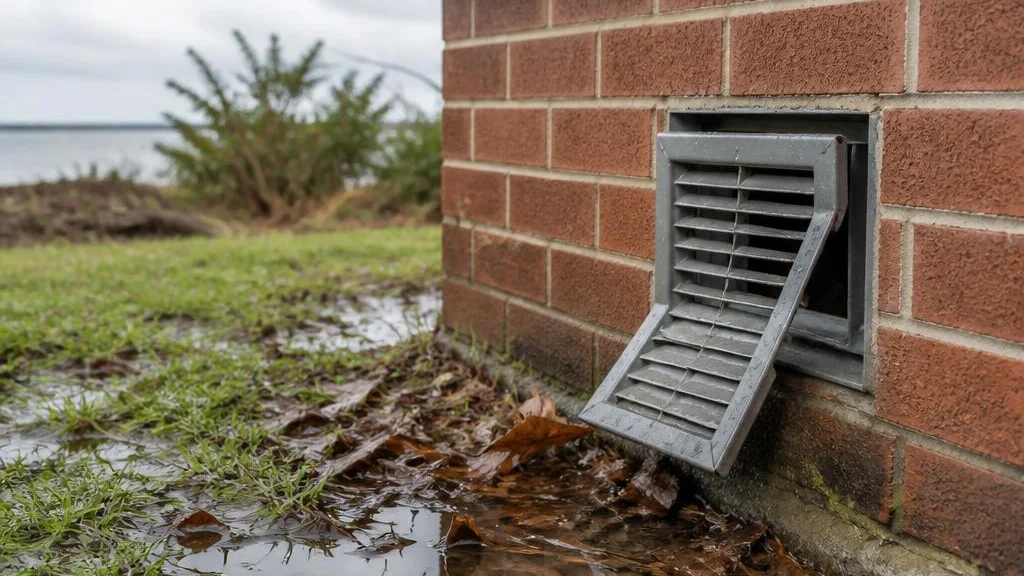
Norfolk packs more people, more rentals and more shared walls onto less dry ground than any other city we serve. A Ghent four-square divided into three flats, a Larchmont colonial by the river, an Ocean View cottage on sand, a Berkley duplex two blocks off the harbor — the addresses sit minutes apart and generate completely different pest bills. This guide lays out the 2026 prices and, just as usefully, who in Norfolk should be paying for what.
How much does pest control cost in Norfolk in 2026?
The Essential quarterly plan is $38 per month, and Pro adds termite protection for $63 per month. Duct and dryer-vent cleaning continue as separate services, with a quote for the work at each property. Job-priced work: $87 to $287 for a single treatment, bed bug work at $175 to $325 per room or $1,000 to $2,500 for a whole home, a liquid termite treatment at $395 for one affected area, a full trenched barrier at $595 to $1,195, rodent exclusion at $99 to $1,495, a WDIR letter at $75 to $125, and crawl space encapsulation at $3,000 to $10,000. Comparable quarterly plans around the region generally quote at $40 to $70 per month. Market ranges reflect what we typically see other Hampton Roads companies charge, based on quotes homeowners bring us. They are our own observations, not a published survey. Flat termite treatment prices assume a home that qualifies — nothing is sold or started before the inspection.
Market ranges reflect what we typically see other Hampton Roads companies charge, based on quotes homeowners bring us. They are our own observations, not a published survey. Our published figures are ranges and starting points; the quote for a given building comes out of that building's inspection.
Tier-by-tier comparisons live on the home health plans page, and everything we do inside the city limits is indexed on the Norfolk pest control page.
Who should be paying for pest control in a city of renters?
Norfolk is roughly half rental households, and the answer changes the economics. An owner-occupier buys prevention for one building. A landlord buys continuity across turnover. A tenant mostly needs to know what the lease obliges the landlord to handle — and in Virginia, the landlord-tenant law puts baseline pest responsibility on the property owner in most multi-unit situations.
Why does per-unit treatment fail in divided houses?
Because the building is the habitat, not the unit. The subdivided four-squares of Ghent and Park Place share wall voids, pipe chases and basements, so German roaches and mice treated out of apartment B resettle from apartment A within weeks. The economical structure is one plan on the whole building — quarterly service at $38 per month with free interim callbacks — rather than emergency single visits at $87 to $287 bought unit by unit as complaints arrive. Landlords who make that switch usually spend less within the year and field fewer calls doing it.
What do bed bugs cost, and who ends up paying?
Treatment is $175 to $325 per room, or $1,000 to $2,500 to run a whole-home program, and the bill lands according to the lease and the facts — in multi-unit buildings Virginia practice generally puts treatment on the owner unless the infestation is traceable to a specific tenant. The pricing runs per room because the work does: every harborage within reach of the beds gets treated and re-checked, and adjacent rooms are inspected so the problem is not simply pushed through the wall. What multiplies cost is delay and DIY foggers, which scatter the insects into neighboring units and turn one room into four.
See bed bug treatment in Norfolk
How does groundwater set the pest agenda block by block?
Norfolk's water table is close enough to the surface that after a hard rain, parts of Colonial Place and Larchmont hold standing water against foundations for days. Saturated soil floods ant colonies upward into walls, keeps crawl spaces humid enough for termites and big roaches, and gives mosquitoes daytime nurseries in every clogged drain. On the flood-prone blocks the effective spend is structural — drainage, sealing, sometimes encapsulation at $3,000 to $10,000 — with routine treatments layered on top, not instead.
What does the city's map say about the money?
The historic districts pay for building-wide plans and masonry-respecting exclusion; the riverfront pays for termite and moisture defense; the bayfront pays for sand-and-storm rodent work; the crosstown corridors pay mostly for the standing barrier that keeps dense-block pests out of the kitchen.
| Area | The dominant spend |
|---|---|
| Ghent & Park Place | Subdivided historic buildings: whole-building roach and mouse programs beat unit-by-unit firefighting. |
| Larchmont & Colonial Place | River frontage and shallow groundwater: termite defense, drainage-aware ant work and crawl moisture control. |
| Ocean View & Wards Corner | Bayfront sand and storm exposure: skirting repairs, cottage crawl sealing and post-blow rodent response. |
| Downtown & Berkley | Harbor-adjacent density: Norway rat exclusion and coordinated roach work across close-set buildings. |
| Norview, Military Circle & Norfolk Highlands | Crosstown residential blocks where the quarterly barrier does the routine holding work season after season. |
Whatever the district, the resulting job orders read the same way: roach control, rat control, termite treatment, bed bug treatment or crawl space moisture control.
Frequently asked questions
Are Norfolk pest prices higher because it's the urban core?
Not on our published rates — the quarterly plan is $38 per month citywide, and the membership with termite coverage is $63 per month whether the address is a Ghent flat or an Ocean View cottage. The wider market's quarterly quotes typically fall between $40 and $70 per month. Market ranges reflect what we typically see other Hampton Roads companies charge, based on quotes homeowners bring us. They are our own observations, not a published survey. Urban jobs do trend larger in scope — more shared structure per building — but that shows up in measured work, not plan pricing.
What is a fair pest budget for a small Norfolk landlord?
For a duplex or triplex, the arithmetic usually favors one building-wide quarterly plan at $38 per month over reactive calls at $87 to $287 apiece, because included callbacks absorb the between-visit complaints that otherwise each become an invoice. Add a one-time exclusion pass — $99 to $1,495 depending on the opening count — in the first year of ownership, and the annual termite inspection at $0 every year after. What breaks budgets is not the plan; it is the unmanaged bed bug case that crosses a party wall.
Does a condo or rowhouse still need its own termite protection?
If you own the walls, yes — termites do not read association documents. Coverage through the $63 per month membership, or standalone defenses from $395 for a localized liquid treatment, $595 to $1,195 for a full trenched barrier, and $8 to $12 per linear foot for bait stations, applies to the structure you are responsible for; in associations, confirm which parts of the foundation the HOA insures and treat the gap. Attached buildings actually raise the stakes, since an untreated neighboring foundation keeps a colony within striking distance of yours. Our flat treatment prices assume a home that qualifies, which the inspection settles first.
See our termite protection in Norfolk
What should I do the day I suspect bed bugs, and what will it cost me?
Stop moving things between rooms, bag the bedding for hot washing, and get an inspection scheduled — identification matters, because bat bugs and carpet beetle larvae both trigger false alarms. Confirmed treatment runs $175 to $325 per room, with the whole-home program at $1,000 to $2,500 where the spread has already happened. The cost curve on this pest is steep and time-driven: a caught-early single-room case and a six-month-old building case differ by thousands of dollars, mostly because of the waiting.
See bed bug treatment in Norfolk
Is encapsulation overkill for a raised cottage near the bay?
Often, yes — and it is worth saying so. A breezy, sandy crawl under an Ocean View cottage has different physics from a sodden inland crawl; what it usually needs is intact skirting, sealed penetrations and rodent-proof vents, which lives in exclusion pricing at $99 to $1,495 rather than the $3,000 to $10,000 encapsulation bracket. Encapsulation earns its cost where humidity readings stay high year-round. The inspection settles which house you have before anyone spends real money.
Want a ballpark for your specific home?
Our cost estimator walks you through the services most Norfolk homes need and gives you a range before anyone visits.
Try the Cost Estimator →Ranges end where a ladder and a moisture meter begin: have the building walked, the foundation measured and the openings counted, and take the number quoted in front of you. The visit is free with no strings on it — book a Norfolk inspection here.