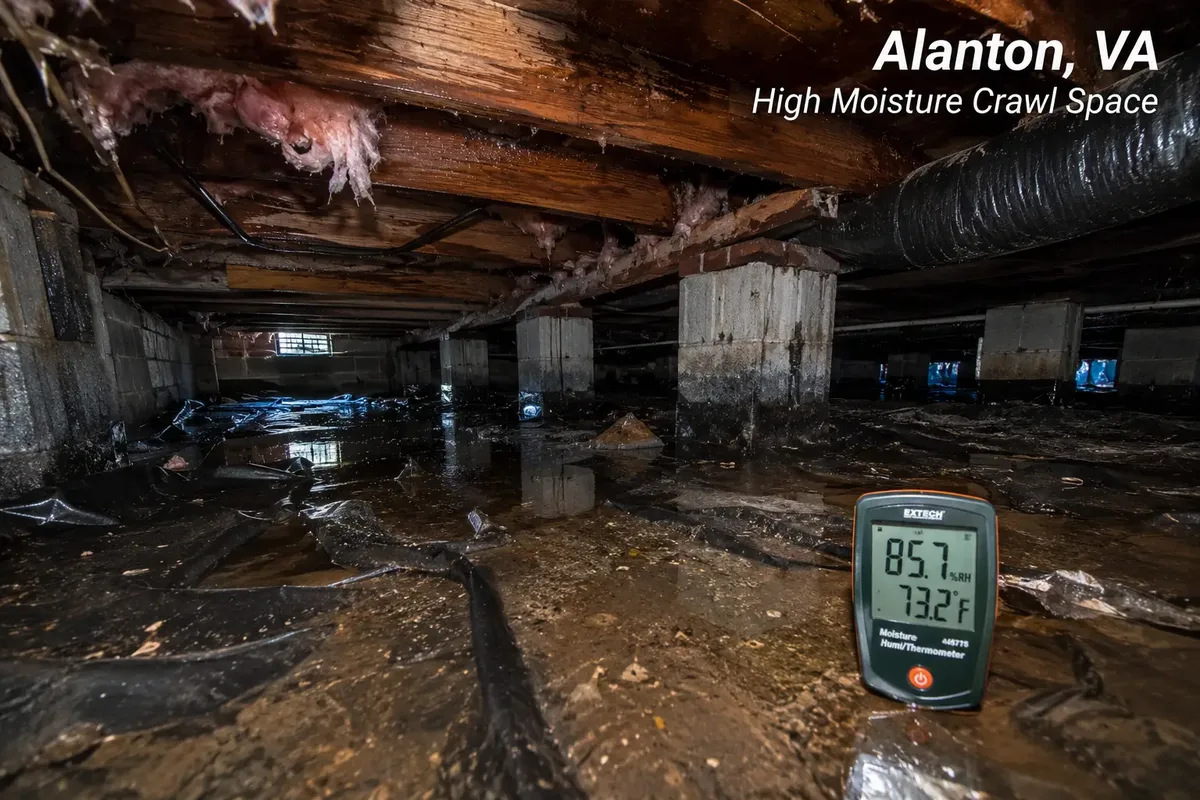
Under a Virginia Beach home, microbial growth is usually a moisture warning—not just a cosmetic problem. In the field footage below, white and gray growth-like material covers portions of the crawl-space framing, with darker discoloration along nearby wood members.
The video documents what is visible, but it cannot identify the specific organism or determine whether laboratory testing is appropriate. The useful question for a homeowner is what allowed the wood to stay damp long enough for growth to develop, and whether the moisture has already affected the framing, insulation, or air moving through the home.
What causes microbial growth in a crawl space?
Microbial growth needs a combination of moisture, a food source, and enough time. In a crawl space, the food source is often the wood framing, subfloor, paper-faced insulation, or other organic material. The moisture can come from several different paths:
Book a crawl space inspection in Virginia Beach
- High humidity and condensation: Warm coastal air can contact cooler joists, ductwork, pipes, and subflooring. When that moisture condenses repeatedly, the wood can stay damp even when there is no obvious puddle.
- Ground moisture: Exposed soil, a missing vapor barrier, a damaged liner, or a high water table can send moisture into the crawl space every day.
- Plumbing and HVAC leaks: A slow supply-line leak, drain leak, sweating duct, or condensate problem may wet one area continuously.
- Rainwater and drainage: Poor grading, short gutter discharge, foundation seepage, and a failed or missing sump system can keep the perimeter wet after storms.
- Inadequate moisture control: Vents alone do not always dry a Hampton Roads crawl space. During humid weather, they can introduce more damp air unless the space has a properly designed moisture-control strategy.
What can microbial growth damage?
Visible growth does not automatically mean that a floor system has lost its strength, but it is a reason to inspect the surrounding materials rather than simply brush the surface and move on.
Get a free quote in Virginia Beach
- Wood framing: Persistent dampness can support wood-decay fungi, staining, softening, and eventual loss of strength in joists, girders, sill plates, and subflooring.
- Insulation: Wet or contaminated insulation can sag, retain odors, lose effectiveness, and keep the wood above it damp.
- Indoor comfort: Musty odors and airborne particles can move upward through floor penetrations, duct chases, and pressure differences between the crawl space and living area.
- Repair scope: If the moisture source remains active, cleanup may be followed by repeated growth, wood repairs, drainage work, or replacement of damaged materials.
- Pest conditions: Damp wood and protected crawl-space voids can make the environment more favorable to termites and other pest problems. Moisture does not prove an infestation, but both conditions should be checked together.
Why cleaning alone does not solve the problem
A treatment or cleaning step may address affected surfaces, but it cannot stop new growth if the crawl space is still receiving moisture. The inspection should identify whether the source is groundwater, ground vapor, condensation, a plumbing leak, HVAC moisture, or rainwater entering from outside.
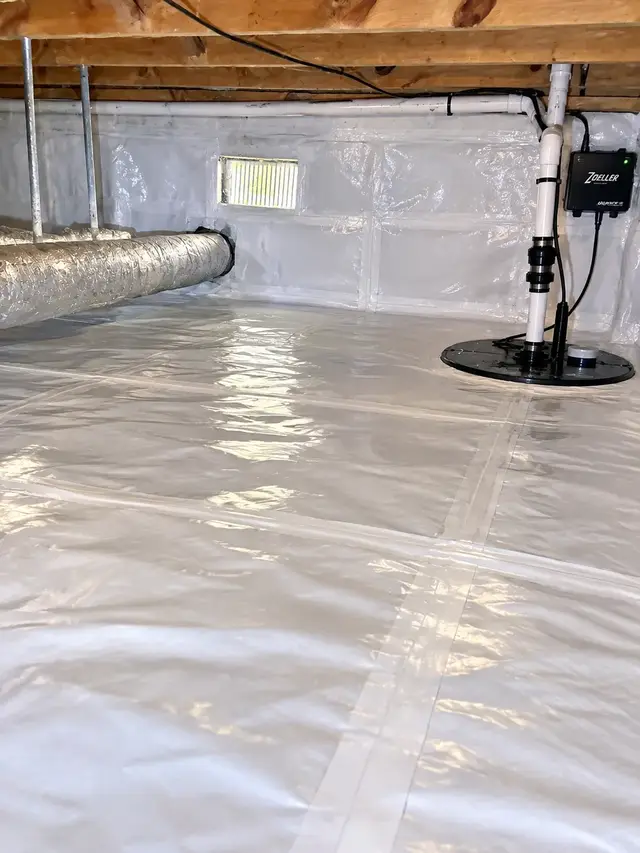
The repair sequence often includes a combination of moisture-source correction, drainage or sump-pump work, dehumidification, vapor control or encapsulation, affected-insulation review, and wood fungus treatment when appropriate. A crawl-space cleaning may be part of the scope, but it should not be treated as a substitute for drying the space.
What should a Virginia Beach crawl-space inspection check?
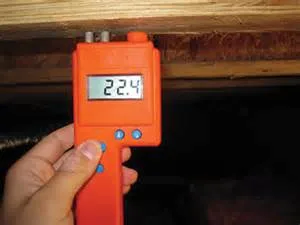
A useful inspection should document more than the most obvious patch. It should check wood moisture, relative humidity, plumbing and HVAC lines, foundation walls, drainage paths, the condition of the vapor barrier, insulation, access points, and nearby framing for softness or structural change.
Get a free quote in Virginia Beach
Homeowners should also ask whether the material shown is being described as visible microbial or fungal growth, wood decay, or something else—and what evidence supports that conclusion. The video is a useful record of the condition, but the moisture source and the condition of the wood determine the repair plan.
Frequently Asked Questions
What causes microbial growth in a crawl space?
Microbial growth usually develops when crawl-space wood or insulation stays damp because of high humidity, condensation, groundwater, plumbing leaks, rainwater, or inadequate vapor and moisture control. Virginia Beach homes can experience several of these conditions at the same time, so the source needs to be identified before cleanup is planned.
Book a crawl space inspection in Virginia Beach
Is white growth on crawl-space wood always mold?
No. White or gray material may be consistent with microbial or fungal growth, but its identity cannot be confirmed from appearance or video alone. An inspection can document the condition and determine whether testing, cleaning, wood-fungus treatment, or another evaluation is appropriate.
Get a free quote in Virginia Beach
Can microbial growth weaken floor joists?
It can be associated with wood decay when damp conditions persist, but visible growth alone does not prove that a joist has lost structural strength. The framing should be checked for moisture, softness, discoloration, section loss, and other signs of deterioration.
Get a free quote in Virginia Beach
Will encapsulation keep microbial growth from coming back?
Encapsulation can reduce the ground moisture and humid-air conditions that support growth, but it is not a universal fix by itself. Drainage, plumbing leaks, HVAC condensation, insulation, dehumidification, and the condition of the affected materials must also be addressed when they are part of the problem.
Get a free quote in Virginia Beach
What should I do if I see growth in my crawl space?
Do not dry-brush or disturb a large affected area before the moisture source and the material condition are evaluated. Document what you see, check for standing water or active leaks if it is safe to do so, and arrange an inspection that considers the wood, insulation, drainage, and moisture levels together.