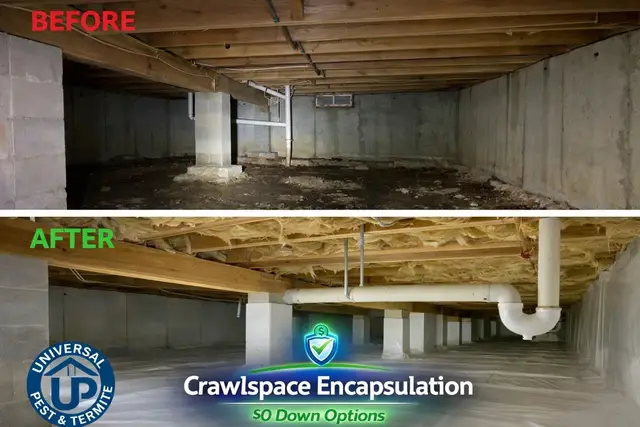
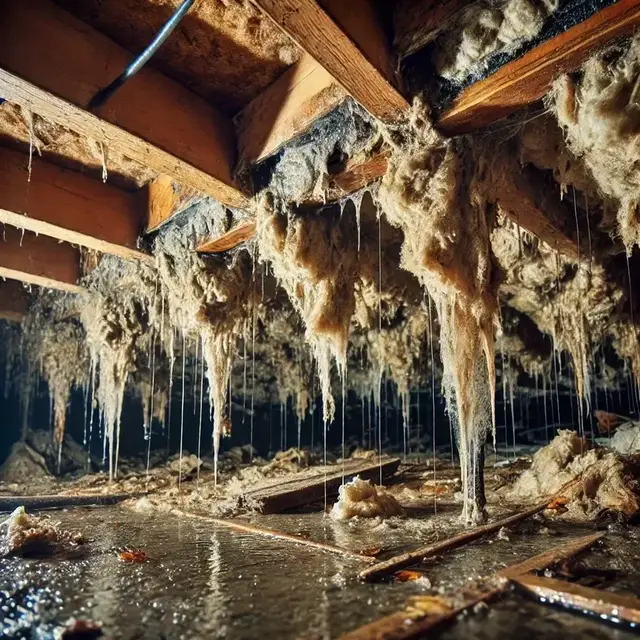
A sump pump and crawl space encapsulation solve different moisture problems. The pump moves liquid water out; the liner controls ground vapor and humid air. In Hampton Roads, where heavy rain, low-lying lots, and damp summer air can all affect the same crawl space, installing one without planning for the other can leave the underlying problem in place.
The right sequence starts with finding the water source, then controlling bulk water, then sealing the crawl space. This article focuses on that installation sequence rather than repeating the broader vented-versus-encapsulated comparison.
Why a sump pump and encapsulation are often planned together
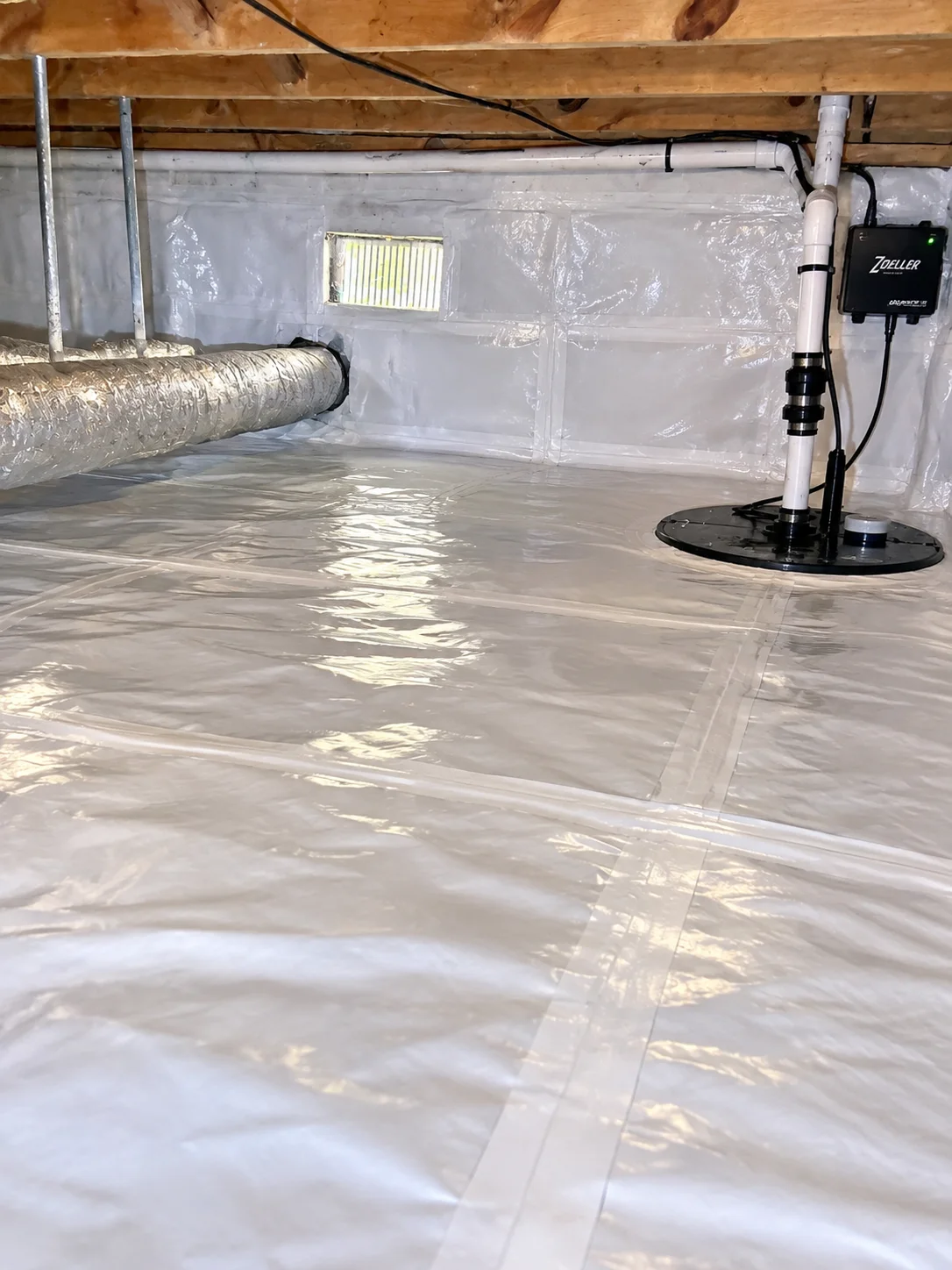
Encapsulation controls moisture coming through the ground and outside air; a sump pump handles water that collects at a low point. A reinforced liner cannot drain a crawl space that is taking on bulk water after rain, and a pump cannot stop water vapor from rising through exposed soil across the rest of the floor.
That distinction matters in older and low-elevation parts of Hampton Roads. A crawl space October have a torn ground cover, damp masonry, sweating ductwork, or a puddle near the foundation. The visible water is only one part of the diagnosis. A proper crawl-space inspection checks plumbing, grading, foundation walls, vents, insulation, ductwork, and the low point before anyone closes the space up.
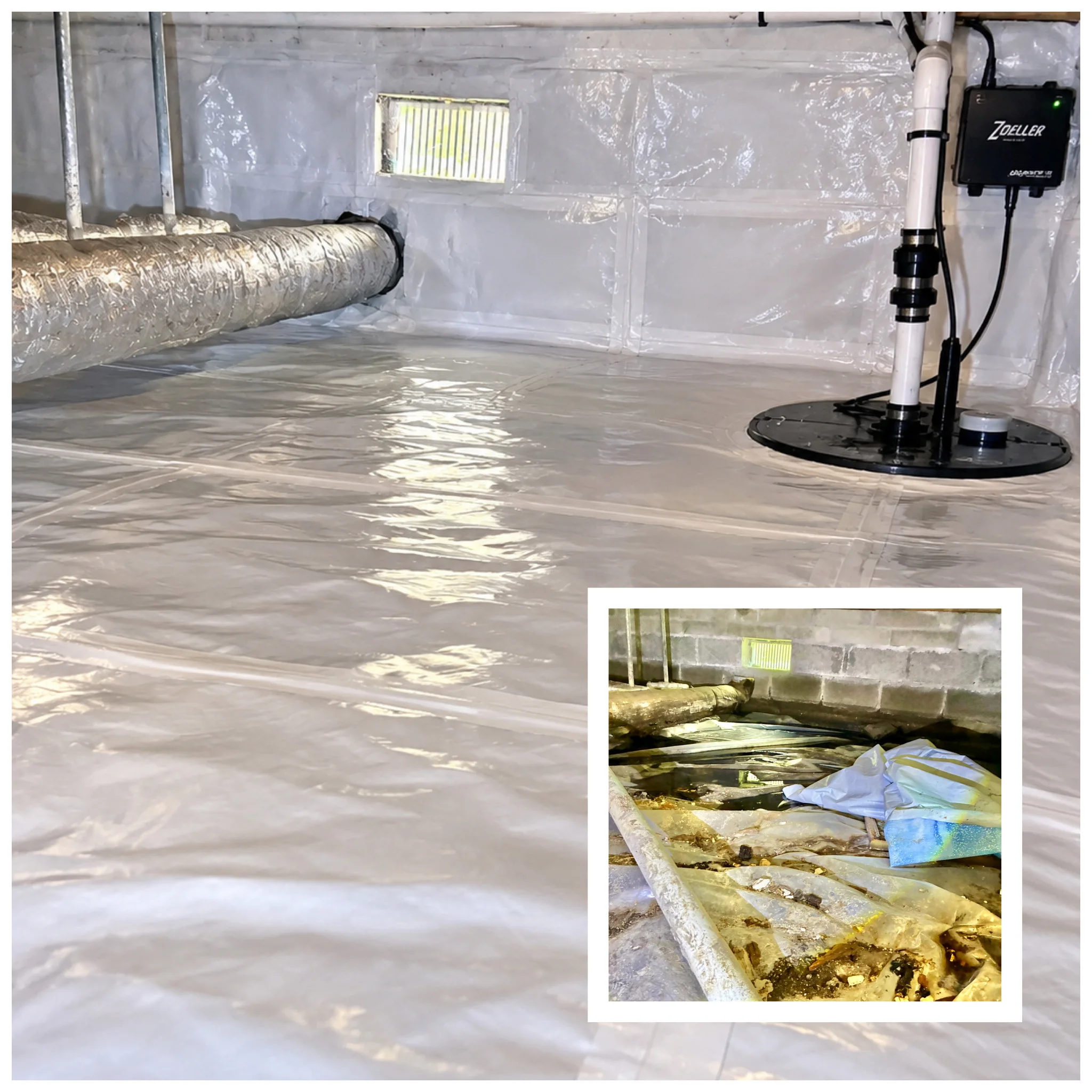
What the crawl space looked like before the work
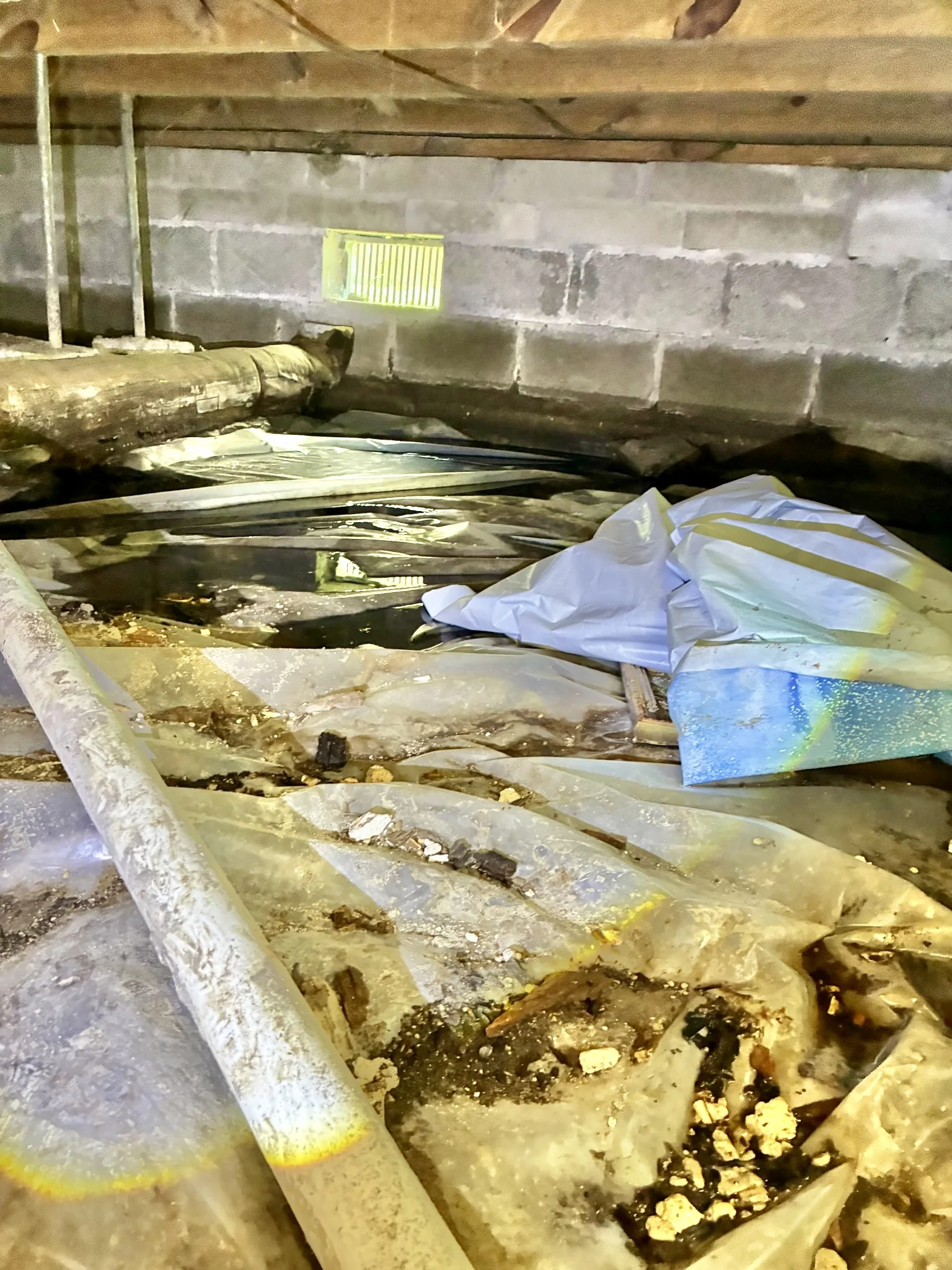
A loose or damaged ground cover can collect water and hide where it is coming from. Before a pump is installed, the water should be traced: a plumbing leak, foundation seepage, runoff, a failed exterior drainage route, and groundwater do not have the same fix. If the source is left active, a new liner can trap the symptoms underneath it.
The installation sequence
- Inspect and identify the moisture source. The crawl space is checked for liquid water, vapor, condensation, plumbing leaks, damaged barriers, and conditions that could support termites or wood decay.
- Choose the low point and pump route. The basin belongs where water naturally collects and where the discharge can leave the crawl space without simply returning to the foundation.
- Install and test the sump system. The basin, pump, check valve, discharge line, and float are connected, then the system is tested before the liner hides access to the floor.
- Prepare the crawl space. Loose debris, failed ground cover, and material that cannot remain under the liner are addressed. Plumbing or drainage issues are corrected before sealing.
- Install the encapsulation liner. The reinforced liner covers the ground, rises along the foundation walls, and has its seams and transitions sealed. The installation must preserve a visible termite-inspection gap at the top of the foundation wall.
- Confirm the finished moisture plan. The pump is retested, the discharge is checked, and the sealed crawl space receives the appropriate humidity-control plan. Encapsulation is not a set-it-and-forget-it finish if the liner or pump is later damaged by another trade.
What encapsulation does not replace
- Exterior drainage work: grading, downspout discharge, and foundation drainage still matter when rainwater is entering from outside.
- Plumbing repairs: a slow supply or drain leak should be corrected before the space is sealed.
- Termite inspection and treatment: the liner should not conceal evidence at the foundation wall, and active termites should be addressed before encapsulation.
- Insulation or duct repairs: wet, contaminated, or damaged material October need a separate assessment instead of being covered.
That is why a quote should separate the pump, drainage corrections, liner installation, humidity control, and any restoration work instead of calling everything “encapsulation.” The sump pump installation service and crawl space encapsulation service can be planned together, but they are not interchangeable.
Questions to ask before approving the work
- What is causing the water: groundwater, runoff, plumbing, condensation, or more than one source?
- Where will the pump discharge, and how will it be checked after heavy rain?
- What parts of the liner will be sealed to the wall, piers, posts, and access opening?
- Where will the termite-inspection gap remain visible?
- How will humidity be controlled after the vents are closed?
- What is included if the pump, liner, or discharge line needs service later?
Frequently asked questions
Do I need a sump pump if my crawl space is being encapsulated?
Not every crawl space needs a sump pump. It becomes important when water collects at a low point, groundwater enters after rain, or the site needs active drainage that a vapor liner cannot provide.
Can I install the sump pump after encapsulation?
It is usually better to plan and test the pump before the liner is finished. Installing it afterward October require cutting or disturbing the liner and can make it harder to verify that the basin and discharge route handle water correctly.
Will encapsulation stop standing water by itself?
No. Encapsulation limits ground vapor and humid air, but it does not remove bulk water. Standing water needs its source corrected through drainage, plumbing repair, a sump system, or another site-specific solution.
Does a sump pump make a crawl space dry?
A sump pump removes water that reaches its basin, but it does not control all humidity. A dry crawl space October also need a sealed ground liner, corrected leaks, appropriate ventilation or dehumidification, and ongoing inspection of the finished system.
How do I know whether my crawl space needs a pump or encapsulation?
The answer comes from measuring and tracing the moisture rather than choosing a product first. An inspection should identify whether the main problem is liquid water, ground vapor, condensation, drainage, plumbing, or a combination of conditions.
For a crawl space with recurring water, a musty odor, a damaged ground cover, or visible condensation, start with an assessment that separates the source from the finish. The team can then explain whether the next step is inspection, drainage, a sump pump, encapsulation, or a combination.