Mice almost never chew their way into a Chesapeake home. They walk in through a gap that was already there — a crawl space vent screen that rusted through, a garage door corner where the rubber has curled, or the unsealed hole where the water line passes through the foundation. Find those openings and close them properly, and the problem ends; set traps without closing them, and you are removing mice faster than they let themselves back in.
Most homeowners never see the actual gap a mouse used. They notice scratching in the walls, droppings in the pantry, or chewed packaging in the garage. By then the mice have been coming and going for weeks.
Key Takeaways
- Mice can squeeze through an opening about the size of a dime, so a gap you would not think twice about is a working door.
- Chesapeake's flat, ditch-drained ground keeps crawl spaces humid, and a damp crawl space gives mice the water they need to stay.
- The five openings worth checking first are crawl space vents, garage door corners, roofline soffits, utility penetrations, and the seam where an addition meets the original house.
- Steel wool packed tight and sealed over with exterior-grade caulk holds; expanding foam alone does not, because mice chew straight through it.
Why Chesapeake Homes Give Mice So Many Doors
Chesapeake is unusually flat, and much of it drains through an engineered network of ditches and canals rather than natural fall. That has two consequences for rodents. Groundwater sits close to the surface, so crawl spaces stay humid long after the weather dries out, and a mouse that gets under your floor can often find condensation to drink without going back outside. Vegetated ditch banks can also give rodents cover to move along between properties.
The soil compounds it. Soft, wet ground lets foundations settle unevenly, and as they do, hairline separations open along expansion joints and where brick veneer meets the slab. Those joints are among the most common structural entry points we find in older housing stock here, and they tend to open further over time rather than close up.
Where you live in the city changes which rodent shows up. Homes along the treeline in Deep Creek sit near the northern edge of the Great Dismal Swamp, so there is wild habitat close at hand, and rodents generally push toward heated structures as autumn cools. In Hickory and the farmland south of it, field mice are more likely to turn up indoors once the fields are cut and their cover disappears. Waterfront lots in Western Branch pair mature hardwoods with damp ground, a combination that tends to favor roof rats working the roofline over mice at the foundation. And in Great Bridge, where the water table runs high near the canal and lock, damp crawl spaces are usually the draw.
Once inside, mice settle near water and food storage. They chew packaging, nest behind baseboards, and contaminate surfaces well beyond the area you can see.
1. Crawl Space Vents And Foundation Gaps
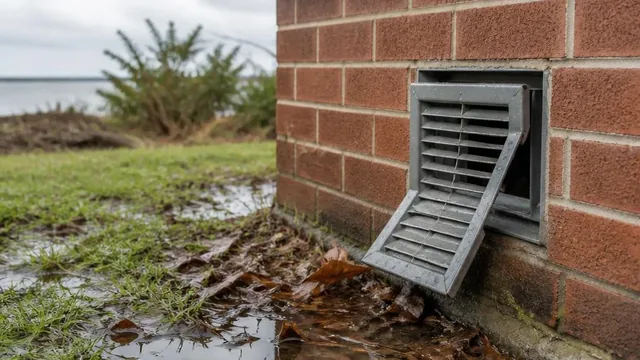
Most Chesapeake homes outside the newer slab subdivisions sit over a vented crawl space, and the vent screens are the weak point. Older louvered vents often use a light mesh that corrodes in humid coastal air, and once a corner of that mesh fails, the opening behind it is wide enough for anything smaller than a rat. Access doors are the other common failure: plywood swells, warps, and stops sitting flush against the frame.
From the crawl space, mice do not stay put. They climb the plumbing and wiring penetrations in the subfloor and enter the wall voids, which is why the scratching you hear is often on the second floor of a house whose entry point is below the first.
To seal these properly, replace failed vent screens with hardware cloth rather than window screen, and rehang or replace access doors so they close against a solid frame. For cracks along the foundation, pack steel wool tightly into the gap and cover it with exterior-grade caulk. For anything wider than an inch, use metal flashing or hardware cloth as the barrier and treat the sealant as weatherproofing, not as the block itself.
2. Garage Door Corners
The bottom seal on a garage door wears fastest at the two bottom corners, where the rubber is compressed and dragged every time the door cycles. Even when the seal looks intact across the middle, those corners often hold a triangular gap — and that is a doorway a mouse can use standing up.
Garages make the problem worse by being the room where people store what mice want. Lawn seed, birdseed, and pet food in paper sacks are an open invitation, and the garage shares framing with the interior walls, so anything that gets in has a route into the house.
Replace worn door sweeps and check the side seals at the same time. Move bulk seed and pet food into hard containers with lids, and pull stored boxes off the floor and away from the walls so you can actually see the perimeter you are trying to protect.
3. Rooflines, Soffits, And Overhanging Limbs
Mature loblolly pines and hardwoods are one of the pleasures of the older Chesapeake neighborhoods, but a limb that reaches the roof is a bridge. Rodents use it to bypass every ground-level defense you have installed.
Once on the roof, they enter through soffit seams, unscreened roof and ridge vents, and the fascia gap where the roof deck meets the gutter line. From the attic they move through insulation into the wall voids. Scratching overhead at night and droppings near the attic hatch are the usual first signs.
Trim limbs back at least six feet from the roofline where the tree allows it. Screen open vents with metal mesh and repair damaged soffit panels rather than painting over them. This closes the same route squirrels use, which is worth doing before autumn either way.
4. Plumbing And Utility Penetrations
Pipes, cables, and refrigerant lines are generally drilled oversize on purpose, to allow for movement, and the gap around them is often finished with a bead of sealant or left open altogether. The result is a ring of space around the penetration, usually hidden behind a hose bib, an outdoor unit, or a kitchen cabinet.
Check under sinks, behind the washer, and beneath the dishwasher, where the supply lines come through. These are also the openings that matter most, because they land inside the house next to water — exactly what a mouse is looking for.
Pack the annular gap with steel wool or copper mesh first, then seal the face with caulk or a pest-rated foam. The metal is what stops the mouse; the sealant only keeps weather and air out. Sealing here does more than prevent rodent infestations — it cuts the drafts that drive up humidity in the crawl space to begin with.
5. Where An Addition Meets The Original House
This is the opening almost everyone misses. Sunrooms, converted carports, bump-out additions, and enclosed porches are extremely common across Chesapeake's older subdivisions, and the addition rarely settles at the same rate as the original structure. Over the years the two pull apart slightly at the seam.
Look where the addition's roofline ties into the original wall, and where its foundation or slab meets the older one. You are looking for a vertical line of separation, often narrow at the top and wider at the bottom, sometimes hidden behind a downspout or a shrub. If the addition was built over its own shallow crawl space, check whether that space is sealed off from the main one or open to it.
Seal the seam with backer rod and a flexible exterior sealant so it can keep moving without reopening, and back it with hardware cloth at any point wide enough to admit a finger.
Reading The Signs Inside
Even when you cannot find the opening from outside, the interior tells you what is happening and roughly where.
| What You Notice | What It Means | What To Do |
|---|---|---|
| Droppings along the back edge of a cabinet or pantry shelf | An active runway, not a one-off visitor; mice travel the same path against walls | Trace the wall that shelf backs onto and inspect that exterior face outside |
| Scratching in the ceiling or upstairs walls at night | Attic or wall-void activity, usually entered from the roofline | Check soffits, roof vents, and any limb touching the roof |
| Greasy dark smudges along a baseboard or joist | A heavily used route — the mark is body oil left by repeated passage | Follow the smudge to where it disappears; the gap is at that point |
| Chewed packaging in the garage but nothing in the house | Entry at the garage door seal, not yet into living space | Replace the door sweep and seal the shared wall penetrations |
| Shredded insulation or nesting material in the crawl space | Established nesting below the floor with water available | Address crawl space moisture as well as the entry point |
Mice also attract other problems. Droppings and spilled food support cockroach activity, and rodents carry fleas, ticks, and mites indoors with them. Acting early keeps the response small.
Sealing That Actually Holds
The most common DIY mistake is using the wrong material. Expanding foam on its own is not a rodent barrier — mice chew through cured foam without much effort, and a foam-only patch often looks fine from outside while being wide open behind. Anywhere a rodent can reach, there has to be metal in the gap: steel wool, copper mesh, hardware cloth, or flashing, with sealant over it for weather.
Pair the structural work with the conditions side. Keep gutters clear and downspouts discharging away from the foundation, address standing water in the crawl space, and trim vegetation back off the siding. In a city this flat, drainage is most of the battle — a dry crawl space is far less attractive than a damp one, regardless of how many gaps remain.
When To Call A Professional
If you have sealed what you can reach and still hear activity, the remaining opening is somewhere you cannot easily inspect — behind the addition seam, under a low crawl space, or at a roofline you should not be on. That is the point to bring someone in. A proper inspection covers the full exterior envelope and the crawl space, identifies the openings in priority order, and separates the ones doing the work from the ones that merely look bad.
Universal Pest and Termite handles inspection, trapping, exclusion repair, and follow-up monitoring for homes across Chesapeake. The goal is a sealed structure, not a standing trap line.
Sealing Mouse Entry Points In Chesapeake Homes
Mouse entry points start small and stay hidden, which is exactly why they persist. Working through the five openings above — crawl space vents, garage door corners, rooflines, utility penetrations, and addition seams — closes the great majority of the routes into a typical Chesapeake home, and dealing with crawl space moisture removes the reason mice want in.
If you suspect rodent activity or want the exclusion work done properly the first time, reach out to us.
Chesapeake Rodent Entry & Exclusion FAQ
1. Where are rodents most likely to enter homes in Hickory and Great Bridge? In these more rural and heavily landscaped areas, field mice and Norway rats tend to enter low. The usual culprits are warped crawl space access doors, gaps where HVAC and plumbing lines pass through the foundation, and rotted garage door weather stripping. A mouse only needs a gap the size of a dime to move in.
2. I live in Western Branch; why am I seeing roof rats in my attic? Because Western Branch and Deep Creek combine damp, wooded ground with mature tree cover, roof rats are a recurring problem there. They climb overhanging branches to reach the roofline and enter at soffit vents, ridge vents, and the fascia gap where the roof meets the gutter line. Unlike mice, they work from the top down.
3. Can rodents get in through my ductwork? Yes. If there is a breach in ductwork running through a crawl space or attic, rodents will use the HVAC system as a climate-controlled corridor, leaving droppings and scent trails that affect indoor air quality. Sealing the ducts and removing the pests together is what makes the fix hold, so where we find duct involvement we recommend pairing the rodent work with a duct inspection from Universal Duct Cleaning.
4. Will attic insulation work help stop rodents in Greenbrier? It helps, though it is the second step rather than the first. In many Greenbrier homes rodents nest in old, matted attic insulation. The Universal Insulation Doctor can remove contaminated material and seal the bypass gaps — light fixtures, plumbing stacks — that rodents use to drop from the attic into living space. Seal the exterior entry points first, or you are restoring an attic that is still open.
5. What does rodent exclusion cost in Chesapeake? Pricing is tiered to the work involved:
- Initial rodent treatment: typically $87 to $287, covering trapping and immediate removal.
- Professional exclusion (sealing): $99 to $1,495, depending on how many entry points there are and how complex the roofline or foundation is to work on.
- Ongoing protection: our Total Home Protection plans start at $38/month for quarterly pest control — a technician visits roughly every 90 days, billed monthly — so if a new gap opens after a storm, you are already covered.