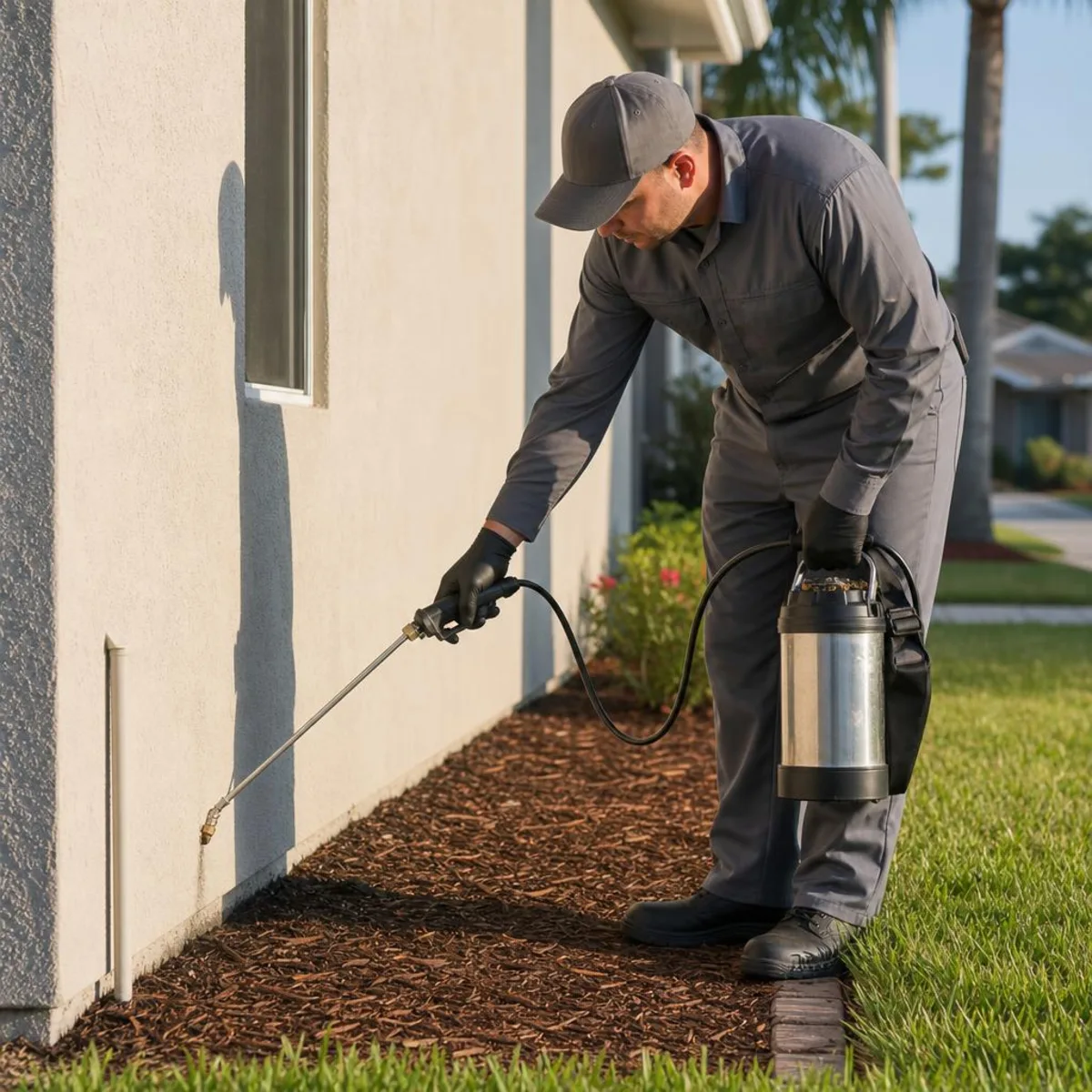
A quarterly non-repellent perimeter application lays an invisible treated band around a slab-on-grade home that ants and roaches cross without sensing it, carrying the material back to the colony. Combined with the slab edge and attic, it works as a system that keeps insects out rather than chasing them once they are in.
What does a non-repellent perimeter application actually do?
It treats the ground and foundation edge with a product insects cannot detect, so they walk across it, groom it off, and transfer it to nestmates before it acts. Because it is non-repellent, ants and roaches do not avoid the band the way they dodge a repellent spray — they carry it home, which reaches the colony you never see rather than the few workers at the door.
The distinction matters more than the product name. A repellent spray tells insects to go somewhere else, which often means finding a new gap into the house. A non-repellent works quietly: the insect crosses the treated foundation edge, picks up the material, and passes it through the colony by contact and grooming. That is the mechanism behind effective perimeter ant control.
In the newer slab-on-grade neighborhoods around Coliseum Central and City Center, the foundation meets the soil in a continuous, accessible line, which is ideal for a perimeter band. Treating that seam quarterly keeps a fresh barrier in place as the product weathers and as new colonies push toward the house through the seasons.
Why does summer heat drive ants and roaches indoors?
When the ground bakes and dries, insects follow moisture and stable temperature inward. Slab-on-grade homes offer a cool, humid refuge at the slab edge, around plumbing penetrations and under the first row of siding. Summer humidity keeps outdoor pressure high, and every crack at the slab perimeter becomes a candidate entry the moment the yard gets too hot and dry.
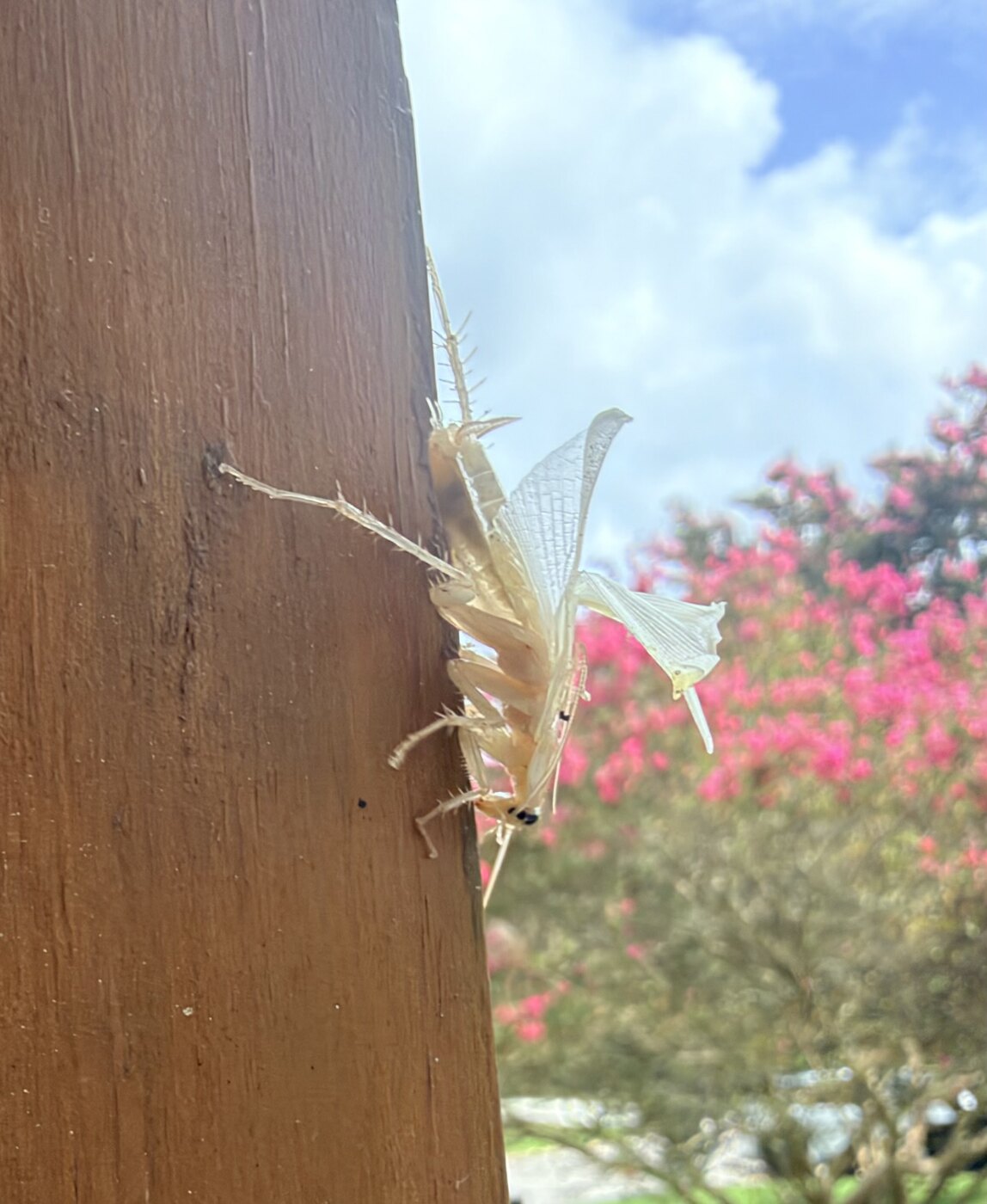
Ants respond to heat and drought by expanding their foraging and probing for water, which in summer means the sweating pipe under a kitchen or the condensate line at the air handler. American roaches, meanwhile, migrate in from mulch beds and utility boxes as outdoor conditions swing between soaking humidity and dry heat, looking for the steadier climate indoors.
The slab edge is where that pressure concentrates. Expansion joints, the gap where siding meets the foundation, and the penetrations for water, cable and condensate all sit right at ground level on these homes. A perimeter band placed across that zone intercepts insects at the exact line they are trying to cross when the heat pushes them toward the house.
How do the perimeter, the slab edge and the attic work together?
Each closes a different route, and a gap in any one undoes the others. The perimeter intercepts insects approaching at ground level; sealing the slab edge and penetrations denies them the cracks they use to get in; and closing attic and roofline gaps cuts off the overhead path that climbers and flying insects use. Treated as one system, the three leave no easy way through.
Ground level is only half the building. Roaches and ants also exploit the roofline — utility runs into the attic, gaps at the soffit, an unscreened gable vent — and a home that is tight at the foundation but open at the eave still lets insects in from above. Closing both ends with pest exclusion is what turns a treatment into a barrier.
On slab-on-grade housing there is no crawl space to seal, so the slab edge itself is the critical seam: the expansion joint, the sill gap, and every penetration through the slab perimeter. Sealing those and maintaining the treated band, then closing the attic, gives you three coordinated layers. The Coliseum Central page walks through how that plays out on the retail-corridor housing there, and the City Center page does the same for the newer builds across the water.
| Entry point under pressure | Why the slab-on-grade layout invites it | Which layer of the shield handles it |
|---|---|---|
| Ants at the sink in a summer dry spell | Drought sends foragers indoors hunting moisture at pipes | Non-repellent perimeter band the workers carry back to the colony |
| Roaches emerging along the slab edge | The expansion joint and sill gap sit right at ground level | Seal the joint and penetrations; keep the treated band fresh |
| Insects around the condensate line | The dripping line offers steady water in summer heat | Correct the drip and treat the penetration point |
| Activity at a soffit or gable vent | The roofline is an overhead route a ground band never reaches | Close and screen attic openings as the upper layer |
| New pressure each quarter | Colonies weather the band and re-establish over a season | Quarterly reapplication keeps the barrier continuous year-round |
| Insects at cable and utility boxes | Penetrations bundle warmth, moisture and a gap in one spot | Seal the penetration and include it in the perimeter treatment |
The attic layer of the shield leads straight into the systems living up there. American roaches that ride a soffit gap into a slab-on-grade attic tend to congregate on the flex duct, tracking grime and egg cases into the runs that feed the bedrooms below; Universal Duct Cleaning scours those runs so the air handler is not distributing roach debris. The blown-in insulation on the attic floor is where ants and roaches burrow and shed, and once it is soiled or packed down it stops sealing the ceiling — Universal Insulation Doctor takes out the fouled layer and re-blows it clean.
Frequently asked questions
Why quarterly — won't one strong treatment last?
The perimeter band weathers with rain, irrigation and sun, and its treated life is measured in months, not years. Insect pressure also shifts with the seasons, peaking as summer heat and humidity drive ants and roaches toward the house. A quarterly rhythm refreshes the band before it thins and keeps a continuous barrier in place through each surge rather than leaving gaps between visits.
Is a non-repellent safe to use around a house with kids and pets?
Non-repellent perimeter products are applied to the exterior foundation band and penetrations, targeting the routes insects use rather than living areas, and they dry in place. The whole idea is a low-profile treated zone at the slab edge, not a fog through the home. As with any application, keeping people and pets off the treated band until it has dried is the sensible precaution.
Do I still need to seal cracks if I have the perimeter treated?
Yes, and the two reinforce each other. The perimeter band intercepts insects crossing the ground, but open slab joints, sill gaps and penetrations are standing invitations that let some through regardless. Sealing those closes the physical routes so the treatment has fewer breaches to cover. Treatment plus exclusion is far more durable than either one working alone.
Why bother with the attic if the ants and roaches are at ground level?
Because not all of them are. Roof-climbing insects and flying pests exploit soffit gaps, unscreened vents and utility runs into the attic, entering from above where a ground-level band has no effect. A home sealed tight at the foundation but open at the roofline still lets pests in overhead. Closing both ends is what makes the perimeter a complete shield rather than a partial one.
If you would rather keep ants and roaches out of your Coliseum Central or City Center home than fight them back inside every summer, the coordinated perimeter band, sealed slab edge and closed attic are the way to do it. A free quote gets a technician mapping the expansion joints, the utility penetrations and the soffit gaps on your specific house. A pest control inspection sets the baseline, and our home health plans keep the quarterly application, the slab seal and the attic screening working as one shield all year.