Found this page through Reddit? You are in the right place. In coastal Hampton Roads, humidity, sandy soil, crawl spaces and termite pressure can change the answer from one house to the next—from Virginia Beach and Norfolk to Chesapeake. This is a plain-English guide to what pest control costs, the signs that deserve attention, what a homeowner can handle first, and when an inspection is the smarter next step. No contact information is needed to read it.
Start with the cost: what pest control can run in Hampton Roads
The honest answer depends on whether you need a recurring barrier, one treatment for an active problem, or work that changes the building itself. Here is the quick version of Universal Pest’s published starting points:
- Recurring plans: $38 per month for Essential quarterly pest service or $63 per month for Pro with termite protection. Duct and dryer-vent cleaning remain available as separately quoted services.
- Active problems: a single pest-control visit is $87 to $287. Rodent exclusion is $99 to $1,495, bed bug treatment is $175 to $325 per room, and crawl-space encapsulation is $3,000 to $10,000 when moisture conditions justify it.
- Termite options: a qualifying localized liquid treatment is $395; a qualifying full trenched liquid barrier is $595 to $1,195. Sentricon setup is $8 to $12 per linear foot with monitoring from $39 per month.
Not every home qualifies for every flat termite option, and nothing is sold or started before an inspection confirms which treatment the structure can take.

The signs homeowners tend to explain away
A single bug outside is not automatically an infestation. Repeated evidence in the place where a pest would live, feed or enter is more useful than a one-time sighting. These are the clues worth photographing and tracking:
- Ants: a trail that returns to the same crack, window, pipe opening or damp area after the visible ants are wiped away.
- Roaches: pepper-like droppings, shed skins, egg cases, a stale oily odor, or activity that increases after dark around kitchens, bathrooms and shared wall voids.
- Termites: pencil-width mud tubes, hollow-sounding wood, discarded wings near a window or sill, or small piles of soil where wood meets the foundation.
- Rodents: repeated scratching after dark, rice-like mouse droppings, larger rat droppings, gnaw marks, shredded nesting material, or a greasy runway along an attic, crawl space or wall route.
- Spiders: several webs or egg sacs concentrated in a garage, shed, crawl-space corner or sheltered eave — especially when the insect supply and clutter remain.
- Bed bugs: live insects, pale shed skins, tiny eggs, dark spotting at mattress seams, or a pattern that continues after ordinary laundry and cleaning.
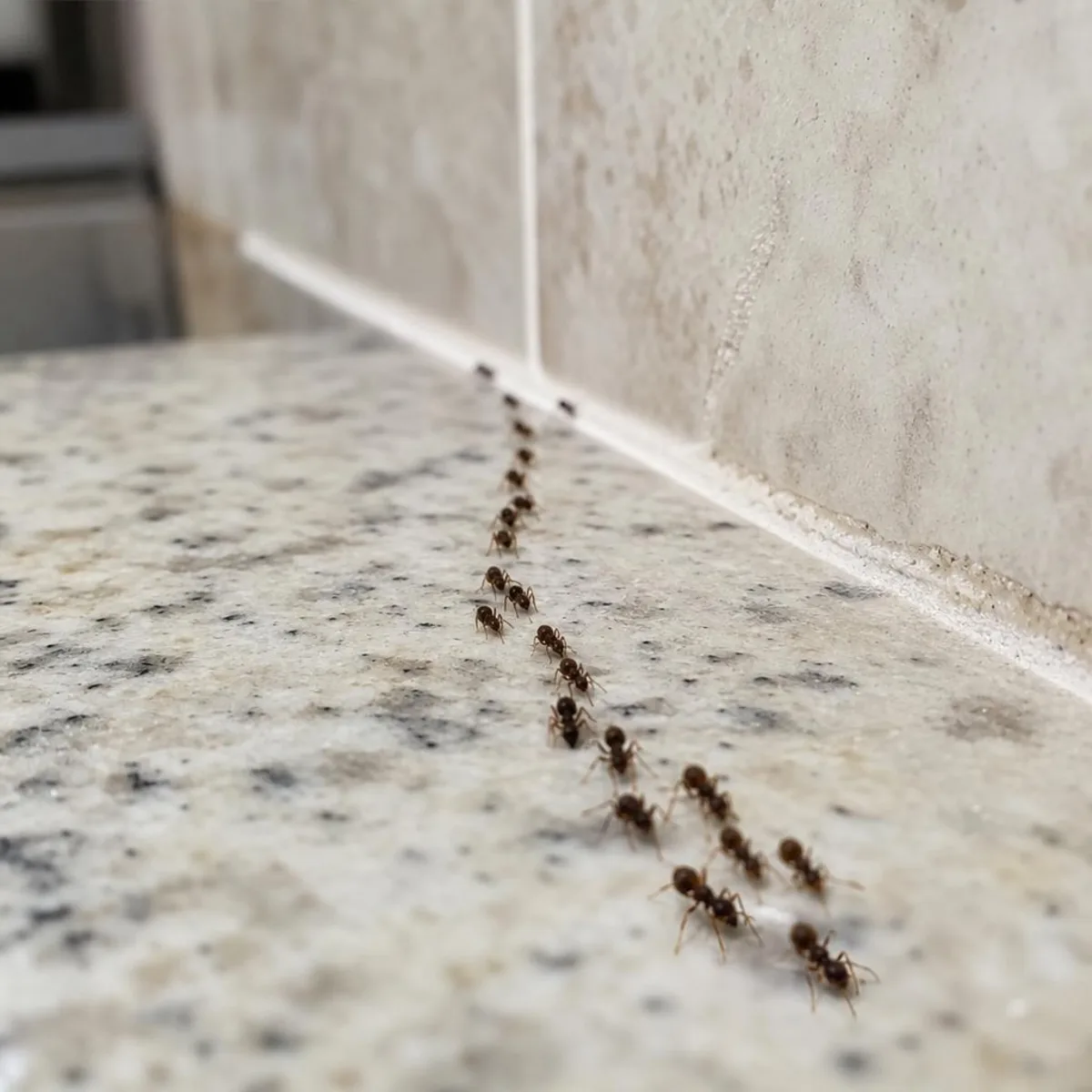
Some signs overlap. A shed skin is not enough to identify a roach species, and a bite is not proof of bed bugs. Identification matters because the right response for a termite mud tube is not the right response for a spider web or a mouse runway.
When DIY prevention is enough — and when it is not
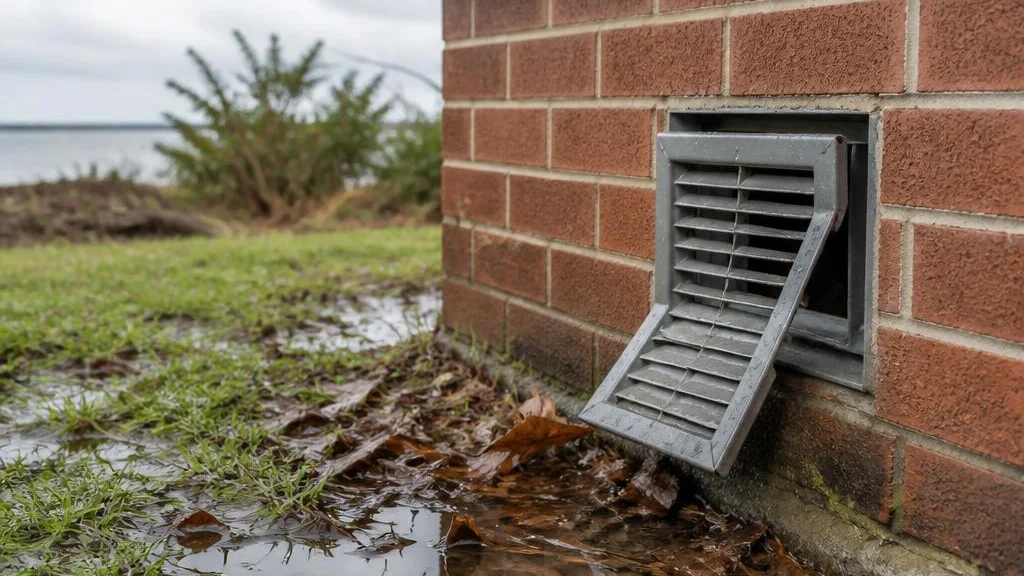
Home maintenance is often the right first move when the evidence is light and the entry point is obvious. Replace a torn vent screen, move firewood off the foundation, trim branches away from the roof, correct a dripping hose bib, store food in sealed containers and close a visible gap around a pipe. Keep a dated photo so you can tell whether the clue returns.
DIY stops being a good experiment when there is repeated activity, contaminated insulation, chewed wiring, a termite tube, a nest in a wall or attic, a bed bug identification question, or a gap you cannot safely reach. Foggers and improvised pesticide mixing can spread some pests or create a safety problem without addressing the route that brought them in. A professional inspection should explain the evidence and the sequence of work before treatment begins.
Five prevention checks that fit Hampton Roads homes
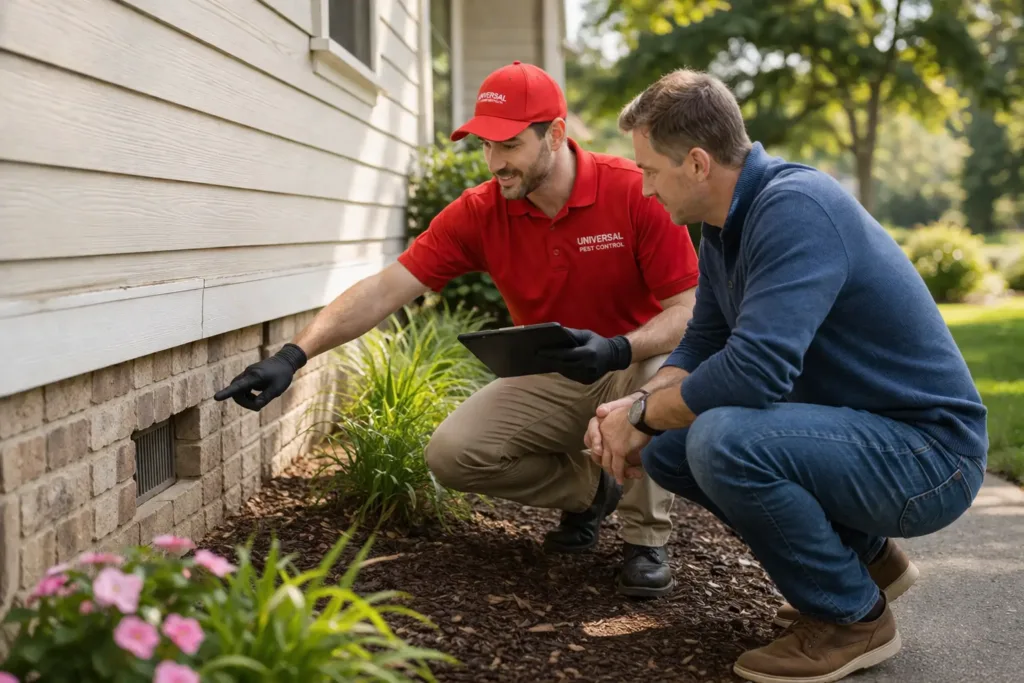
- Walk the foundation after rain. Look for water held against the wall, mulch touching the siding, downspouts discharging at the slab and gaps around hose bibs or utility lines.
- Check the roofline from the ground. Branches, open soffit returns, lifted screens and separated fascia are common routes into attics.
- Make the crawl space boring. Confirm the access door closes, vents are screened, pipes are sealed and insulation is not hanging down or holding a sharp new odor.
- Remove the easy food and shelter. Wipe trails, clean crumbs under appliances, secure pet food, empty standing water and move cardboard, leaf piles and firewood away from the structure.
- Track patterns instead of guessing. Note the pest, time, weather, room and exact place you saw evidence. A repeated location is often more diagnostic than the number of insects you saw.
Hampton Roads does not have one universal pest pattern. A raised Ocean View cottage, an older Ghent apartment and a wooded Great Bridge home can have different entry points even when the homeowner sees the same ant, roach or mouse. Prevention works best when it follows the building.
What a professional inspection should answer
A useful inspection should connect the evidence to a plan. It should identify the pest when possible, distinguish current activity from old signs, locate the entry or harborage, check conditions that keep the problem returning, and separate treatment from repairs or restoration. For termites, it should explain the measured scope and why a localized treatment, full barrier or baiting system does or does not fit. For rodents, it should cover trapping, exclusion and any attic, crawl-space, insulation or ductwork concerns in the right order.
The inspection should also tell you what is not known yet. An online form can show a published range, but it cannot count every roofline gap, measure a foundation or see behind a shared wall. That is why the free homeowner inspection is the step that turns a range into a property-specific plan. A WDIR letter for a real-estate closing is different and costs $75 to $125 because it is formal transaction paperwork.
If you found this through Reddit
Use this page as a checklist, not a reason to buy a plan you do not need. You can start with the cost estimator, compare the published figures with another quote, or read the full Hampton Roads pricing guide for the details behind each range. You can also find the official Universal Pest Reddit profile; that is our account, not a statement that Reddit endorses the company. If the evidence points to an active problem or a hidden entry route, a free inspection is the most reliable way to decide what belongs on the next step.
How much does pest control cost in Hampton Roads?
The published recurring plans start at $38 per month for Essential quarterly pest service and $63 per month for Pro with termite protection. Duct and dryer-vent cleaning remain available as separately quoted services. A one-time pest-control visit is $87 to $287, rodent exclusion is $99 to $1,495, and bed bug treatment is $175 to $325 per room. Qualifying termite options are $395 for a localized liquid treatment or $595 to $1,195 for a full trenched barrier. Not every home qualifies for the flat termite figures, so the inspection comes first.
What are the most common signs of a pest infestation?
Repeated evidence in a pest’s likely hiding or entry place is the strongest clue: trails that return after cleaning for ants, droppings and odor around food or plumbing for roaches, mud tubes or discarded wings for termites, nighttime noise and gnaw marks for rodents, concentrated webs and egg sacs for spiders, and live insects, shed skins, eggs or dark spotting near sleeping areas for bed bugs. A single outdoor insect is not enough to identify an indoor infestation.
When should I call a professional for pest control?
Bring in a professional when activity keeps returning, the pest is not confidently identified, evidence involves termites, rodents have reached wiring or insulation, a nest is inside a wall or attic, bed bugs are suspected, or the entry point is unsafe to reach. A professional inspection is also useful when a treatment would only hide the symptom because the route, moisture problem or shared wall condition has not been addressed.
What can I do to prevent pests before they become a bigger problem?
Seal gaps around pipes, doors, vents and utility lines; keep branches and mulch off the structure; direct downspouts away from the foundation; repair torn screens and leaking hose bibs; store food and pet food in sealed containers; remove standing water and cardboard; and keep firewood and leaf piles away from the house. Photograph and date any recurring clue so a repeated route is easier to identify.
What happens during a pest control inspection?
The inspection should identify the pest when possible, separate current activity from old evidence, trace entry points and harborage, check moisture and building conditions that support the problem, and explain which work is treatment versus repair or restoration. The findings should determine whether the next step is a single treatment, recurring prevention, exclusion, termite protection or a referral for insulation, duct or moisture work.