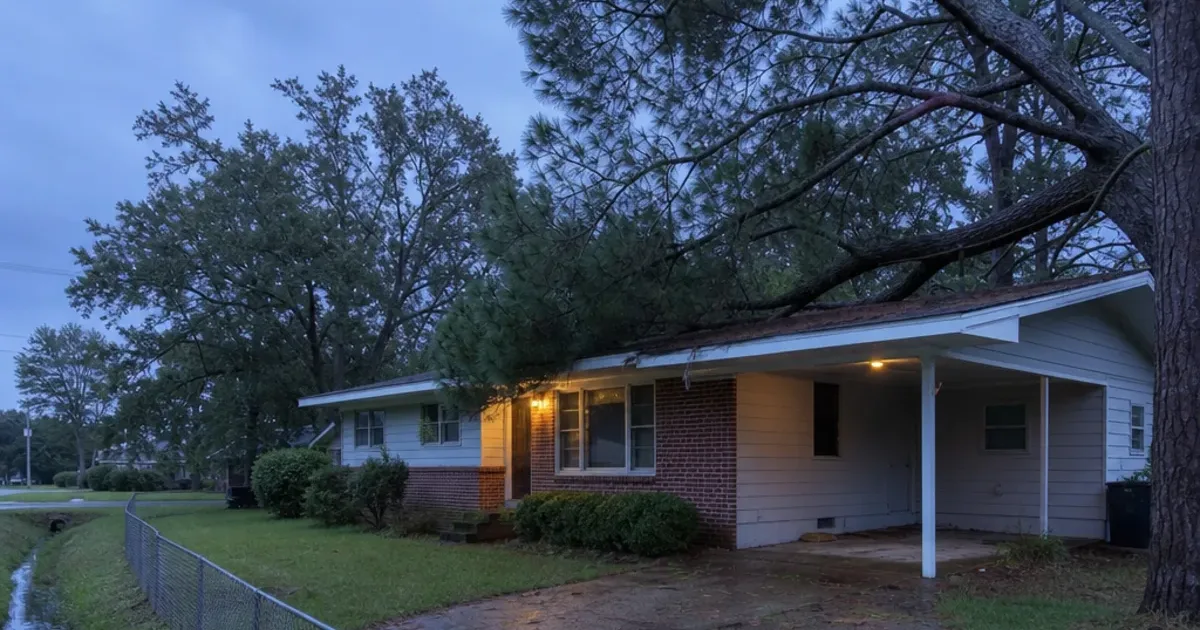
A mouse in the pantry and scratching above the ceiling can feel like two separate problems, but in a Virginia Beach home they often share one cause: an opening that lets rodents in and a sheltered place that lets them stay. Removing the animal without closing that route is temporary. Sealing the route while an animal is still inside creates a different problem.
Effective rodent control is a sequence: identify the animal and its runway, remove what is inside, repair the opening, and then check the area for contamination or damage. That order matters in older Bayside and Kempsville homes, beach-area houses exposed to wind and salt air, and crawl-space homes around Great Neck and Princess Anne.
The Virginia Beach rodent fix is a sequence
- Inspect from a safe position. Look for fresh droppings, rub marks, gnawing, nesting material, and daylight around soffits, vents, doors, and utility penetrations.
- Map the active route. A gap is more useful evidence when it lines up with a runway, odor, sound, or fresh sign inside.
- Remove the animals. The method depends on whether the activity is in a living space, attic, garage, or crawl space.
- Seal the route. Screens, hardware cloth, metal flashing, door repairs, and other durable materials are chosen for the opening rather than covered with a quick plug.
- Review the aftermath. Chewed wires, damaged ductwork, soiled insulation, and nesting debris need their own safe repair or cleanup plan.

What removal and seal-out work covers
A good plan connects the indoor evidence to the exterior opening. A technician October compare the size of droppings with the width of a gap, inspect the crawl-space or attic perimeter, and check whether a garage door corner, foundation vent, roofline transition, or pipe penetration has a fresh runway nearby.
Three entry points we repair and seal
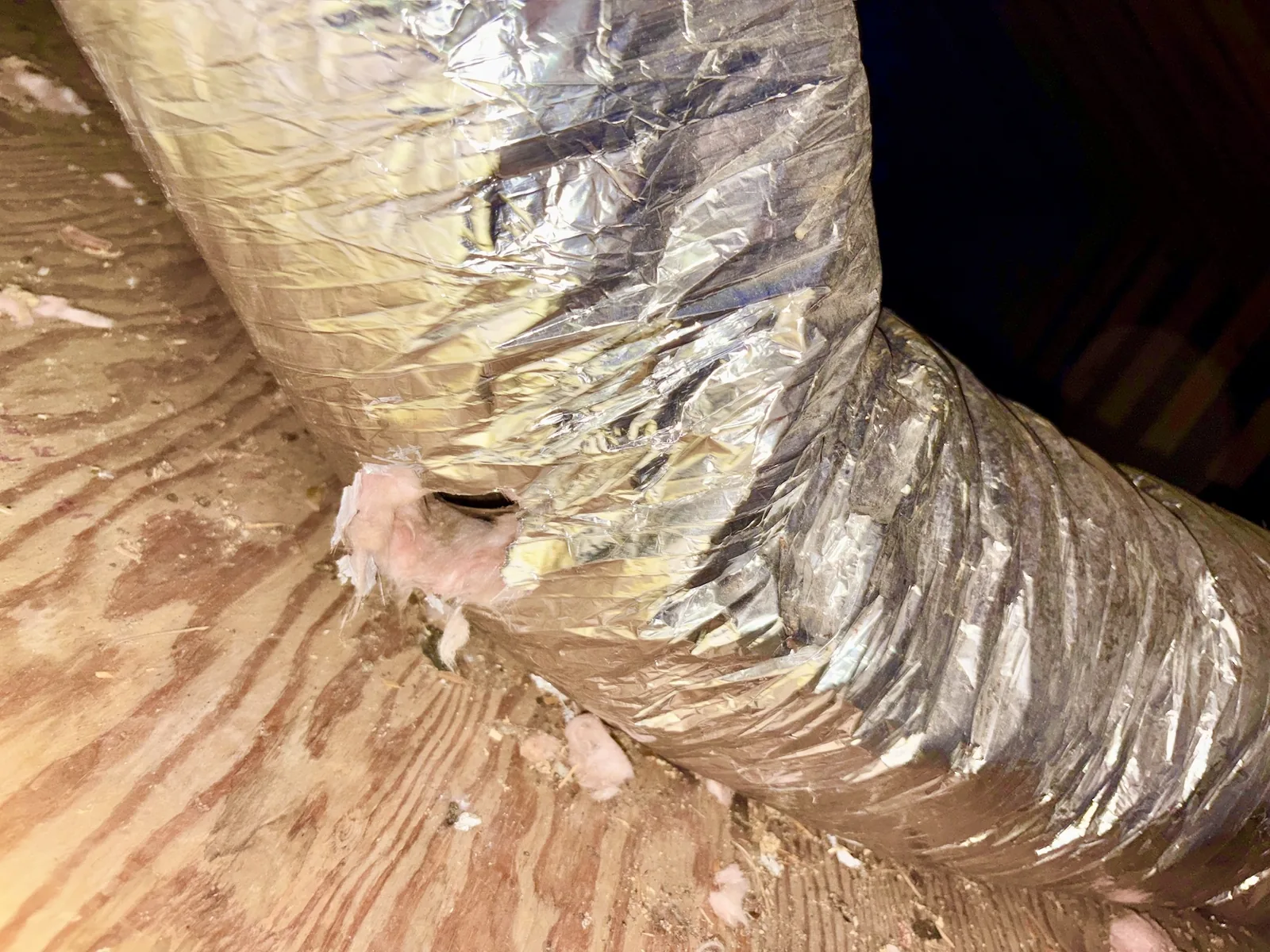
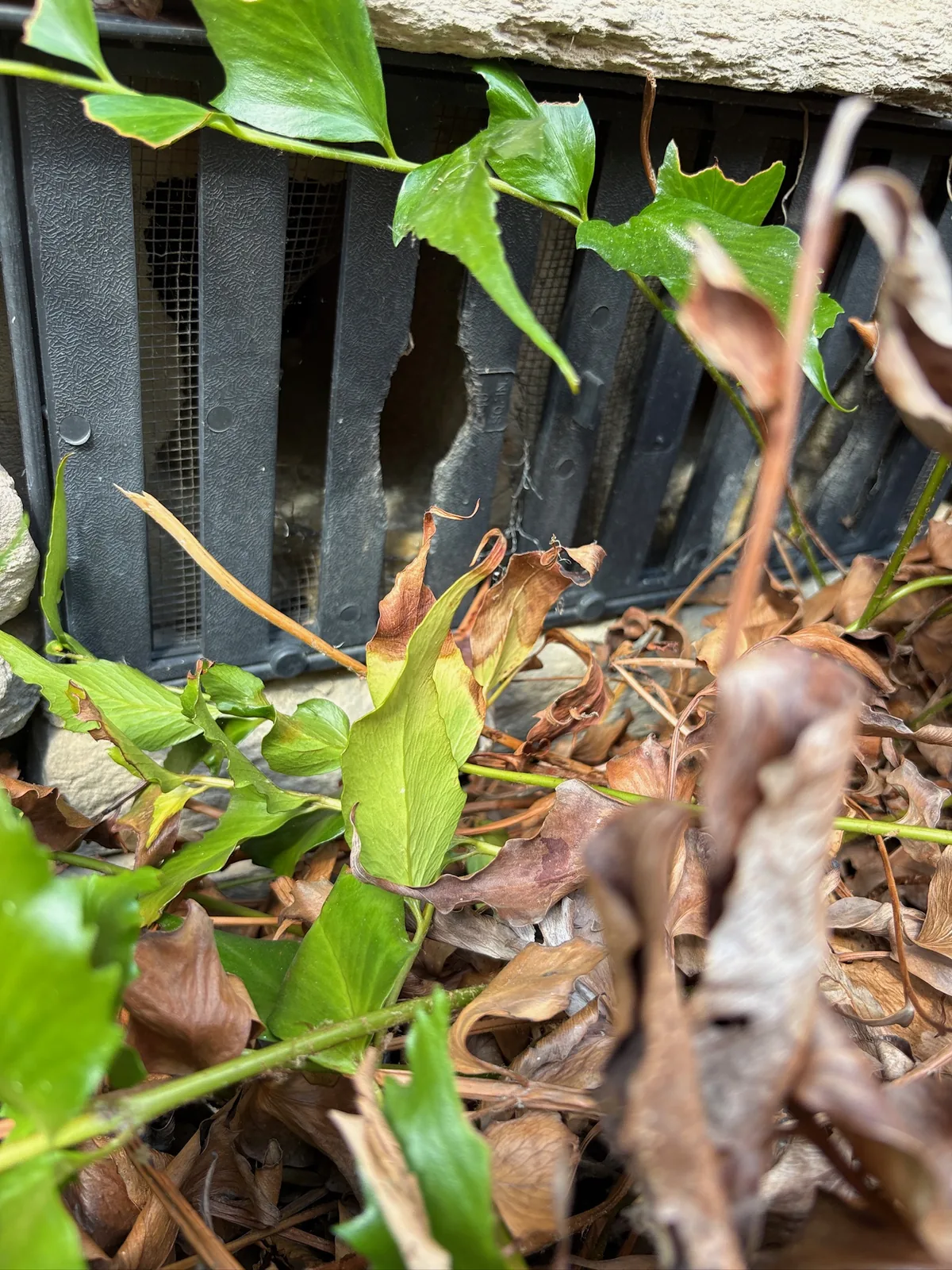
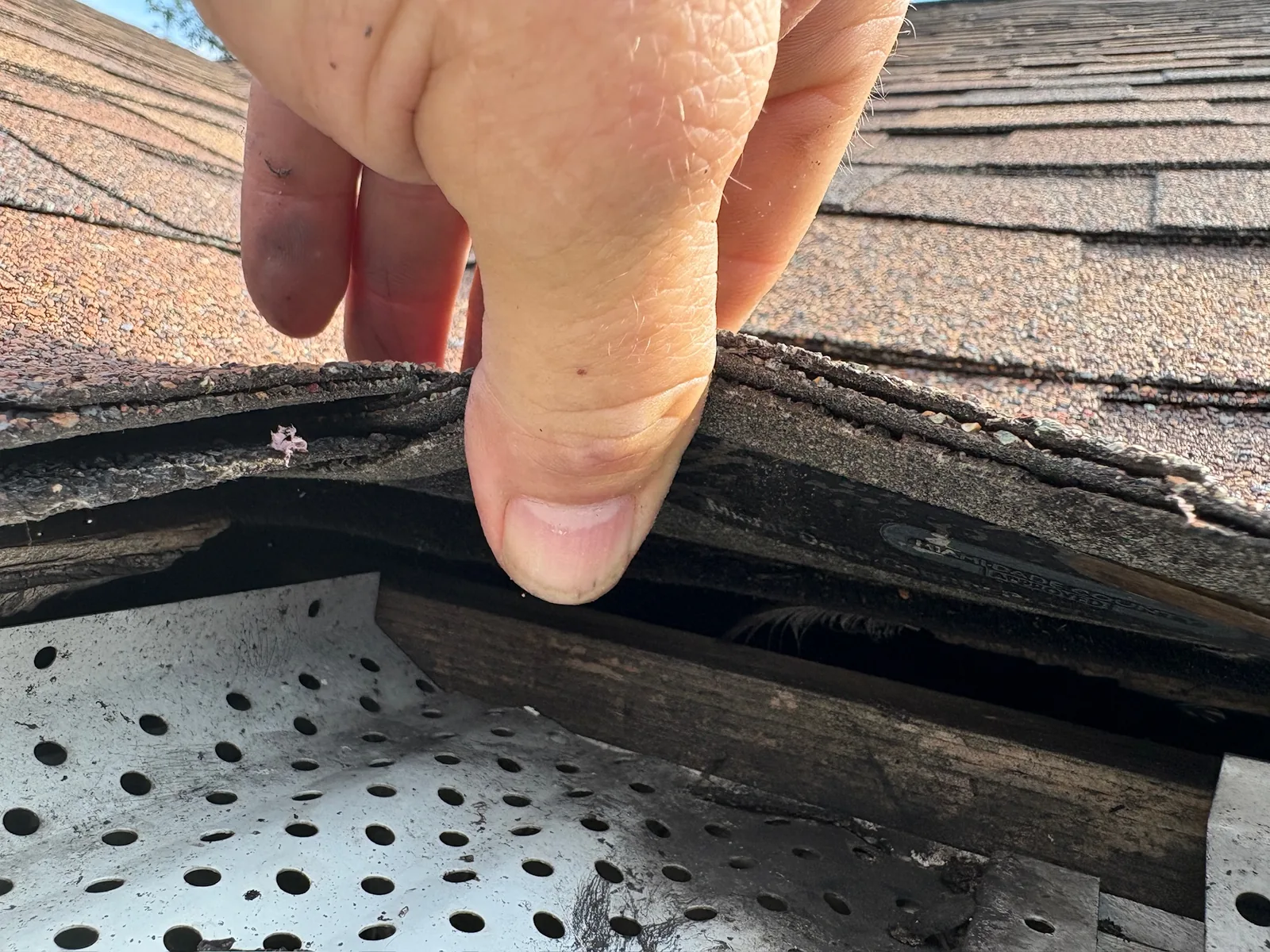
Rodent entry points are not always a hole in a wall. Rats can chew through flexible ductwork, damage a foundation vent to reach a crawl space, or use a narrow builder’s gap beneath the edge of roof shingles to reach an attic. These owner-supplied field photos show the kinds of openings our inspection and exclusion work is designed to address.
| Stage | Question it answers |
|---|---|
| Inspection | What animal is present, and where is it moving? |
| Removal | How can the current animal be cleared without pushing it deeper into the house? |
| Seal-out | What opening needs a repair that teeth, weather, and settling will not quickly defeat? |
| Follow-up | Did new evidence appear, and does any damaged material need another trade? |
Frequently Asked Questions
What does rodent seal-out mean?
Rodent seal-out means closing the specific openings a rodent uses to enter a home with materials suited to that opening, after the current animals have been removed or accounted for.
It is more than filling a visible crack. The inspection connects an exterior gap with indoor evidence, then checks nearby vents, soffits, door corners, siding transitions, and utility lines for a second route.
Should rodents be removed before gaps are sealed?
Yes, the removal plan should come before a permanent seal whenever an animal may still be inside an attic, wall void, garage, or crawl space.
Sealing the only opening too early can trap an animal indoors or cause it to search for a new route into the living area. A temporary control step and a final repair can be sequenced so the work closes the home without creating that risk.
How do you find where Virginia Beach rodents are getting inside?
Technicians compare fresh signs with likely entry points around the roofline, foundation, garage, doors, vents, and utility penetrations instead of relying on the location of one sighting.
Salt air, wind, tree contact, settling, and worn door seals can all open routes over time. A ground-level inspection can document many clues, while attic and crawl-space access should be handled carefully when droppings or damaged wiring are present.
How long does rodent removal and seal-out take?
The time depends on the animal, the location, the number of active openings, and whether the building needs a repair before it can be sealed.
A straightforward accessible gap October be handled quickly, while a roofline route, low crawl space, or damaged vent screen can require more than one stage. An honest plan separates immediate removal from repairs and cleanup that cannot safely happen at the same time.
What if I still hear scratching after the seal-out?
New scratching after seal-out deserves a follow-up inspection rather than another layer of sealant, because it may indicate a missed route, a different animal, or activity that was already inside.
Note the time and location of the sound, and look from a safe position for new droppings or gnawing. Daytime movement can point toward squirrels or another visitor, while repeated night movement is more consistent with rodents.
Virginia Beach entry points worth checking first
Start at transitions where two materials meet. Foundation vent screens can corrode near the coast. Garage door corners can lift away from the slab. A soffit return can separate at the end of a roofline. Around older homes, a pipe or cable penetration October have a soft seal that has shrunk, cracked, or never fully closed.
Roof branches deserve attention too, but trimming them is only one part of the fix. A branch can provide access to the roof while a damaged vent or fascia provides the actual doorway. In a crawl space, look for torn screening, a loose access door, and gaps around plumbing or HVAC lines.
What to do before the inspection
- Move pet food, birdseed, and pantry goods into sealed containers.
- Keep children and pets away from droppings, nesting material, and traps.
- Photograph signs from a safe location without sweeping or vacuuming them dry.
- Do not touch chewed wiring or climb onto a wet roof.
- Write down when the sounds occur and where they seem loudest.
Our rat control, mouse control, and pest exclusion services address the animal and the opening as one plan. If you are seeing fresh signs in a Virginia Beach home, submit a rodent inspection request so the next step is based on evidence rather than a guess.