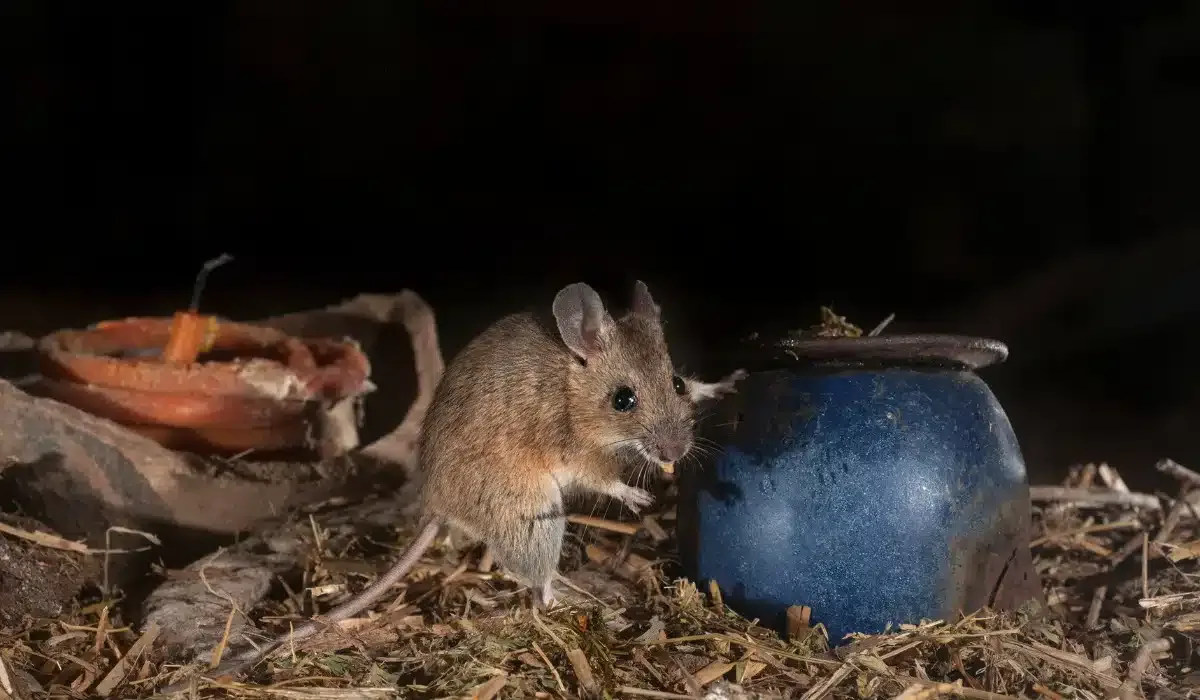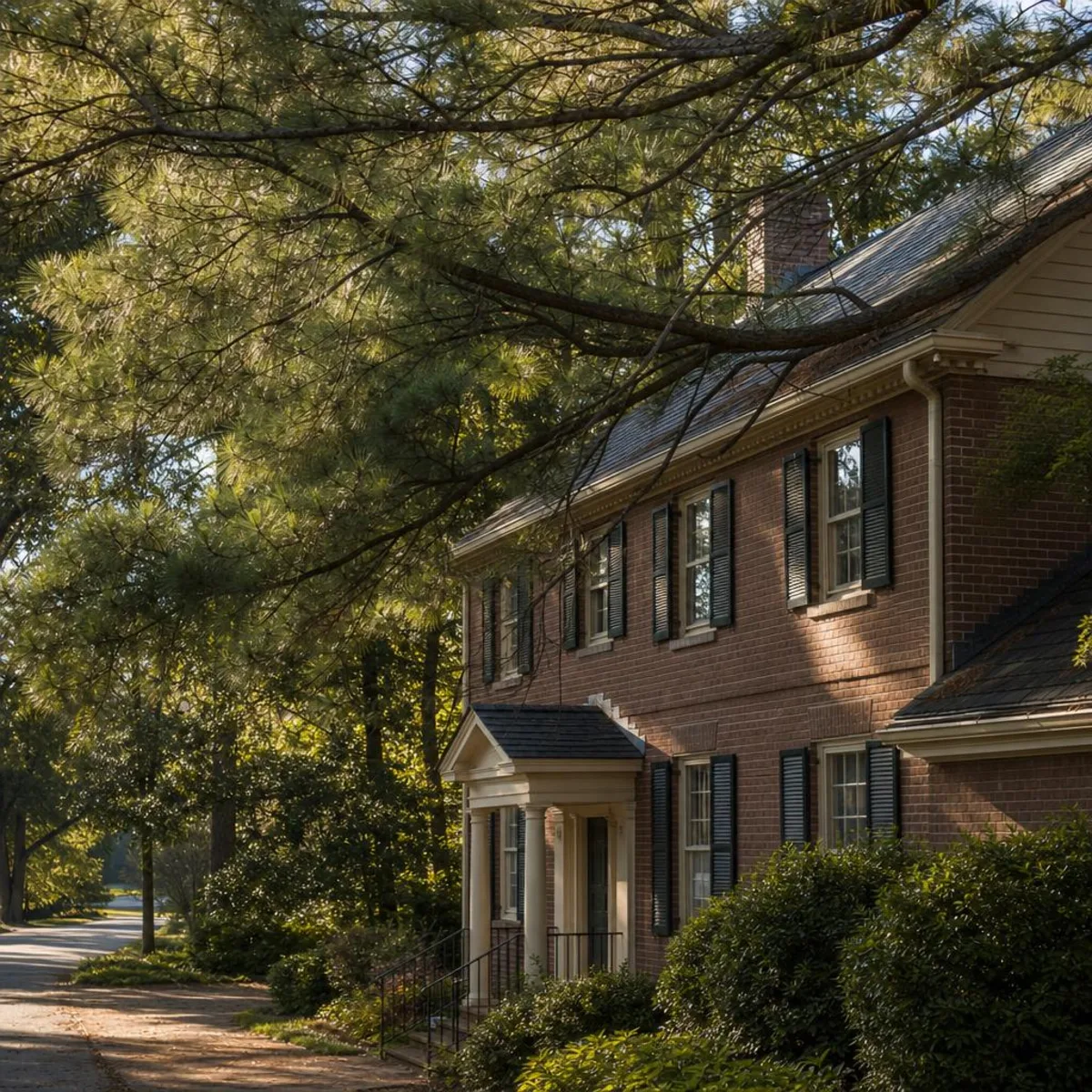
Roof rats reach Great Neck and Thoroughgood attics through the trees, not the foundation. The mature loblolly pine and live oak canopy over these older streets forms a continuous overhead highway that lets a climbing rodent step onto the roof without ever touching a wall.
Why does the tree canopy matter more than the house itself?
A roof rat is built to climb, and a limb that touches or overhangs the shingles removes the hardest part of its journey. In heavily wooded lots the animal travels branch to branch, drops onto the roof, and searches the eave line for an opening — so the canopy, not the siding, is the real access road into the attic.
Get a free quote in Thoroughgood
On a bare, open lot a rat has to scale a downspout or a length of cable to reach the roofline, and that exposure keeps numbers low. Great Neck and Thoroughgood do not offer that limit. Decades of growth have pushed pine and oak crowns directly over rooflines, and the squirrels and rats sharing that canopy treat every touching branch as a bridge. The result is pressure on the roof edge that a newer subdivision simply does not generate.
The same house dropped into a treeless street would see far fewer attic climbers. The building has not changed — its surroundings have, which shifts the fix from the walls to the yard.
How do wooded neighborhoods differ from the newer subdivisions?
Newer Virginia Beach subdivisions are slab-on-grade with young, set-back landscaping and rooflines that stand clear of any branch. The older wooded sections were built under an established canopy that has since grown into the eaves, so the roofline is shaded, damp, and constantly in reach of something that climbs.
Get a free quote in Thoroughgood
Shade and moisture compound the problem. A roofline that never fully dries holds soft, weathered wood at the fascia and soffit, and soft wood is easy for a rodent to widen into an opening. Leaf and needle litter collecting in the gutters and valleys gives cover right at the point where a rat is already testing for a way in.
These are the streets we cover on our Great Neck and Thoroughgood pages, and the canopy is exactly what makes them beautiful and vulnerable at once. Nobody wants to lose the trees, and they should not have to — the goal is to break the bridges, not clear the lot.
What tree and landscape work actually changes the outcome?
Cutting back every branch to a clear gap from the roof, ideally several feet, is the single change that does the most. Rats will jump a short span but not an open one. Thinning heavy overhang, removing dead limbs that rest on shingles, and keeping climbing vines off the walls all take away the routes before exclusion work even begins.
Get a free quote in Thoroughgood
Trimming is the half of the job most pest companies never mention, because it is landscape work rather than sealing. But on these lots it is decisive. A perfectly sealed roofline still invites daily testing if a limb lies across it, and constant testing eventually finds the one weak spot.
Ground cover matters too. Ivy climbing a masonry wall gives the same vertical route a downspout does, and woodpiles stacked against the house let a rat reach the lower roof in stages. Pulling those back is cheap and permanent.
Once the routes are cut, what still has to happen at the roof?
Trimming lowers the traffic; it does not close the door. Any rat already established, and any that still bridges a gap, needs the roofline sealed at the openings it uses — screened vents, closed soffit returns, and metal at the fascia gaps. Trimming plus sealing together is what holds; either one alone tends to fail.
Get a free quote in Thoroughgood
Sealing the eave, vents, and fascia is pest exclusion work, and clearing whatever has already moved into the attic falls under rat control. The trapping-then-sealing-then-cleanup sequence for a coastal attic is a longer subject on its own, laid out in our guide on getting rats out of a Virginia Beach attic, so this piece stays on the trees.
By the time a canopy rat has been nesting overhead for a season, the trouble rarely stops at droppings. A run of flex duct with a chewed-open seam draws attic air and nesting litter straight into the rooms it feeds, so those runs get inspected and cleaned by Universal Duct Cleaning once the roofline is closed. The attic insulation, matted flat into runways and fouled, no longer holds a temperature and comes out and back in through Universal Insulation Doctor. A canopy problem that reaches the attic tends to hand off to both, which is why an attic restoration quote here often arrives from all three crews at once.
| Sign at the roofline | What the canopy is doing | The tree or sealing fix |
|---|---|---|
| Pine limbs resting on the shingles | Decades of canopy growth over an older roofline in Great Neck | Trim branches back to a clear open gap from the roof edge |
| Scratching that starts at one corner of the attic | An overhang bridging to a single soft fascia point | Repair and seal that fascia gap with metal after trimming |
| Needle and leaf litter packed in the valleys and gutters | Constant shade and drop from oak and pine over Thoroughgood roofs | Clear the debris so damp wood dries and cover is removed |
| Ivy or jasmine climbing a brick wall to the eave | Established ground cover left to grow into the structure | Pull vines off the walls and away from the foundation |
| A woodpile stacked against the house | Staged height that lets a climber reach the lower roof | Move stored wood well clear of the walls |
| Soft, weathered soffit boards at the shaded north side | A roofline that never fully dries under the canopy | Replace and screen before the softened wood becomes an opening |
Frequently asked questions
How far back should I cut branches from the roof?
Aim for a clear open span between the nearest limb and the roof edge — several feet rather than a few inches. A rat will leap a short gap, so a branch that merely stops touching the shingles is not enough. On tall pines that means removing the lower reaching limbs entirely rather than tipping them, which also keeps them from growing back into contact within a season or two.
Get a free quote in Thoroughgood
Will trimming the trees alone keep roof rats out?
It removes most of the traffic, which is the largest single improvement on a wooded lot, but it does not close any opening the roofline already has. A rat that still bridges a gap or one already nesting inside needs the eave, vents, and fascia sealed as well. Trimming and sealing work as a pair; on these streets neither one carries the whole job on its own.
Why do my newer-subdivision friends never have this problem?
Their rooflines stand clear of any branch. Younger, set-back landscaping and slab construction mean a climbing rodent would have to scale a wall or downspout in the open to reach the roof, and that exposure keeps pressure low. The older wooded sections were built under a canopy that has since grown into the eaves, which is the difference driving the activity.
Get a free quote in Thoroughgood
Do the same trees bring carpenter ants too?
They can, and the damp wood under a shaded canopy suits both. Carpenter ants excavate softened wood rather than climb to the attic, so it is a separate problem with a separate fix, even on the same lot. A roof rat route and a carpenter ant colony can exist on one Thoroughgood property at once without being connected.
See ant control options in Virginia Beach
If loblolly limbs are lying on your Great Neck or Thoroughgood roof and something is running the attic after dark, start with the canopy. A technician can walk your lot, mark which branches need cutting back to a clear span and which soffit returns and fascia gaps still need screening, and price the trimming and the metal work as one job from crown to eave — book that walk-through here. Our coverage across the rest of the city is mapped on the Virginia Beach hub.