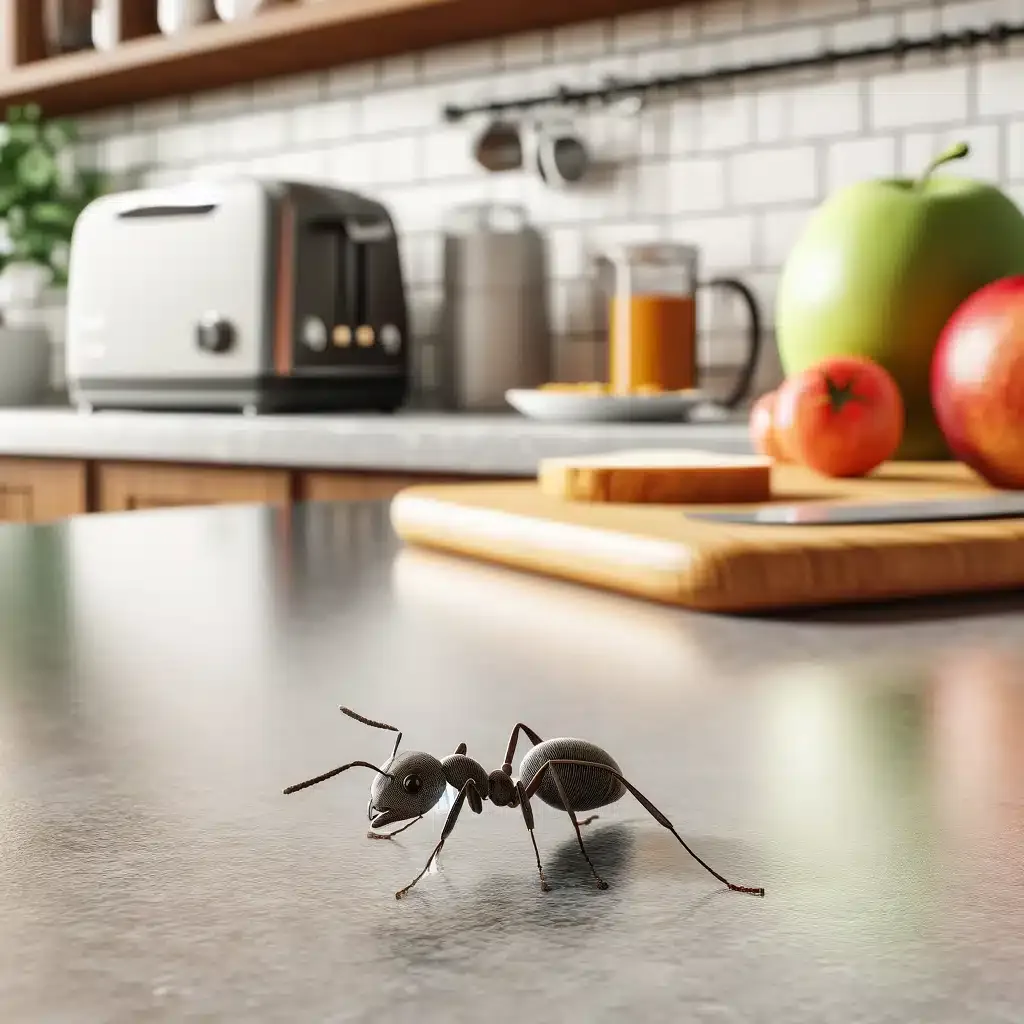
A line of ants on the counter is rarely about your kitchen—it is about the yard outside it. The species crossing the counter tells you where the nest sits and whether you have a nuisance or a structural problem, and on the wooded, water-edged lots of the southern Virginia Beach oceanfront the answer is usually a moisture-loving nuisance ant, not a wood-destroyer. Identify the ant first; the treatment follows from that.
Which Ant Is Actually in Your Kitchen?
Four ants show up on Hampton Roads counters, and they behave very differently:
- Odorous house ants — small, dark, and the most common kitchen invader. Crush one and it smells like rotten coconut. They trail to anything sweet and nest outside in mulch and leaf litter.
- Argentine ants — tiny, uniform, and endless. They form large supercolonies that push indoors when the yard swings too wet or too dry.
- Carpenter ants — the big ones. They do not eat wood, but they hollow out damp, softened lumber to nest in, so a steady carpenter-ant trail can point to a moisture problem in a wall or subfloor.
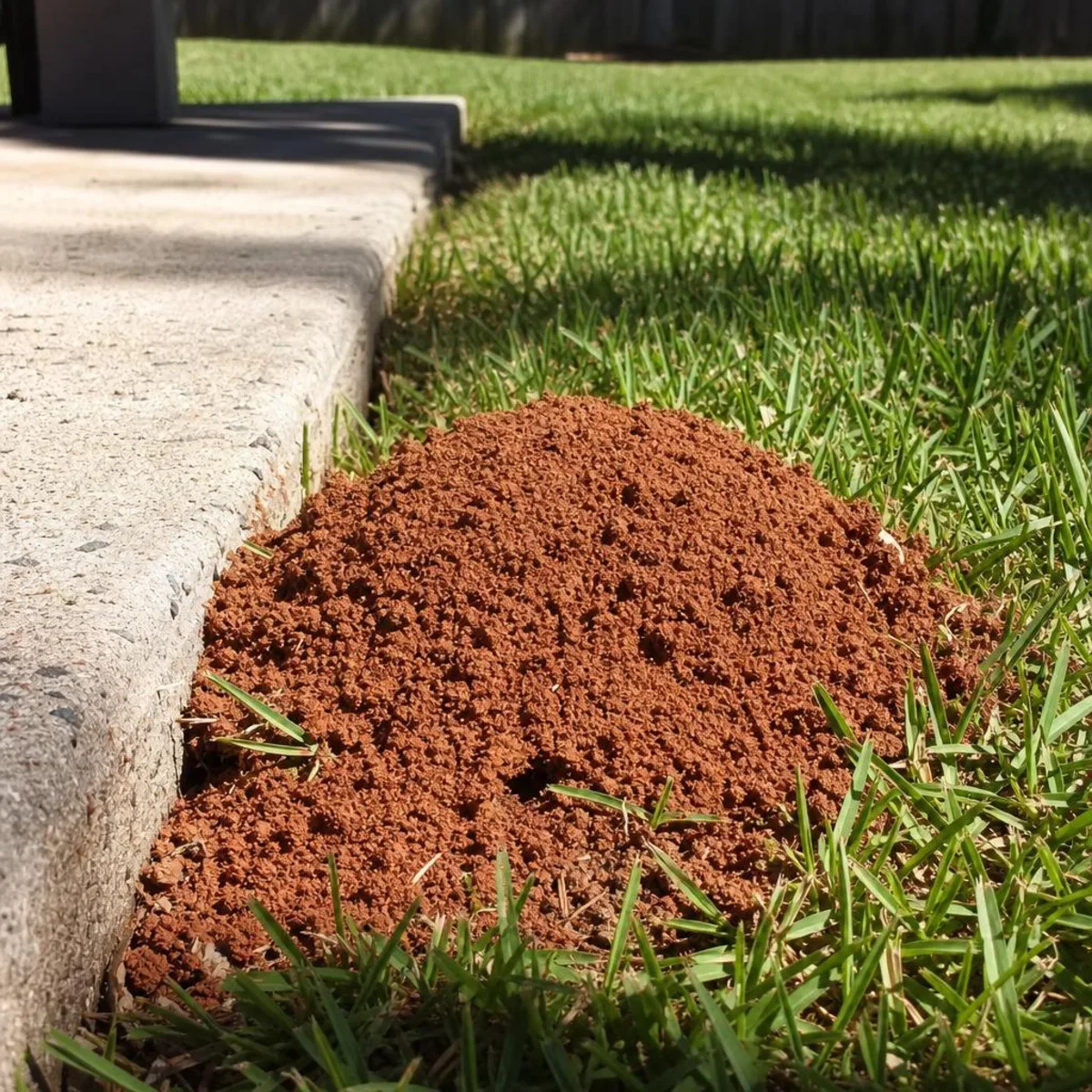
- Fire ants — mostly a lawn and outdoor concern here, but they will work a patio door on a hot, dry stretch.
Naming the ant settles the whole job. Sweet-feeding odorous house ants are chasing food; carpenter ants are chasing damp wood. One is a housekeeping fix, one is a building fix, and treating them the same way wastes a visit.
What the Yard Around the Kitchen Is Doing
Under the live-oak canopy that shades Bay Colony and Alanton, low limbs and heavy leaf drop keep the ground damp and hand ants a bridge from tree to gutter to soffit. A branch resting on the roof is a highway that runs straight past your foundation into the eave above the kitchen. Trimming that limb back does more than any spray on the counter, because it cuts the route before the trail ever forms.
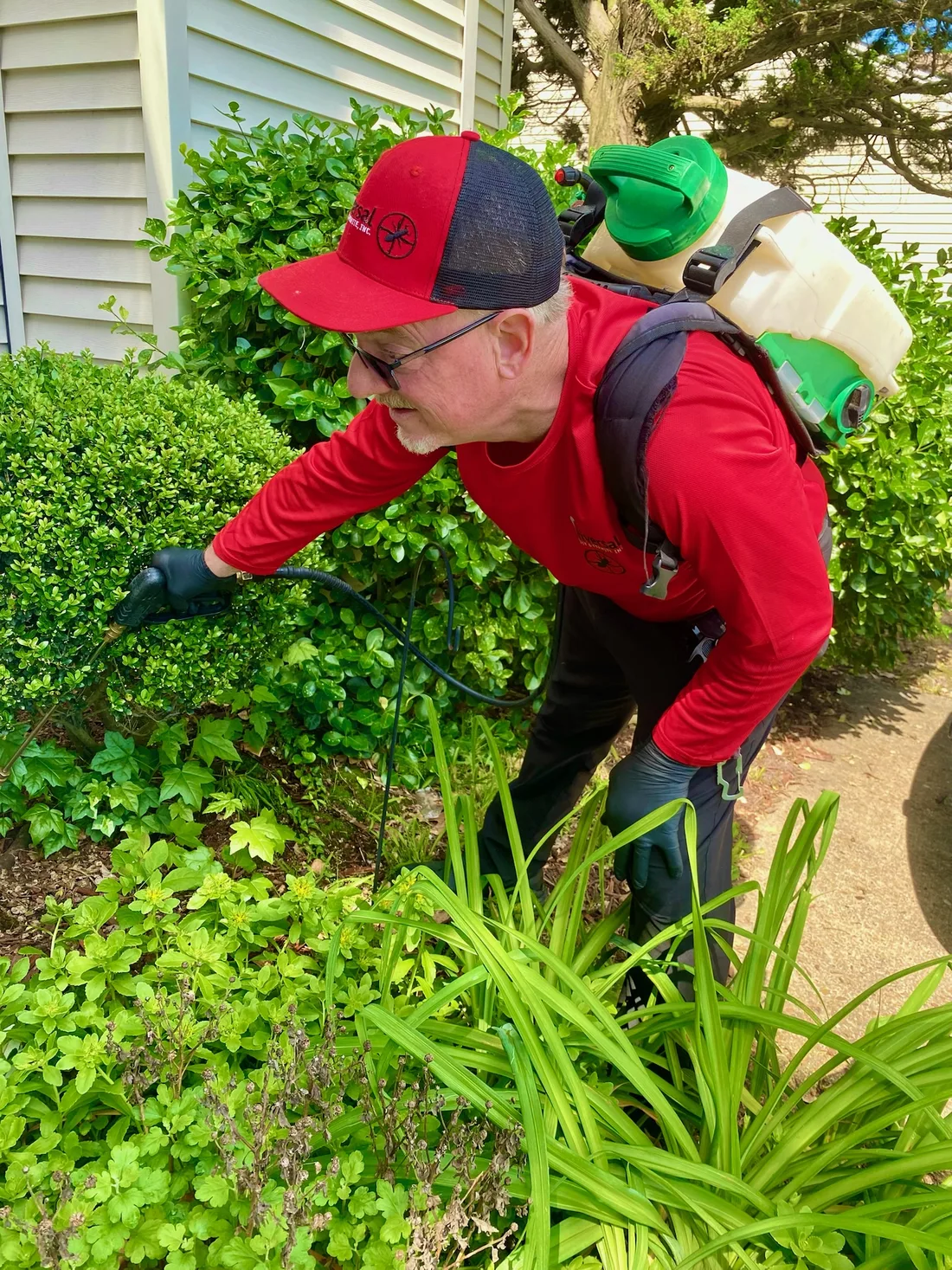
Closer to the water, elevation and moisture drive them indoors. Homes ringing Broad Bay sit where the water table rides high, so crawl spaces and mulch beds stay wet and odorous house ants nest right against the foundation before following a pipe inside. Out on the sand at Sandbridge, near-sea-level lots swing between soaked and bone-dry with the tide and the rain, and both extremes push colonies to October indoors hunting stable moisture and food. On the properties that back onto the wooded edge of First Landing State Park, the surrounding maritime forest is a permanent ant reservoir—cut back the vegetation touching the house or the woods keep resupplying the colony no matter how many trails you break.
Symptoms, Causes, and Fixes
| What you see | What it usually means | What fixes it |
|---|---|---|
| A steady sweet-feeding trail on the counter | Odorous house ants nesting outside in mulch or leaf litter | Clean up food, then bait the trail so workers carry it back to the nest |
| Large black ants and faint sawdust near trim | Carpenter ants in damp, softened wood | Find and dry the moisture source, then treat the nest void |
| Ants appearing right after heavy rain or a dry snap | A yard colony flooded or parched out of the soil near Broad Bay or Sandbridge | Correct drainage and seal entry points along the foundation |
| Trails coming down from a ceiling or soffit | Branches bridging the Bay Colony canopy to the roofline | Trim limbs off the house and treat the exterior entry |
What Actually Works
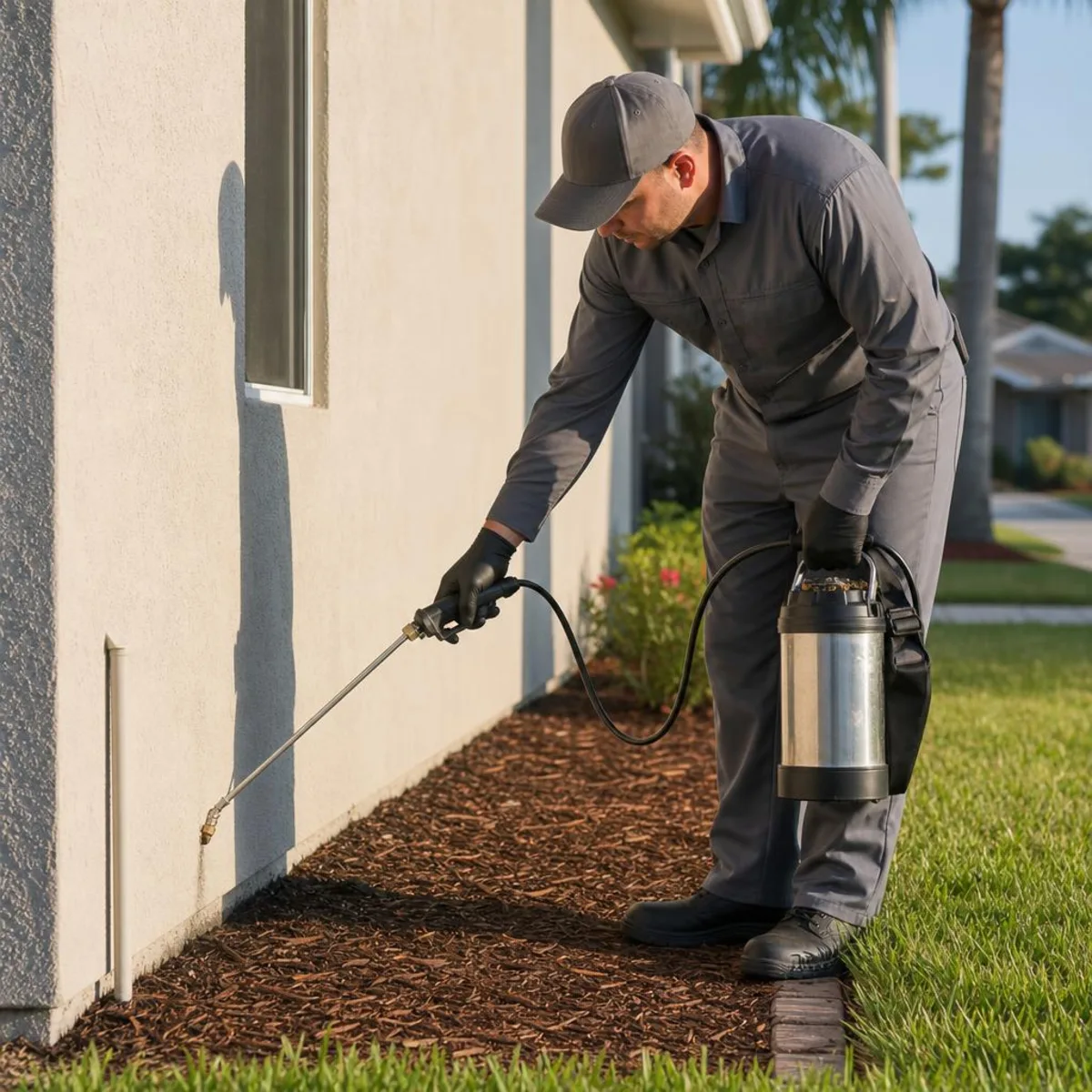
Wiping the counter and sealing food removes the reward that keeps a trail alive, and caulking cracks around windows, doors, and pipe penetrations closes the door. But the trail only stops for good when the colony outside is dealt with, and that means a professional ant treatment baits the workers to carry home rather than a spray that kills the ants you can see and leaves the queen laying. Keep an eye out for new ant activity after heavy rains, when flooded yards along the water push colonies toward the house. And because ants are drawn to food and water sources, keeping pet dishes clean and dry removes one of the easiest targets in the kitchen.
Frequently Asked Questions
Should I worry if I only see a few ants?
A handful of odorous house ants is usually scouts, not an infestation. Clean up the food source and watch for a day or two; if a steady trail forms, the colony outside has found your kitchen and needs baiting.
Are the ants in my kitchen damaging the house?
Small sweet-feeding ants are a nuisance, not a structural threat. Large carpenter ants are different—they nest in damp, softened wood, so a persistent trail near the trim of an oak-shaded Bay Colony or Alanton home can point to a hidden moisture problem worth inspecting.
Why do ants show up every time it rains?
On the low, wet ground near Broad Bay and on the sand at Sandbridge, heavy rain floods shallow nests and pushes colonies toward higher, drier ground—often the slab or crawl space of your home.
Do all-natural treatments work on kitchen ants?
Universal Pest & Termite offers exterior pest control programs for ants and all-natural solutions upon request, which pair well with sealing entry points and cutting back the vegetation feeding colonies from the First Landing State Park edge.
Ant Hotline: 757-502-0200