A Newport News homeowner can go from seeing nothing to finding droppings behind the toaster, hearing movement in a wall, and spotting a mouse in the same week. That does not always mean mice appeared overnight. Often, a small population has been using a garage, crawl space, wall void, or shed until weather, food, or construction changes push the activity into view.
The useful question is not only “Why today?” It is “What changed, and where were the mice already traveling?” In neighborhoods such as Denbigh, Hilton Village, Lee Hall, and City Center, different foundations, tree cover, renovations, and drainage patterns can create different routes into a home.
Why a mouse problem can feel sudden
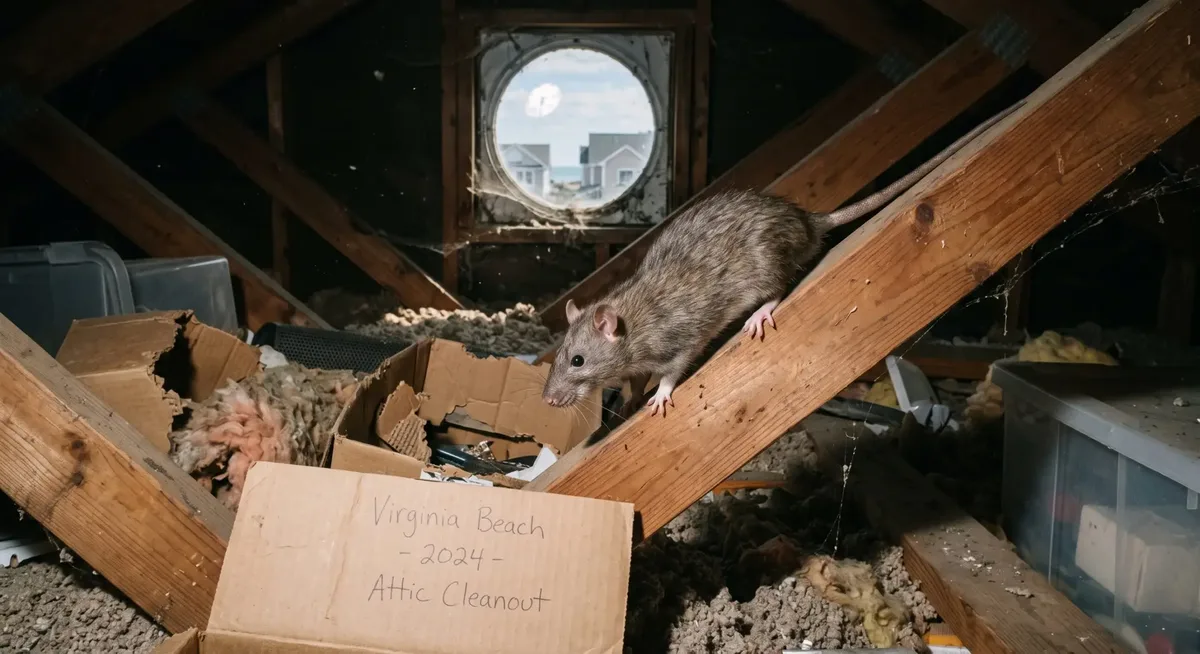
Mice are good at staying out of sight. They follow edges, move through wall and ceiling voids, and use insulation or stored items as cover. A new food source can make them visible in a kitchen, while rain or a temperature shift can move them from an exterior harborage toward a garage or crawl space.
Home changes can expose an old problem too. A remodeling project October open a wall, a fallen tree October disturb a nesting spot, or a new door sweep October leave one corner unsealed. Even a quiet house can reveal activity when a refrigerator is moved or a storage area is finally cleaned.

Four changes that bring hidden mice into view
- Weather and shelter: heavy rain, a sharp cool-down, or a disturbed outdoor nest can shift movement toward the structure.
- Food becomes easier: an open pet-food bag, a pantry spill, or an overflowing bin can turn a quiet route into a repeat stop.
- A building gap changes: a garage seal, foundation screen, or utility penetration October open just enough for a mouse to pass.
- The population grows: repeated activity in a protected void can eventually create more noise, odor, and visible movement.
Frequently Asked Questions
Why do mice suddenly appear in a Newport News home?
Mice usually seem to appear suddenly when weather, food, construction, or population pressure changes an established route from a hidden space into the living area.
A mouse October have been moving behind cabinets, beneath a floor, or through a garage before it crossed an open room. Fresh droppings in more than one area suggest the visible sighting is part of a larger route that needs to be traced.
Does seeing one mouse mean there is an infestation?
One sighting does not prove the size of a population, but it is enough reason to look for fresh droppings, gnawing, nesting material, and entry gaps rather than dismissing it.
Mice are most comfortable moving where people do not see them. Evidence in a pantry, garage, crawl space, or wall edge helps distinguish a single accidental visitor from recurring activity.
Can rain or cooler weather cause sudden mouse activity?
Yes, rain and cooler weather can make a dry, protected building more attractive, especially when an exterior nest or food source has been disturbed.
Weather is a trigger, not the whole explanation. The inspection still needs to find the route that made the home available, such as a door corner, vent screen, roofline seam, or gap around a pipe.
Where should Newport News homeowners look first?
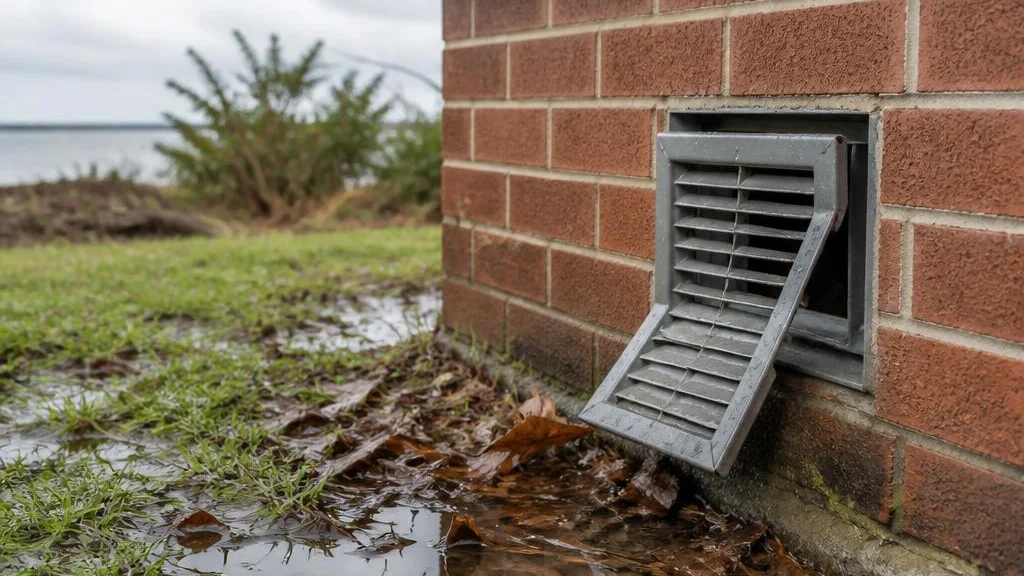
Start where the home meets the ground and where utilities or doors pass through it: garage corners, foundation vents, crawl-space access, pipe penetrations, and the edges of attached additions.
Then check the nearest indoor edge for evidence. A line of droppings beside a wall, insulation pulled into a nest, or rub marks near a utility opening can connect the interior sign to an exterior route.
What should I do first when mice appear?
Secure food and pet supplies, keep people and pets away from contaminated material, document the signs, and avoid sealing a suspected opening until it is clear no animal remains inside.
Dry sweeping or vacuuming droppings can disturb contaminated dust. A written record of dates, locations, and sounds gives the inspection a better starting point than a single mouse sighting.
How to investigate a “sudden” infestation
Walk the home’s perimeter after looking inside. A mouse route often follows a protected edge, so focus on corners and transitions instead of scanning the middle of a wall. Check the garage threshold, the crawl-space door, foundation screens, hose bibs, cable lines, and the place where an addition meets the original house.
Inside, check under sinks, behind large appliances, along the back of lower cabinets, near the water heater, and around stored boxes. Do not pull insulation apart or reach into a void to find the animal. The goal is to preserve evidence and identify the path safely.
First steps that reduce pressure without hiding the evidence
- Transfer cereal, grains, snacks, and pet food to hard-sided containers.
- Clean crumbs and spills, and keep garbage in a lidded container.
- Reduce clutter against exterior walls and keep firewood away from the structure.
- Trim vegetation that touches the siding or roof, but do not assume trimming closes the entry.
- Record fresh signs before moving or cleaning anything around them.
The Newport News rodent control team can evaluate the current activity and the opening behind it. For a broader plan, see mouse control and pest exclusion, or submit a rodent inspection request.