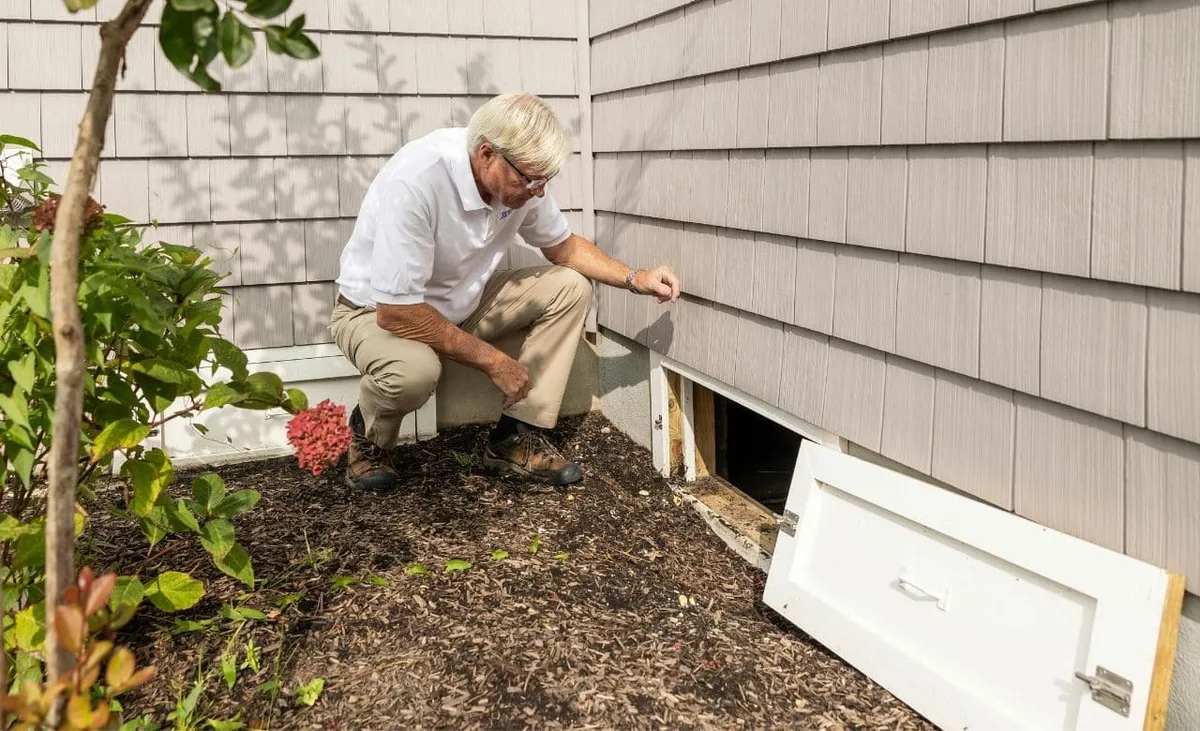
Treat termites before you seal a crawl space, never after. Once a liner goes down over damp soil, it hides the exact spots where subterranean termites climb out of the dirt onto piers and sills, and it locks a technician out of the wood that has to be reached to stop them. Inspect first, treat if there is activity, fix the moisture, then encapsulate last so the sealed space stays inspectable instead of becoming a place a colony can work unseen.
That sequence matters most on the low ground here in Virginia Beach, where the water table sits close to the surface and vented crawl spaces on block piers stay humid for months at a time. Get the order wrong and you pay for it twice: once for the encapsulation, and again to cut, retreat, and re-tape a liner that never should have gone down over an active infestation.
Why the Order Cannot Be Reversed
Proper termite work on an existing house has to reach the places where dirt meets wood, the base of every interior pier, the sill plates, and the band of framing just above the soil. Those are the same surfaces a vapor barrier covers when it is run up the piers and taped off. Do the inspection and the treatment first and a technician has clean access to all of it. Encapsulate first and that access is gone, sealed behind reinforced poly that now has to be cut open and re-sealed just to get a treatment rod to the soil.
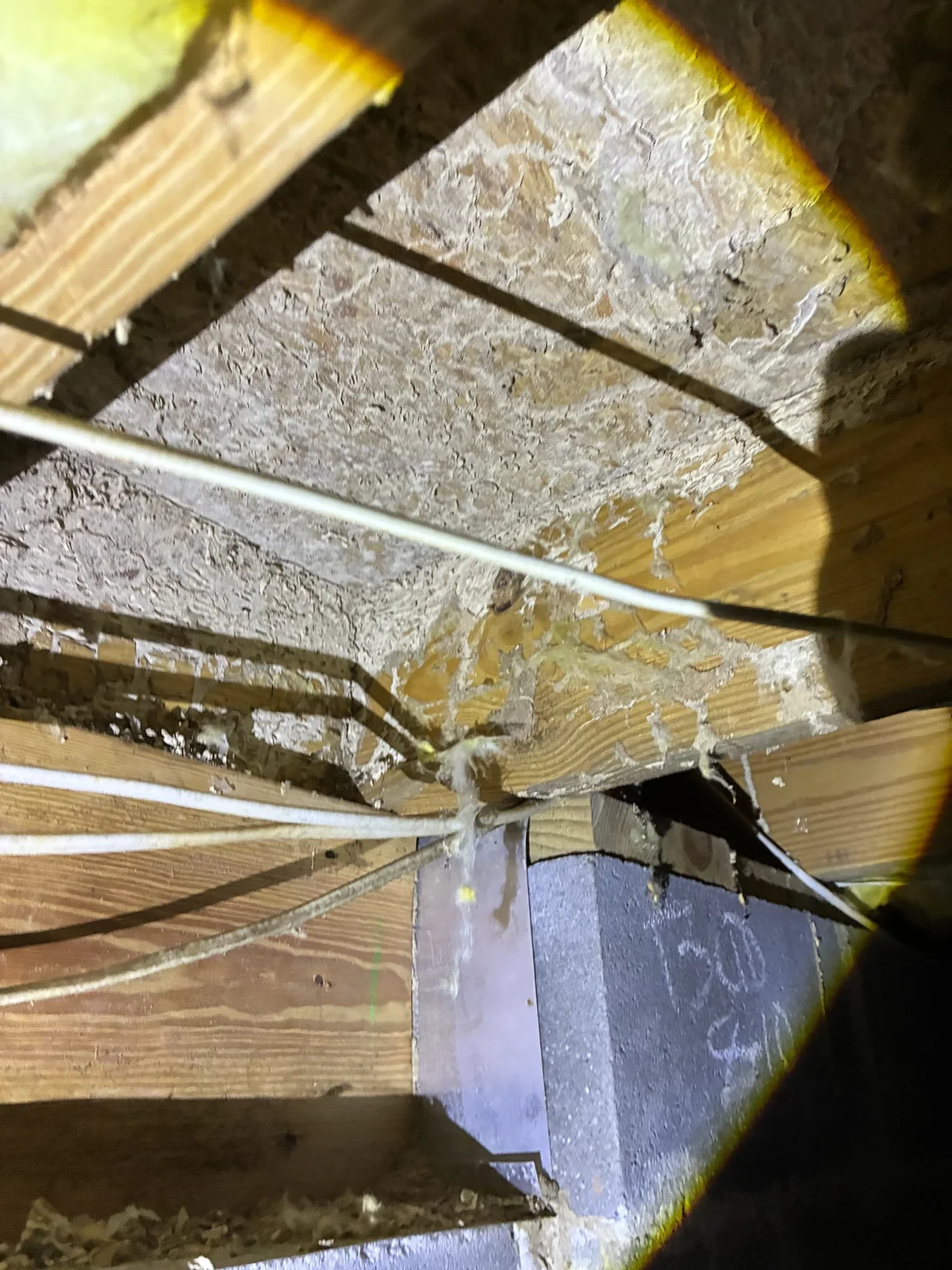
A liquid soil treatment also depends on continuous contact between the ground and the wood it is protecting. Lay a liner over untreated, damp soil and you have not stopped the colony; you have only put a roof over its head. Subterranean termites build mud tubes across the top of a barrier or up the seams to reach framing, and now those tubes are on the underside of the liner where nobody is looking.
Why the Ground Here Makes It Worse
The soil under Virginia Beach is coastal-plain sand that drains poorly once the water table rises, and near the tidal creeks it barely drains at all. In Alanton and Broad Bay, houses sit on that sandy ground under a heavy live-oak canopy, and the combination keeps crawl spaces shaded, damp, and humid deep into the year, exactly the conditions a subterranean colony needs to feed without a break. The mature trees that make those streets desirable are the same canopy that keeps the ground from ever fully drying out.
Down along the Lynnhaven River and out on Great Neck, the water table sits close enough to the surface that the dirt under a vented crawl space stays wet through a dry spell. Foundation vents on a sticky afternoon pull warm outside air under the floor, that air condenses on the cool joists and ductwork, and the subfloor stays damp on top of an already-wet grade. Kempsville, set back from the immediate waterfront, fights the same problem in a different form: older vented crawl spaces on block piers over flat, poorly draining ground that holds runoff long after a storm passes.
Construction detailing decides whether that moisture becomes a termite highway. Most of the older housing stock across these neighborhoods runs to vented crawl spaces on block piers, with interior piers scattered through the middle of the footprint. Those interior piers are the problem. A mud tube on a perimeter wall might catch your eye from the hatch, but a tube climbing an interior pier in the center of the crawl space is out of sight the moment a liner is up, and it is precisely the spot a colony favors because it is dark, damp, and undisturbed.
What a Homeowner Sees and What It Means
| What you see | What it means | What fixes it |
|---|---|---|
| Pencil-width mud tube on a block pier | An active subterranean colony bridging wet soil to the framing | Leave it intact; a liquid soil treatment at the source before any liner goes down |
| Swarmer wings on a sill or windowsill in early summer | A mature colony under the house sending out reproductives | A full crawl-space inspection to confirm and locate the activity, then treatment |
| Torn or loose liner over damp soil after an earlier job | Encapsulation was done before treatment; access is now sealed off | Selective liner removal, soil treatment, then re-sealing with an inspection band |
| Musty air and standing damp under the house | Coastal-plain sand and a high water table keeping the space humid | Drainage correction, a sealed vapor barrier, and a dehumidifier |
The Right Sequence: Inspect, Treat, Dry, Then Seal
The fix is not complicated, but the order is everything. Start with a full inspection of the crawl space, foundation, and every run of framing a technician can reach, mapping the wet spots and any mud tubes on perimeter walls and interior piers. If there is activity or clear risk, treat next with a liquid soil application or bait system while the wood and soil are still fully accessible.
Only then do you tackle moisture and encapsulation. Correct the drainage, drop the humidity, and lay the liner last, leaving a clear inspection band along the walls so future checks do not require cutting anything open. Pulling the crawl-space humidity down in the same push keeps the space unfriendly to a colony instead of just hiding it. David Shafer, our lead inspector with more than fifteen years under houses across Hampton Roads, works this sequence because it protects access rather than sealing it away.
What a Finished, Inspectable Crawl Space Looks Like
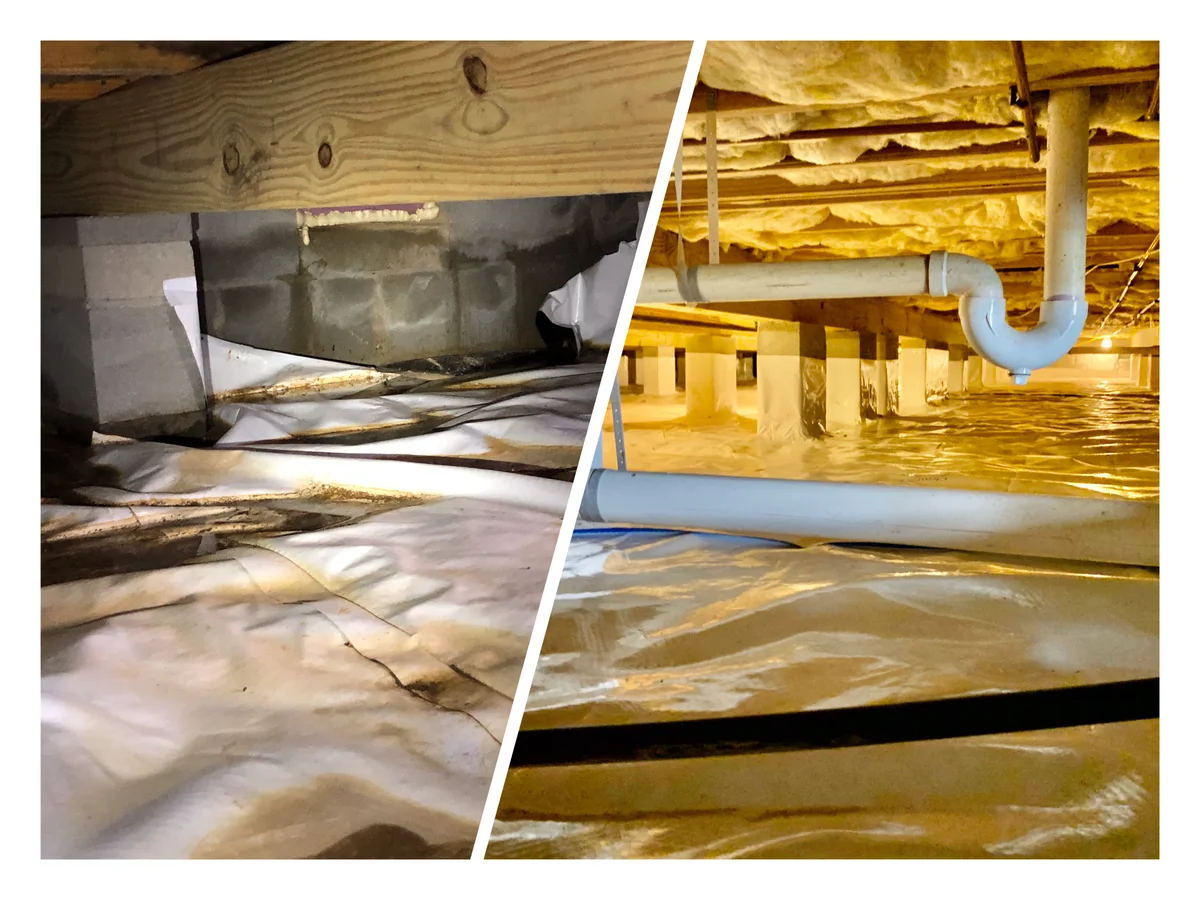
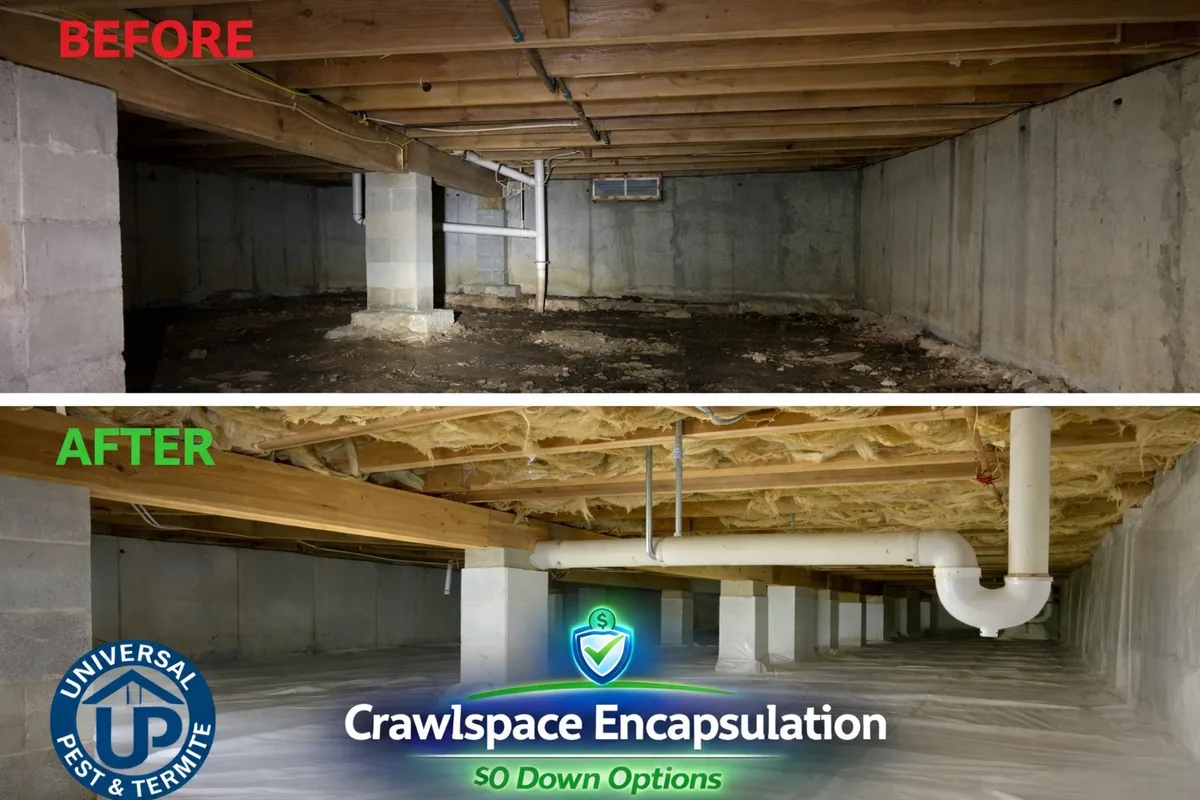
A crawl space done in the right order is one you can actually inspect a year later. The liner is sealed and continuous across the treated ground, the joists are dry, and the strip of foundation wall left visible along the perimeter gives an inspector a running head start on any fresh mud tube. Compare that to a space where the liner went down first: every follow-up check turns into demolition, and interior piers stay hidden behind poly that nobody wants to keep cutting apart.
How the Wrong Order Plays Out
The failure pattern is always the same. A house gets encapsulated to solve a moisture complaint, the space dries out, and everyone moves on. Months later swarmer wings show up on a windowsill, and when the liner comes back up there are tubes running along interior piers that were sealed off the whole time. Now the job is selective liner removal, a soil treatment, and re-taping the seams, extra visits and delays that a single inspection up front would have prevented.
An inspection band by itself does not close the gap either. Many Virginia jurisdictions require a one- to two-inch inspection gap in unvented crawl spaces so mud tubes and damage stay visible, and that gap is genuinely useful. But a visible band on the perimeter tells you nothing about a colony working an interior pier or the sub-slab. The band is a window, not a treatment, and it only earns its keep when the soil was already treated before the liner went down.
Coordinating the Whole Job
Because the steps have to happen in a set order, it helps when one crew handles the inspection, the termite treatment, the moisture correction, and the encapsulation together. That is how you avoid a sealed space that has to be reopened, and how the follow-up inspections stay quick instead of turning into another project. If you want to understand the encapsulation side of the budget before you start, this breakdown of crawl-space encapsulation cost in Virginia Beach walks through what the sealing work involves.
Protect Your Investment
Treat first, then seal. Universal Pest & Termite, Inc. coordinates the inspection, the termite treatment, the moisture work, and the crawl-space encapsulation in the order that keeps a sealed space inspectable instead of forcing cuts and re-taping down the road. It is the difference between a crawl space you can check in five minutes next spring and one you have to take apart to look at.
If you are weighing encapsulation for a house in Alanton, Broad Bay, Kempsville, along the Lynnhaven River, or out on Great Neck, get the termite inspection done before the liner goes anywhere. Call us at (757) 502-0200, or stop by our Virginia Beach office at 5600 Greenwich Rd, Virginia Beach, VA 23462, and we will schedule the inspection and the sealing work as one coordinated job.
FAQs
Why can't I just encapsulate my Alanton crawl space and deal with termites later?
Because the liner covers the exact surfaces a termite treatment has to reach. In Alanton and Broad Bay, the damp sandy ground under the live-oak canopy keeps a crawl space humid enough for a colony to feed year-round, and once the vapor barrier is run up the piers and taped off, any mud tubes climbing the framing are sealed out of sight. Treating first means a technician has clean access to the soil and the wood before that access disappears.
Does a high water table near the Lynnhaven River change how the work should be sequenced?
It makes the moisture step non-negotiable, but it does not change the order. Along the Lynnhaven River and Great Neck the water table sits close to the surface, so the soil under a vented crawl space stays wet even in dry weather. You still inspect and treat first, then correct the drainage and drop the humidity, then seal, so the liner goes down over treated, drying ground rather than over an active, wet grade.
Why are interior piers such a problem in older Kempsville crawl spaces?
Older vented crawl spaces on block piers in Kempsville sit over flat, poorly draining ground that holds runoff, and they tend to have interior piers scattered through the middle of the footprint. A mud tube on a perimeter wall might be visible from the hatch, but a tube on an interior pier is hidden the moment a liner is up, which is exactly why the soil around those piers has to be inspected and treated before anything gets sealed.
Can termite activity be found after a crawl space is already encapsulated?
Yes, but it usually means selective liner removal to reach the soil and framing, plus re-taping the seams afterward, all of which could have been avoided by treating first. Swarmer wings on a windowsill in early summer are a common tell that a colony has been working behind a liner. If you already have a sealed space and suspect activity, an inspection can locate it and open only the sections that need treatment.