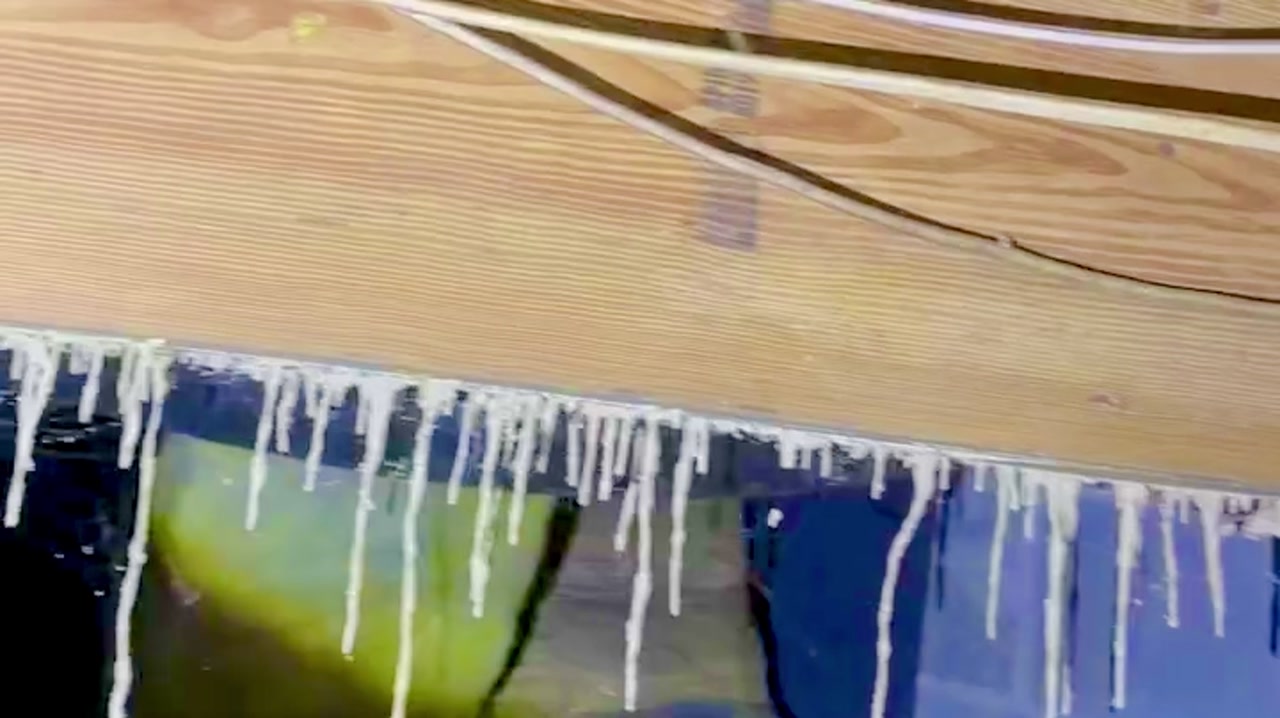
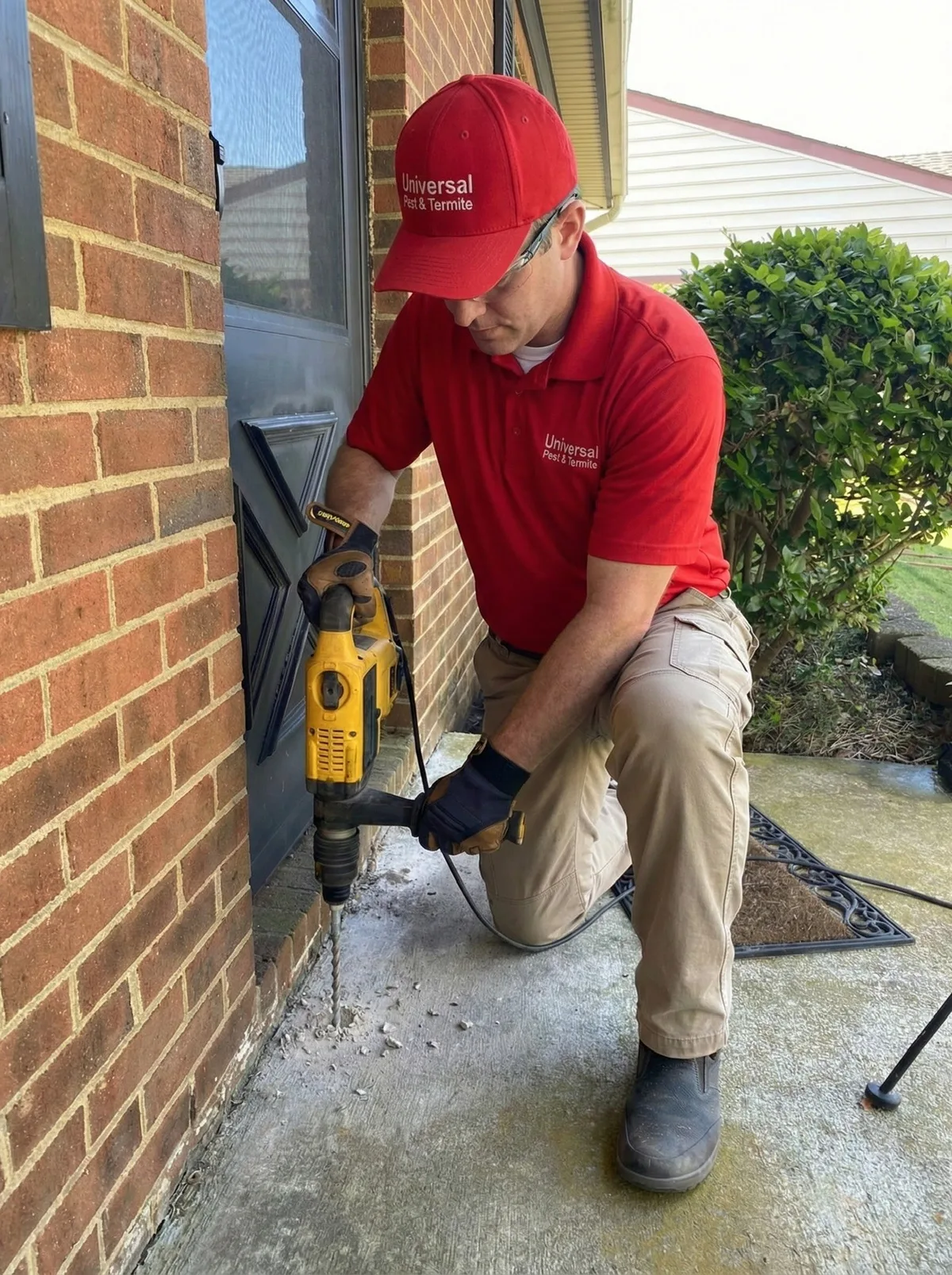
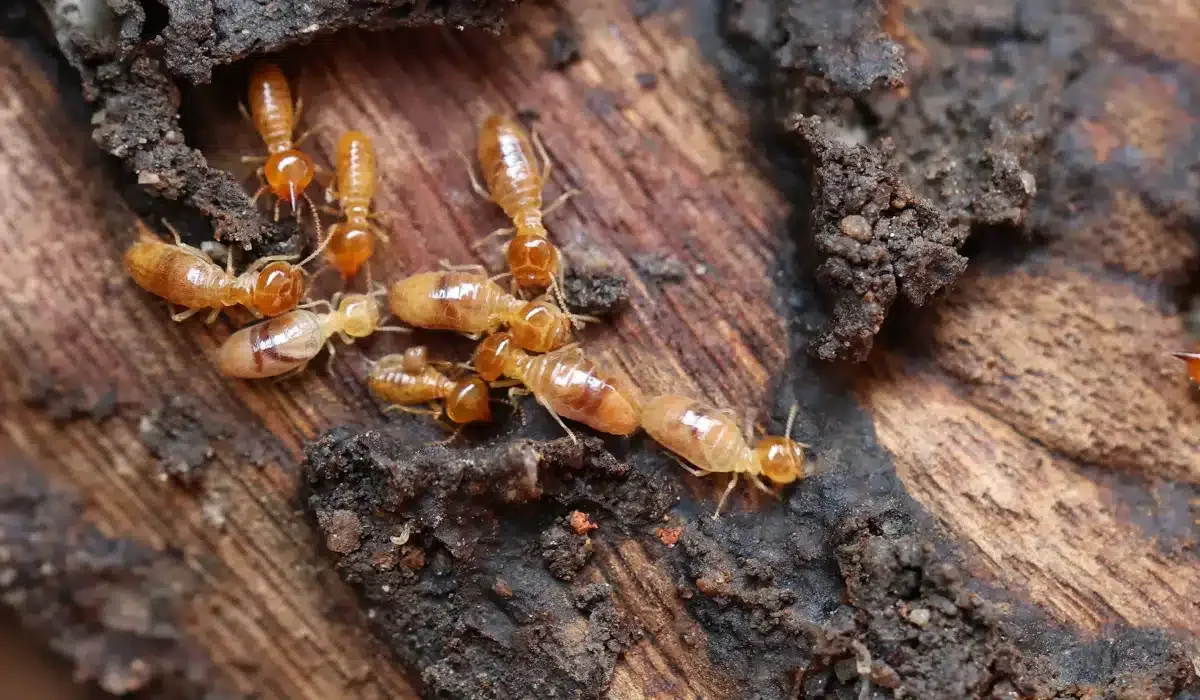
At a Chesapeake home, a later termite inspection found active termites and extensive hidden wood damage after another pest-control provider had previously told the owners the home was clear. The discovery came when the inspector checked an area behind a dirt-filled porch, where insulation covered part of the subfloor and structural framing, and moved a section aside to examine the wood.
What the Chesapeake inspection uncovered
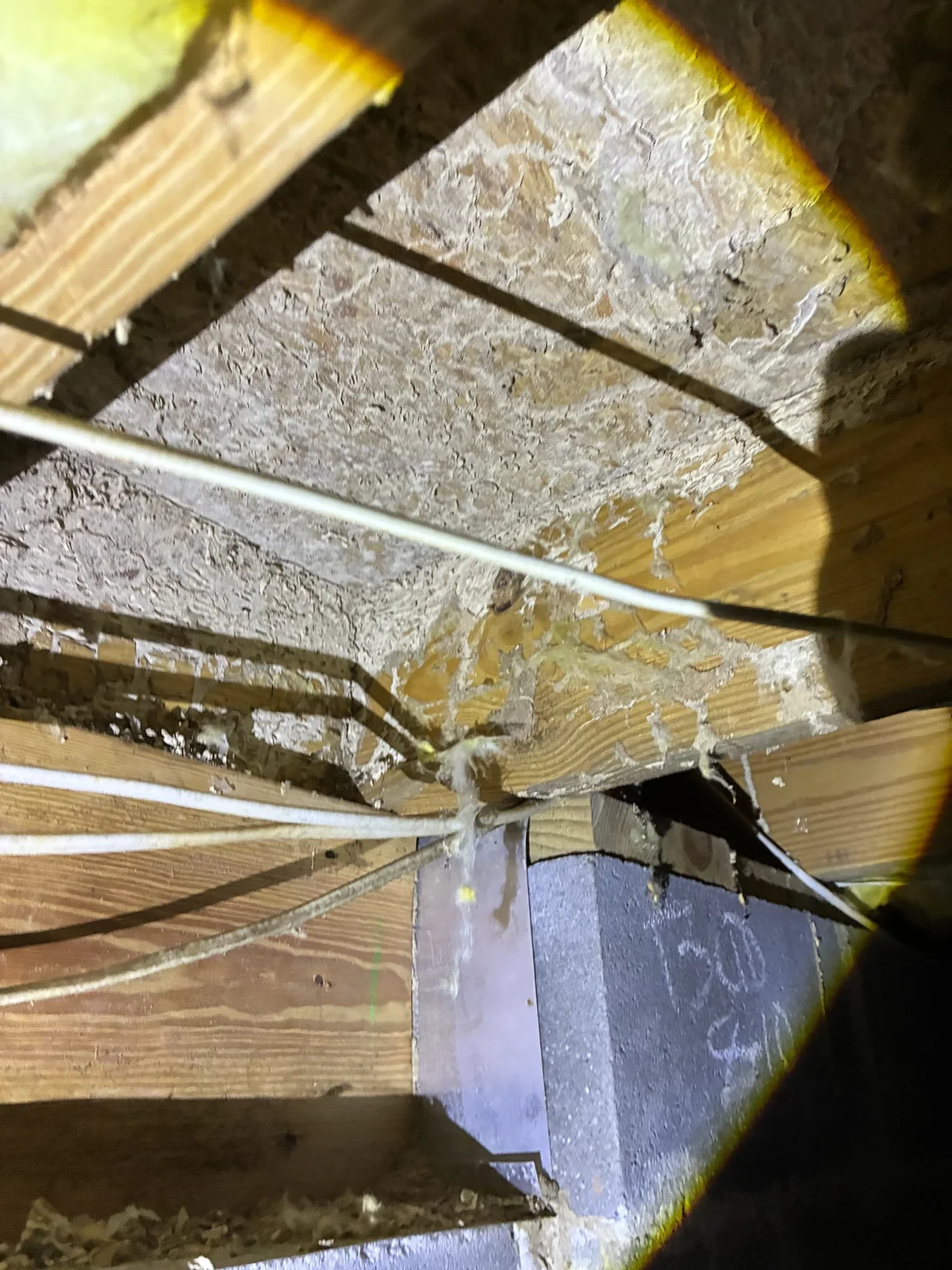
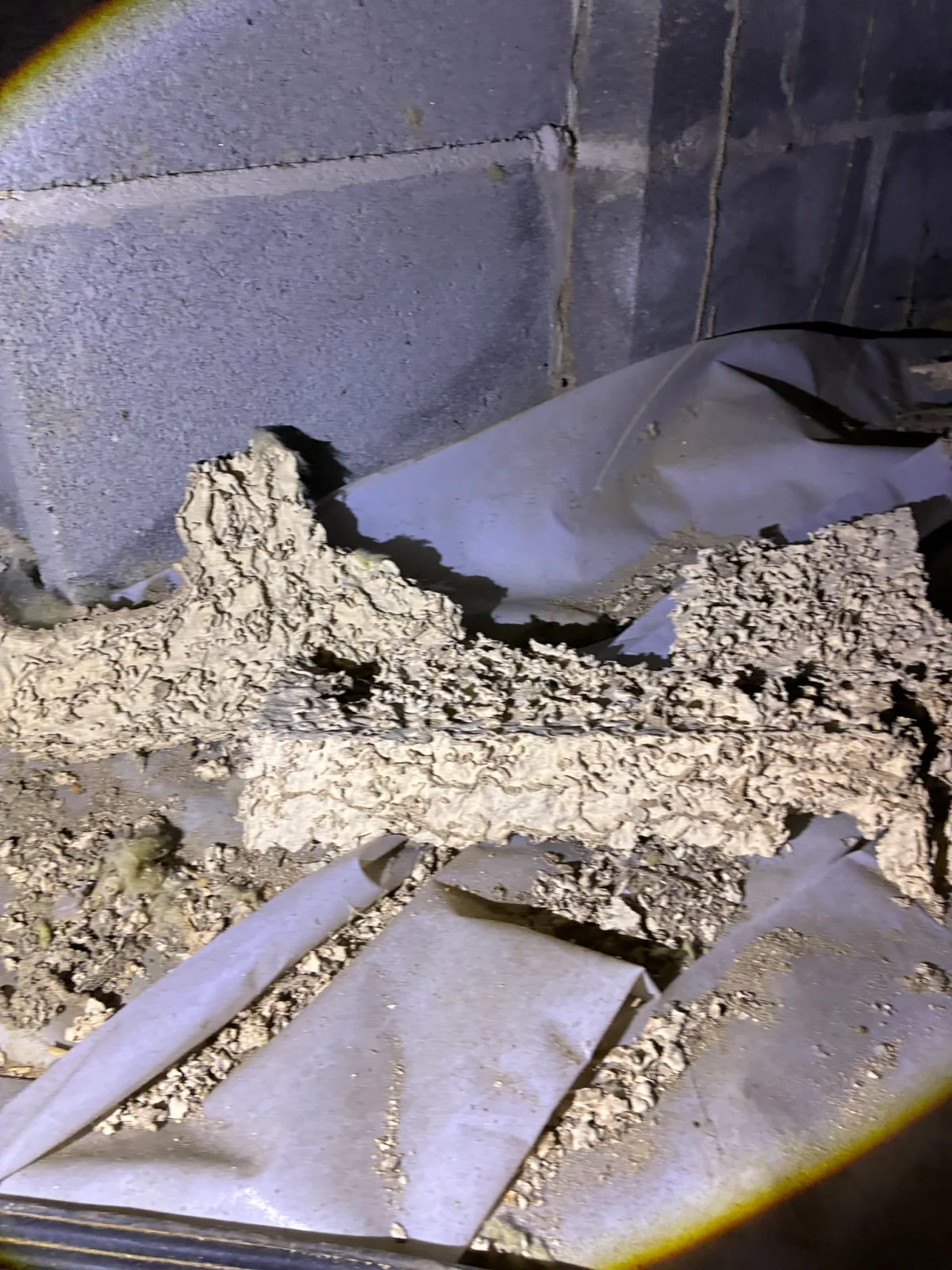
The inspection revealed termite evidence and significant damage that had been hidden from view. The photos show mud tubes and affected wood around crawl-space framing, along with termite material near the foundation. They document what was visible in the opened area; they do not, by themselves, establish the full extent of damage elsewhere in the home.
Why the concealed area deserved attention
Insulation can make it harder to see the wood and foundation surfaces behind it. In this case, checking the covered area revealed termite evidence that was not visible from the surrounding open surfaces. Subterranean termites can use mud tubes as protected routes between soil and the wood they feed on, so an inspection looks beyond the first visible sign and follows accessible evidence toward the structure.
The insulation was not proof of what caused the infestation. What mattered during this inspection was that it covered wood that needed to be examined. If a section of a crawl space or porch area cannot be seen, ask the inspector to explain the limitation and whether safe access can be created.
A previous all-clear is a snapshot, not a permanent guarantee
A prior inspection reports what was found under the conditions and access available at that time. This Chesapeake case does not tell us what the earlier provider could see, but it does show why homeowners should ask which areas were accessible and how concealed wood was handled. A new concern, fresh mud tubes, swarmers, or unexplained damage can justify another inspection even when an earlier visit found no evidence.
What homeowners can do next
If you spot suspected termite tubes or damaged wood, photograph the area without scraping or spraying it, and note where and when you found it. Avoid pulling down insulation or disturbing concealed materials yourself; a professional can assess the evidence and explain what needs to be opened or checked. The treatment recommendation should follow the inspection findings, and any wood repair should be scoped separately from termite treatment.
For local service information, see our termite control in Chesapeake. If you have a concern about concealed activity, call (757) 502-0200 to discuss an inspection.
Frequently Asked Questions
Why did the Chesapeake inspector look behind the insulation?
Insulation covered part of the subfloor and structural wood, so moving a section let the inspector examine an otherwise concealed area.
Not every inspection includes opening materials, and access can vary by property. Ask how concealed areas are documented and what would be needed to inspect them safely.
Can insulation cause a termite infestation?
This inspection found termites and wood damage behind insulation, but it did not establish that the insulation caused the activity.
See our termite protection in Chesapeake
The relevant issue was visibility: the insulation covered part of the wood that needed inspection. A professional can assess the route and conditions without assuming the insulation itself was the source.
Does an earlier termite all-clear mean a home is still clear?
No; an earlier inspection reflects the conditions and areas that could be assessed at that time, and it cannot guarantee that concealed or newly active termites are absent later.
Get a free quote in Chesapeake
If new evidence appears or an important area was inaccessible, arrange a follow-up and ask the inspector to explain what changed or what could not be seen.
Do mud tubes show how much wood termites have damaged?
No; mud tubes are evidence of termite activity, but they do not show how far activity extends or the condition of every hidden wood member.
See termite damage repair in Chesapeake
An inspection should document the accessible route, examine nearby wood, and identify areas that need additional access or repair evaluation.
What should I do if I find termite evidence?
Take a clear photo, avoid disturbing the area, and arrange a termite inspection to assess the evidence and any concealed damage.
See our termite protection in Chesapeake
Note the location and date, and mention any recent swarmers or changes in the wood. Do not rely on scraping away a tube or spraying its surface as a substitute for finding the route.