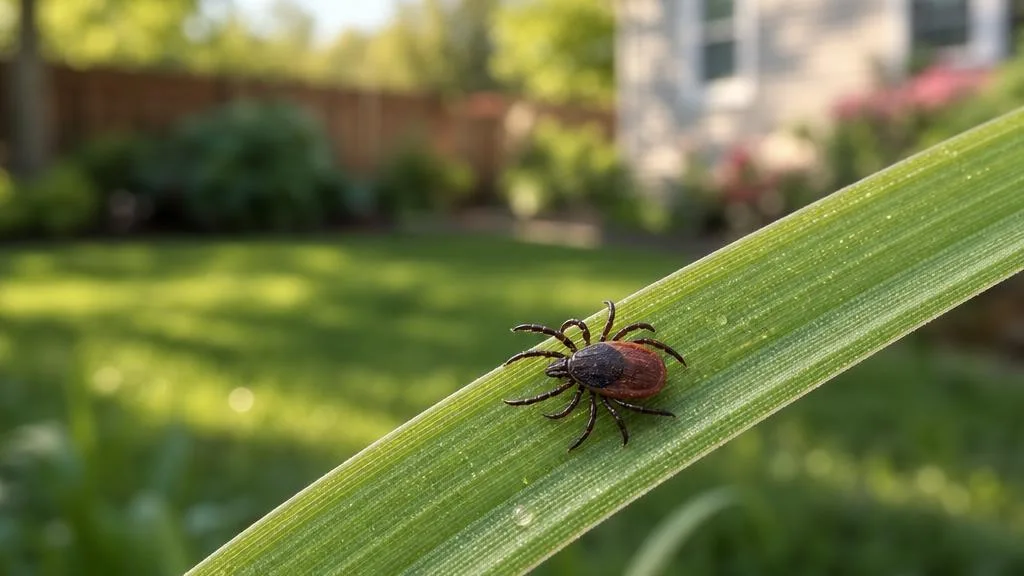
When the first cold snap arrives, many Hampton Roads residents assume ticks have disappeared for the season. Cold weather slows tick activity, but it does not guarantee every tick is gone. The Virginia Department of Health (VDH) says ticks are present throughout the Hampton & Peninsula Health Districts, and its local guidance notes that blacklegged ticks may be active on winter days above 40°F. The CDC also says blacklegged ticks can bite when winter temperatures are above freezing.
That matters in Virginia Beach, Chesapeake, Norfolk, Suffolk, Portsmouth, Hampton, Newport News, and Williamsburg, where people and pets still use yards, trails, and neighborhood paths through fall and winter. The practical rule is simple: after time outdoors on a mild day, keep checking for ticks—especially around brush, tall grass, leaf litter, and wooded edges.
What cold weather changes—and what it does not
Tick activity varies by species, life stage, and temperature. Cold conditions reduce activity for many ticks, and VDH identifies spring through fall as the period when ticks are most active in the Hampton & Peninsula districts. But a cold spell is not a reliable “all clear.” Blacklegged ticks can become active during milder winter weather, so an exposed walk, yard chore, or dog outing can still bring people into contact with them.
Ticks are often found in wooded areas, brushy fields, along trails, and around homes. A yard does not need to border deep woods to deserve a check: vegetation at a fence line, a shaded path, or leaf litter beneath shrubs can be worth noticing. The CDC also notes that people may encounter ticks in their own yard or neighborhood.
Tick-borne health concerns in Virginia
VDH’s Hampton & Peninsula Health Districts identify Lyme disease, Rocky Mountain spotted fever, and ehrlichiosis as illnesses ticks can spread in the area. VDH’s Virginia tick chart also associates particular diseases with particular tick species across the state. This is useful context for Hampton Roads, but it does not mean every tick carries a pathogen or that every disease is equally common in every city.
Blacklegged ticks
These ticks can transmit Lyme disease. VDH also associates blacklegged ticks with anaplasmosis and babesiosis in Virginia. Symptoms vary; fever, headache, fatigue, muscle aches, or a new rash after possible exposure deserve medical attention.
Lone star ticks
VDH associates lone star ticks with ehrlichiosis and alpha-gal syndrome. Alpha-gal is an allergic condition—not an infection—and can cause a delayed reaction to some mammalian foods. Ask a healthcare professional about possible symptoms.
American dog ticks
VDH lists American dog ticks as a vector for Rocky Mountain spotted fever. Fever, severe headache, muscle aches, nausea, or a rash after a tick exposure should be discussed promptly with a healthcare professional.
Many tick-borne illnesses can begin with nonspecific symptoms such as fever, chills, headache, muscle aches, or fatigue. Some rashes may appear days or weeks after a bite, but a rash is not required for every illness. If you feel sick after a possible tick exposure, tell a healthcare professional when and where you may have encountered ticks. A tick’s appearance cannot confirm whether it carried a pathogen, and this article is not a medical diagnosis.
Ways to reduce tick exposure in colder months
Use the same prevention habits on mild winter days that you would use during warmer months:
- Choose your route: stay near the center of maintained trails and avoid brushing against tall grass, dense shrubs, and leaf litter.
- Use repellent as labeled: choose an EPA-registered repellent for exposed skin. Products containing 0.5% permethrin are for treating clothing, shoes, and gear—not skin. Follow the product label.
- Dress for a tick check: wear closed shoes and long pants when walking through brush or yard edges; light-colored clothing can make a crawling tick easier to spot.
- Check people, clothing, and pets: look over your body, hair, clothing, and gear after time outdoors. Ask your veterinarian which tick-prevention products are appropriate for your pet, and check the pet after it has been outside.
- Shower and dry clothing: shower soon after coming indoors. The CDC says a high-heat dryer cycle can kill ticks on dry clothing; allow extra time for damp items.
Make the yard less inviting to ticks
Regular yard care can reduce places where ticks may wait for a host. Keep grass trimmed, remove leaf litter, and clear brush near the house and lawn edge. The CDC also describes a three-foot wood-chip or gravel border between lawns and wooded areas as one landscaping measure that may help reduce blacklegged tick habitat. These steps do not make a yard tick-proof, so continue checking people and pets.
If you find a tick attached, use clean, fine-tipped tweezers to grasp it close to the skin and pull upward with steady, even pressure. Do not twist, burn, or coat it with petroleum jelly or nail polish. Clean the bite area and your hands after removal. Contact a healthcare professional if you develop a rash, fever, or other concerning symptoms.
When to consider a professional tick-yard assessment
If ticks keep appearing on family members or pets after yard time, an inspection can help identify the parts of the property that deserve attention. A technician can assess shaded vegetation, brush, groundcover, and lawn-to-woodline transitions, then discuss whether a targeted tick treatment is appropriate. Treatment is only one part of prevention; it does not replace repellents, personal tick checks, or veterinary care.
Learn about our tick-control service across Hampton Roads. For city-specific information, see Virginia Beach tick control, Chesapeake tick control, and Norfolk tick control.
Prevention and disease details in this guide follow public-health guidance from the CDC and Virginia Department of Health, including the Hampton & Peninsula Health Districts. Tick activity and reported disease patterns can vary by species, season, and locality.
Frequently Asked Questions
Do ticks die when the first frost arrives?
No. A frost does not mean every tick is gone.
Cold weather slows activity, but blacklegged ticks may still be active on mild winter days. VDH’s local guidance notes activity above 40°F, so keep checking after outdoor time when temperatures rise.
Can ticks bite during winter in Hampton Roads?
Yes. Blacklegged ticks can bite on warmer winter days in Hampton Roads.
VDH says ticks are present throughout the Hampton & Peninsula Health Districts and can be found near homes, trails, brush, and wooded areas. Risk depends on the tick and the conditions; it is not limited to summer.
Which tick-borne diseases should Hampton Roads residents know about?
Local VDH guidance names Lyme disease, Rocky Mountain spotted fever, and ehrlichiosis as tick-borne health concerns.
VDH’s Virginia tick chart also associates tick species with conditions such as anaplasmosis, babesiosis, and alpha-gal syndrome. Not every tick carries a pathogen, and a bite does not confirm that someone will become ill.
How can I reduce tick exposure during cold weather?
Use repellent as labeled, avoid brushing against tick habitat, and check people and pets after outdoor time.
Keep grass trimmed and leaf litter cleared near the house. Ask a veterinarian about pet tick preventives, and use permethrin only on clothing or gear when its label allows it—not on skin.
What should I do after finding an attached tick?
Remove it promptly with fine-tipped tweezers and contact a healthcare professional if symptoms develop.
Grasp the tick close to the skin and pull upward with steady pressure; do not twist, burn, or smother it. Seek medical advice for a rash, fever, chills, headache, or other concerning symptoms after a possible tick bite.