Universal Pest & Termite logo with ant badge
  • Over 26 Years Protecting Hampton Roads
  • 100% Pest Free Guarantee
  • Same-Day / Next-Day Service Available
  • Family & Locally Owned
All Articles
Termite ControlMarch 9, 2026

What Termite Inspectors Look for During a Termite Inspection in Hampton Roads

What Termite Inspectors Look for During a Termite Inspection in Hampton Roads

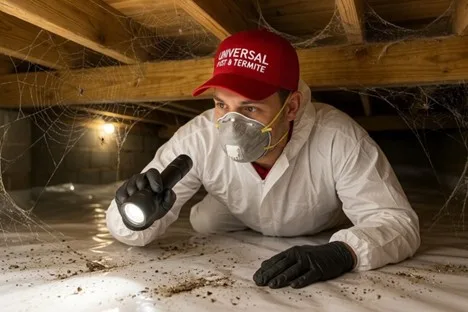
Termites read a crawl space differently than a homeowner does. An inspector is looking for four things: live mud tubes, hollowed structural wood, wing piles near light, and the moisture that feeds all of it.

On the coastal plain, the sandy soil drains fast at the surface but the water table sits close underneath, so the ground under most of these houses stays damp even in a dry August. That damp ground, plus the vented crawl spaces on block piers that dominate the post-war tract housing off the I-64 corridor, is exactly the environment subterranean termites want. A professional termite inspection is really a reading of those conditions, not just a hunt for bugs.

Mud Tubes: The First Thing a Flashlight Finds

Subterranean termites build pencil-thick tubes of soil and saliva up the foundation so they can reach wood without drying out in open air. Along the tidal branches of the Elizabeth River, where crawl-space dirt rarely fully dries, these tubes stay soft and active for months. An inspector snaps a tube open; damp mud with pale workers inside means a live run, while a crusted, empty tube means an old path worth marking and watching.

The tract houses built out along the I-64 corridor after the war sit low on block piers, and their tubes tend to climb the interior piers rather than the perimeter wall. A homeowner never sees those. That is why the inspection happens on hands and knees under the floor, not from the yard.

Inspectors also examine wood structures such as floor joists, sill plates, beams, and window frames. Termites eat wood from the inside out, often leaving a paper-thin surface intact while the core is gone. A sill plate that looks fine but caves under a probe is the classic find. In the older brick homes of Norfolk's Ghent, the sill plates sit low and close to grade, so that wood-to-soil contact is the first place the probe goes.
Swarmers, Wings, and Moisture

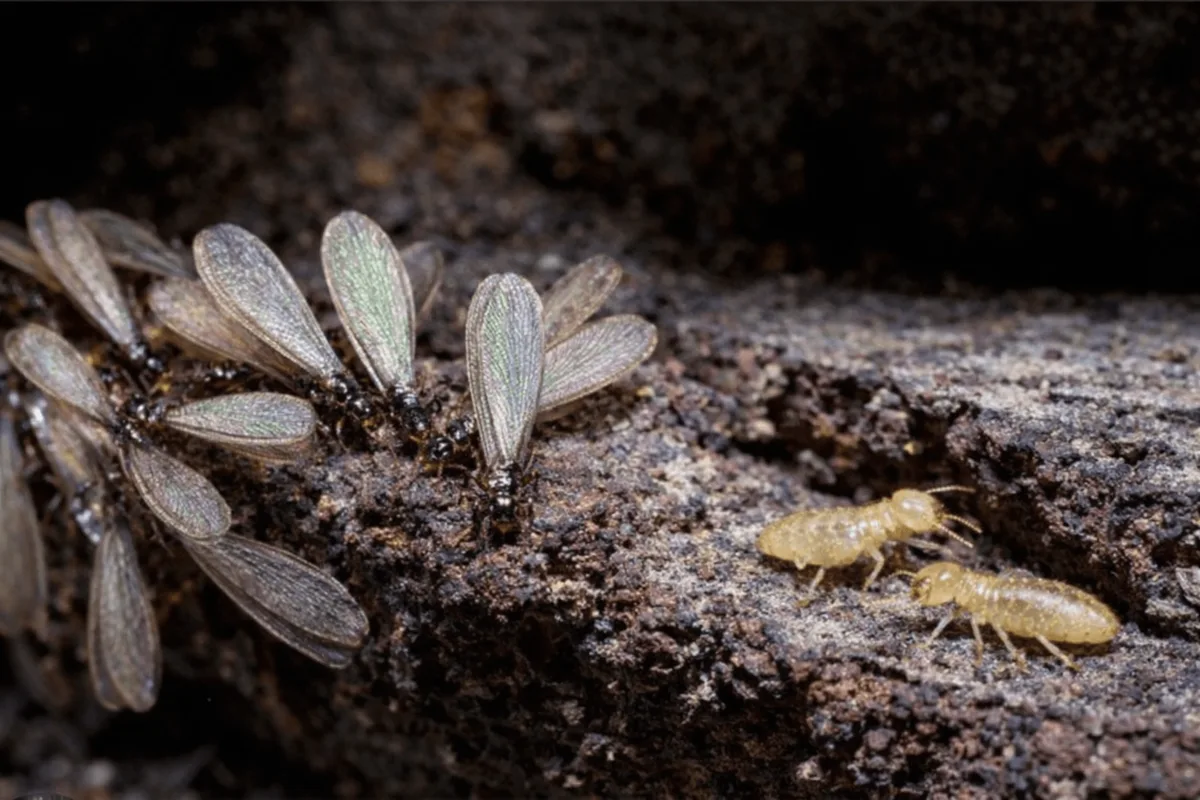
Another key sign is swarming termites or discarded wings, usually found near windows, doors, or light fixtures where reproductives fly toward the light and drop their wings in a small silvery pile. Because the wet ground around Great Bridge in Chesapeake holds warmth well, colonies there tend to send up swarmers on the first warm, still days of summer, so a windowsill pile in June is a strong tell.

Moisture is inspected as carefully as the wood itself, because termites cannot live without it. The tidal crawl spaces near the river branches are the worst offenders: standing dampness on the vapor barrier, sweating pipes, and soft joists over a wet corner. Where the water table pushes up under a low pier-and-beam floor, that whole subfloor becomes a humidity reservoir, and the inspector reads the rust on nail heads and the mold line on the joists to find it.

Finally, inspectors look for entry points around the structure, including foundation cracks, wood-to-soil contact, and gaps around utility lines. In the brick stock around Ghent, hairline mortar cracks and buried porch framing are the quiet doorways; in the corridor tract homes, it is the plumbing penetrations through a slab addition tacked onto the original crawl-space house.

A professional termite inspection helps homeowners catch this early, before a hollow joist becomes a sagging floor.
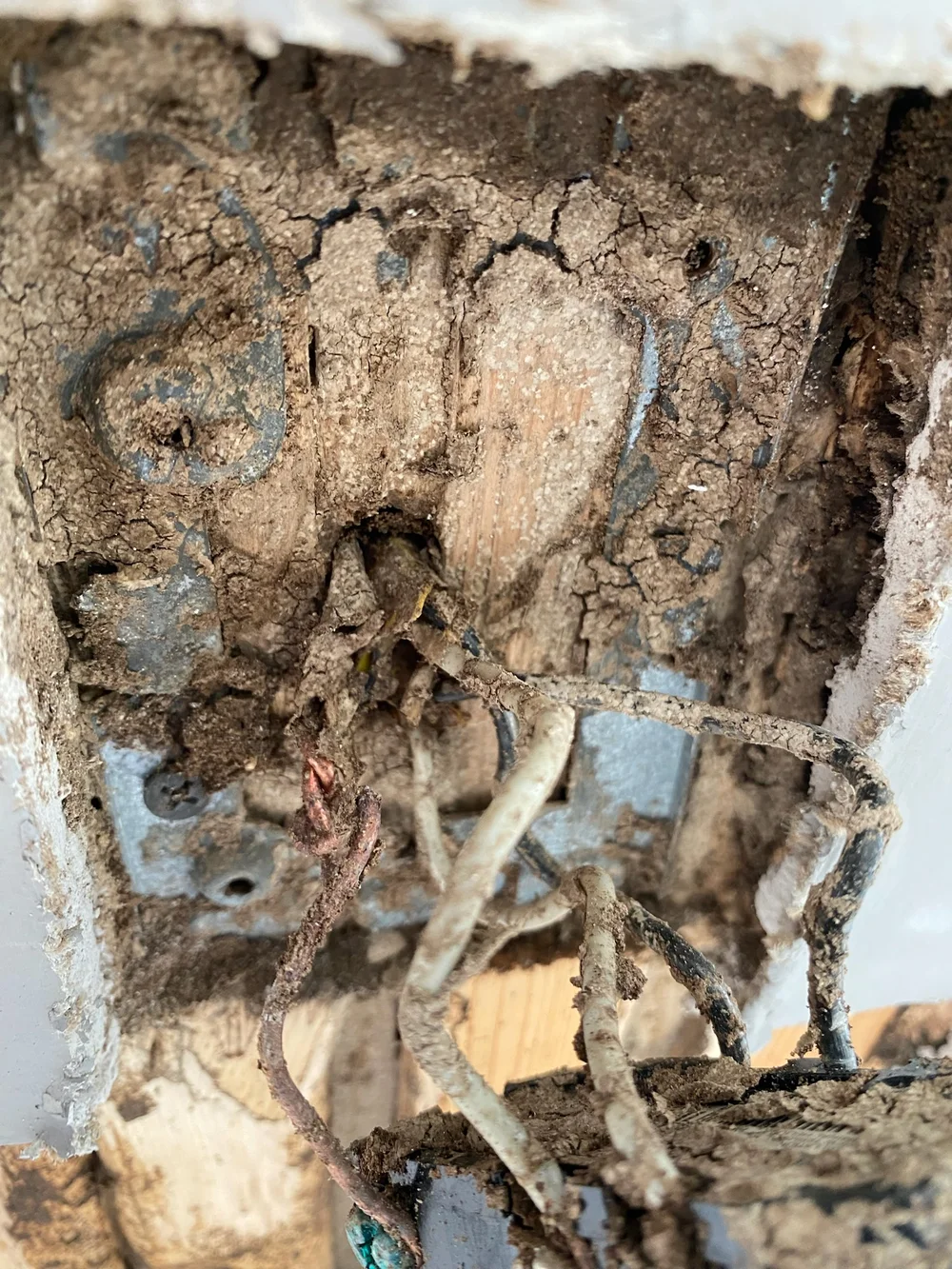

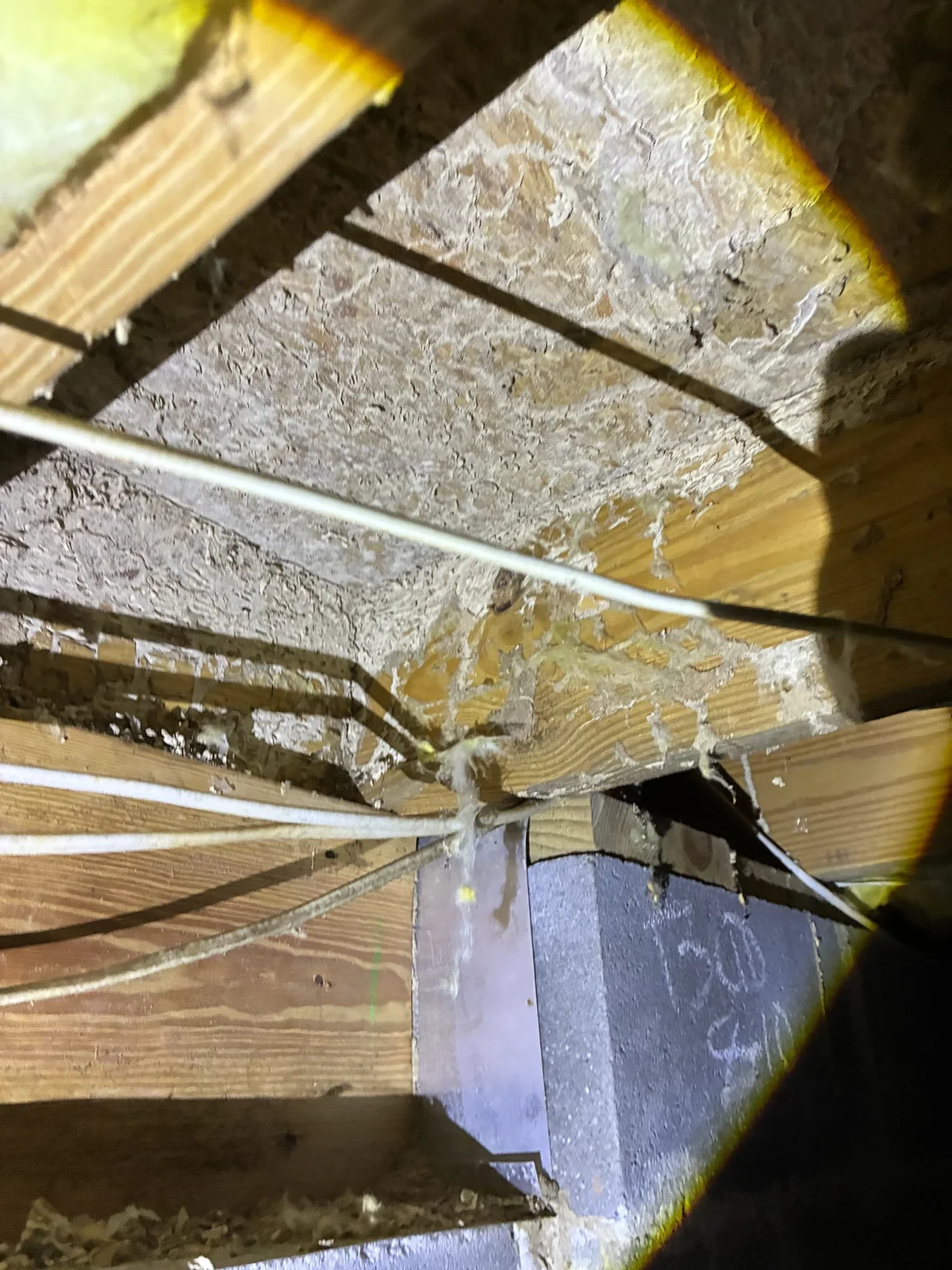
Subterranean termite mud and damaged framing exposed behind an interior light switch in a Bay Island home in Virginia Beach
A wall void opened on Bay Island in Virginia Beach, off Broad Bay: subterranean termite mud packed around the switch box and wiring, with the framing behind it eaten hollow. From the room side there was nothing to see until the cover plate came off — which is why an inspection is a hands-on job, not a walk-through.

What You See vs. What It Means vs. What Fixes It

  • Mud tube on a pier: A live run from the soil to your subfloor. Fix: break it, treat the soil, and cut the moisture that keeps it soft.
  • Silvery wings on a windowsill: A colony swarmed nearby, often under the same floor. Fix: inspection to locate the nest, then treatment; a can of spray never reaches the colony.
  • Joist that sounds hollow when tapped: Wood eaten from the inside. Fix: assess structural loss and treat before more joists go.
  • Sweating pipes and a wet vapor barrier: The tidal water table feeding the crawl space. Fix: moisture control so the space stops inviting the colony back.

FAQ About Termite Inspections

1. How long does a termite inspection take?
Most inspections run 30 to 60 minutes, longer when a low crawl space along the river branches makes the joists hard to reach.

2. Why do the older Ghent homes need a closer look?
The turn-of-the-century brick homes in Ghent sit low, with sill plates near grade and buried framing, so wood-to-soil contact and mortar cracks get checked first.

3. How often should a crawl-space home near the Elizabeth River be inspected?
Once a year. The close water table keeps the crawl damp year-round, so conditions that attract termites never really shut off.

4. What happens if termites are found during the inspection?
Depending on what the crawl space shows, technicians may recommend liquid termite treatments or a termite baiting system to eliminate the colony, usually paired with drying out the space.
Dealing with pests at home?

Get a free, no-obligation quote from Hampton Roads' trusted local pest & termite experts.

Request a Free Quote

24/7 Immediate Response for all of the 757 — or call (757) 502-0200

Our agent Olivia will message you via text immediately after you submit this form. She can answer all of your questions and schedule appointments. You can also get immediate assistance via phone or email.

It’s our Easy / Hassle Free Promise.

Needed for Quote

By checking this box, I agree Universal Pest & Termite, Inc. may contact me by phone call, text message, or email about this request. Consent is not required to purchase. Message frequency varies; msg & data rates may apply; reply STOP to opt out. See our Privacy Policy.

Ready to protect your home?

Call now or request a free quote online. Same-day service often available.

Why Universal

How We Compare to Other Pest Control Companies

Not every pest control company in Hampton Roads offers the same thing. Here is a straight comparison of what you get with Universal Pest Control and what is common elsewhere in the industry.

Comparison of Universal Pest & Termite, Inc. against common practice among other pest control companies serving Hampton Roads.
UniGuard ProgramExclusive
Universal Pest Control

Termite protection and full pest control combined in one membership for one low monthly payment — from $59/month, with the termite warranty and quarterly pest service included together.

Most pest control companies

Termite protection and pest control are usually sold as two separate agreements, with two renewals and two bills to keep track of.

SmartPay financingExclusive
Universal Pest Control

$0-down payment options on termite treatments, baiting systems, and repairs, so the work can start before payday. Simple, predictable monthly payments.

Most pest control companies

Financing, where it is offered, is commonly arranged separately through a third-party lender.

Pest Guard Attic Insulation™Exclusive
Universal Pest Control

Hampton Roads' only licensed Pest Guard Insulation™ installer, through our sister company Universal Insulation Doctor — insulation manufactured with an EPA-registered pest preventative, so the replacement itself resists the insects that ruined the original.

Most pest control companies

Attic insulation is typically referred out, and standard fiberglass has no pest deterrent built into the material.

Total Home Health Network
Universal Pest Control

Pest and termite control, attic insulation, and duct cleaning coordinated under one roof through the Universal family of companies — one point of contact for the whole job, done in the right order.

Most pest control companies

Pest control only. Insulation and duct work are usually booked with separate vendors on separate timelines.

A+ BBB rating
Universal Pest Control

BBB accredited since 2007 with an A+ rating, earned through consistent, honest work in the same community.

Most pest control companies

Accreditation and ratings vary by company — worth checking before you book anyone.

26+ years in business
Universal Pest Control

Protecting Hampton Roads homes since 2000 — more than 26 years in the same market, with over 100,000+ homes serviced.

Most pest control companies

Tenure in the area varies widely; newer branches and recently opened franchises are common.

Family owned & operated
Universal Pest Control

Owned and run by a family that has lived in Hampton Roads their whole lives. The people who answer the phone and the crews at your door are your neighbors.

Most pest control companies

Ownership varies — many local branches are franchises of national brands, with crews dispatched from outside the area.

Guarantees in writing
Universal Pest Control

Pest-Free Guarantee and Termite-Free Guarantee: if pests come back between scheduled visits, so do we, at no extra charge. Free inspections, plus same-day and next-day service.

Most pest control companies

Retreatment terms, callback windows, and what counts as covered differ from contract to contract.

The highlighted Universal Pest & Termite column reflects services we provide directly or through the Universal family of companies. The “Most pest control companies” column describes common industry practice in general terms and is not a statement about any particular company — some companies may offer services that are similar, so ask any provider exactly what their plan, warranty, and quote include before you sign. Financing on approved credit.