It is a memorable claim: cockroaches cannot walk backward, so one that slips into a narrow space—or even an ear—cannot get back out. The claim is an oversimplification. A cockroach is not built with a one-way walking mechanism; it can change direction. A tight gap may limit how an insect turns or escapes, but that is not a reliable way to identify a roach or measure an infestation.
For a Hampton Roads homeowner, the more useful question is what the sighting can tell you. One cockroach in a bedroom is a reason to look for more evidence, not proof that a colony is established there. The species, where it appeared, and whether you find repeated signs nearby all matter.
Can cockroaches actually move backward?
Yes. The statement that cockroaches categorically cannot walk backward is misleading. Their spiny legs and quick, coordinated gait are adapted for moving over surfaces and through tight spaces, but they can adjust direction. Confusion often comes from an insect becoming trapped in a confined opening, where turning is difficult for many small animals. That behavior does not mean every roach is physically unable to reverse.
Stories about insects entering ears are rare medical incidents, not a likely outcome of finding a roach in a bedroom. If you believe an insect is in someone’s ear, get medical care promptly. Do not put tweezers, cotton swabs, or household chemicals into the ear.
What a bedroom roach sighting may mean
A bedroom is not the usual first place to look for a food-and-water source, but a cockroach can travel from another part of a home. It may follow a wall edge, pass through a plumbing or utility opening, or be an outdoor species that wandered inside. In connected housing, German cockroaches can also move between units through shared walls and service openings.
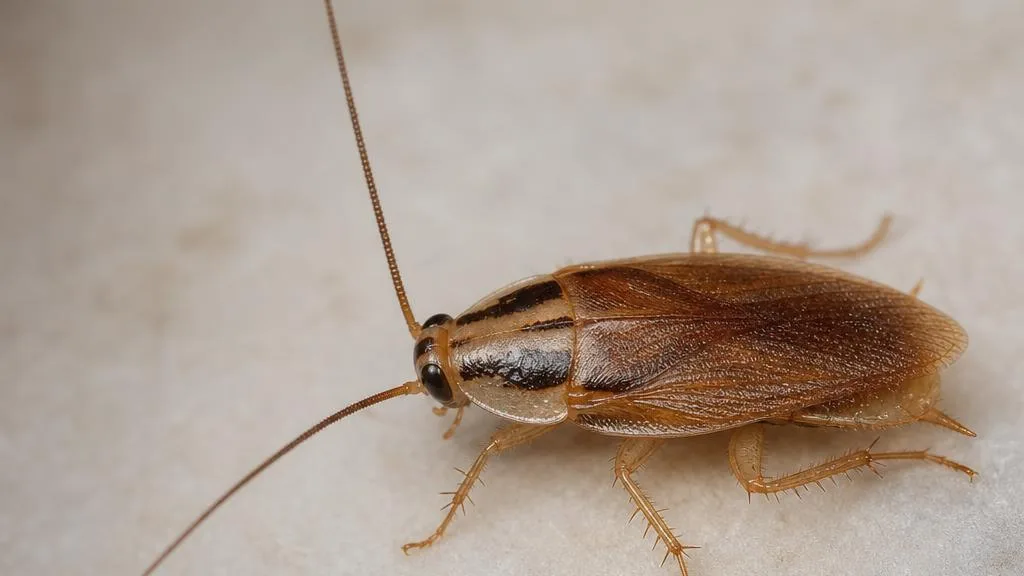
Species clues help, but a photo is not always enough for a definite identification. German cockroaches are relatively small and tan, with two dark stripes behind the head. Larger reddish-brown cockroaches may be outdoor visitors that enter from damp exterior areas. Compare a clear photo with our pest library; if you suspect German cockroaches, our cockroach control page explains the inspection and treatment approach.
Check for patterns instead of guessing
Start with the area where you saw the insect, then check likely nearby routes. Look along baseboards, behind a nightstand, around a closet or laundry area, and near any bathroom or plumbing wall. Do not dismantle electrical equipment or move heavy appliances if doing so is unsafe.
- Write down the time and exact room. Note whether the roach was near food, water, a drain, or an exterior door.
- Look for additional live insects, pepper-like droppings, shed skins, or egg cases in protected cracks and corners.
- Check nearby kitchen and bathroom areas, especially under sinks and around appliance gaps, where warmth, moisture, and food can be available.
- Take a clear photo from above and beside a familiar object for scale. Keep the specimen or photo if identification is uncertain.
Repeated sightings, small nymphs, or several kinds of evidence close together raise more concern than one adult roach with no other signs. Even then, evidence does not tell you exactly where the harborage is or which treatment is appropriate. A technician can inspect connected rooms and trace likely travel routes.
Why a bedroom sighting does not automatically mean a large infestation
Cockroaches are commonly active at night, so a nighttime sighting alone is not a measurement of population size. One insect may have wandered in from outdoors or moved from another room. Conversely, repeated sightings or young roaches can point to ongoing indoor activity and deserve a closer inspection.
Avoid treating the entire room based only on a single sighting. Foggers and broad sprays may not reach hidden cracks where roaches shelter, and pesticide products can create avoidable exposure if used against label directions. Store food securely, clean crumbs and spills, address accessible moisture, and avoid mixing products. If activity continues, get the source assessed before adding more chemicals.
What to do next in a Hampton Roads home
Older homes, attached housing, utility penetrations, and damp exterior areas can create different entry or harborage conditions. A bedroom insect may have come from a kitchen, bathroom, shared wall, crawl-space route, or the outdoors; the room itself does not identify the source. That is why an inspection should consider the connected areas rather than treating only the spot where the roach was seen.
If you see another cockroach, save a photo and note where it appeared. If you find repeated activity, droppings, egg cases, or shed skins, request an inspection instead of relying on the “can’t walk backward” story to judge what is happening. Universal Pest serves Hampton Roads communities; start with our service-area directory or request a pest inspection.
Can cockroaches walk backward?
Yes. The absolute claim that cockroaches cannot move backward is misleading. A narrow opening can make turning or escaping difficult, but that does not mean the insect has a one-way walking mechanism.
Does one cockroach in a bedroom mean I have an infestation?
Not by itself. One sighting can be an outdoor insect or a roach that moved from another room. Repeated sightings, nymphs, droppings, shed skins, or egg cases are stronger reasons to arrange an inspection.
Why would a cockroach be in my bedroom?
It may have traveled from a kitchen, bathroom, utility opening, shared wall, or the outdoors. Check nearby sources of food and moisture and note whether you see additional evidence along the route.
Are German cockroaches different from larger outdoor roaches?
Yes. German cockroaches are smaller and tan with two dark stripes behind the head, and they commonly establish indoors near food and water. Larger reddish-brown species may enter from outdoor or damp areas. A clear photo can help, but uncertain identifications should be confirmed.
What should I do if an insect gets into someone’s ear?
Seek medical care promptly. Do not put tweezers, cotton swabs, or household chemicals into the ear, and do not treat an ear incident as a substitute for a pest inspection.