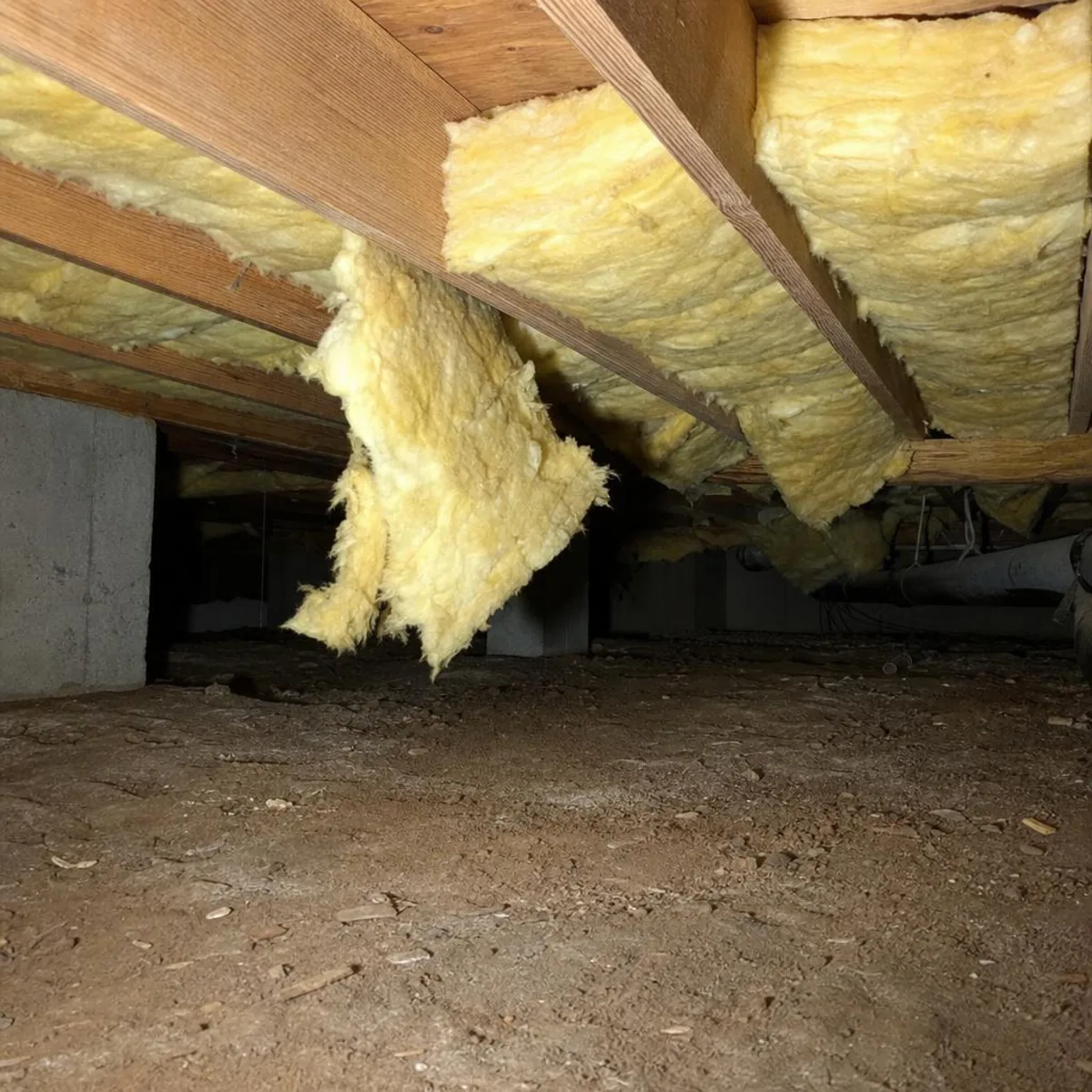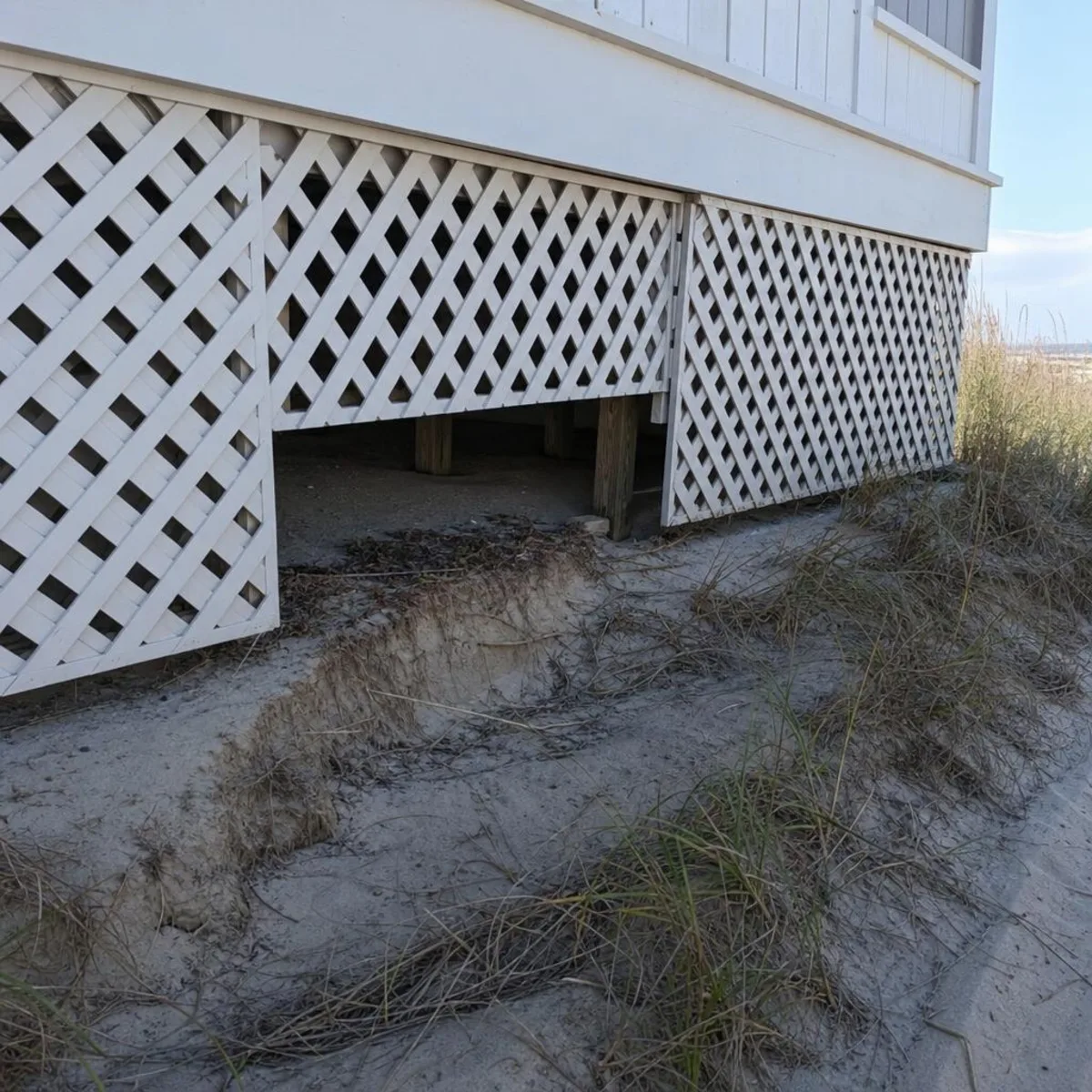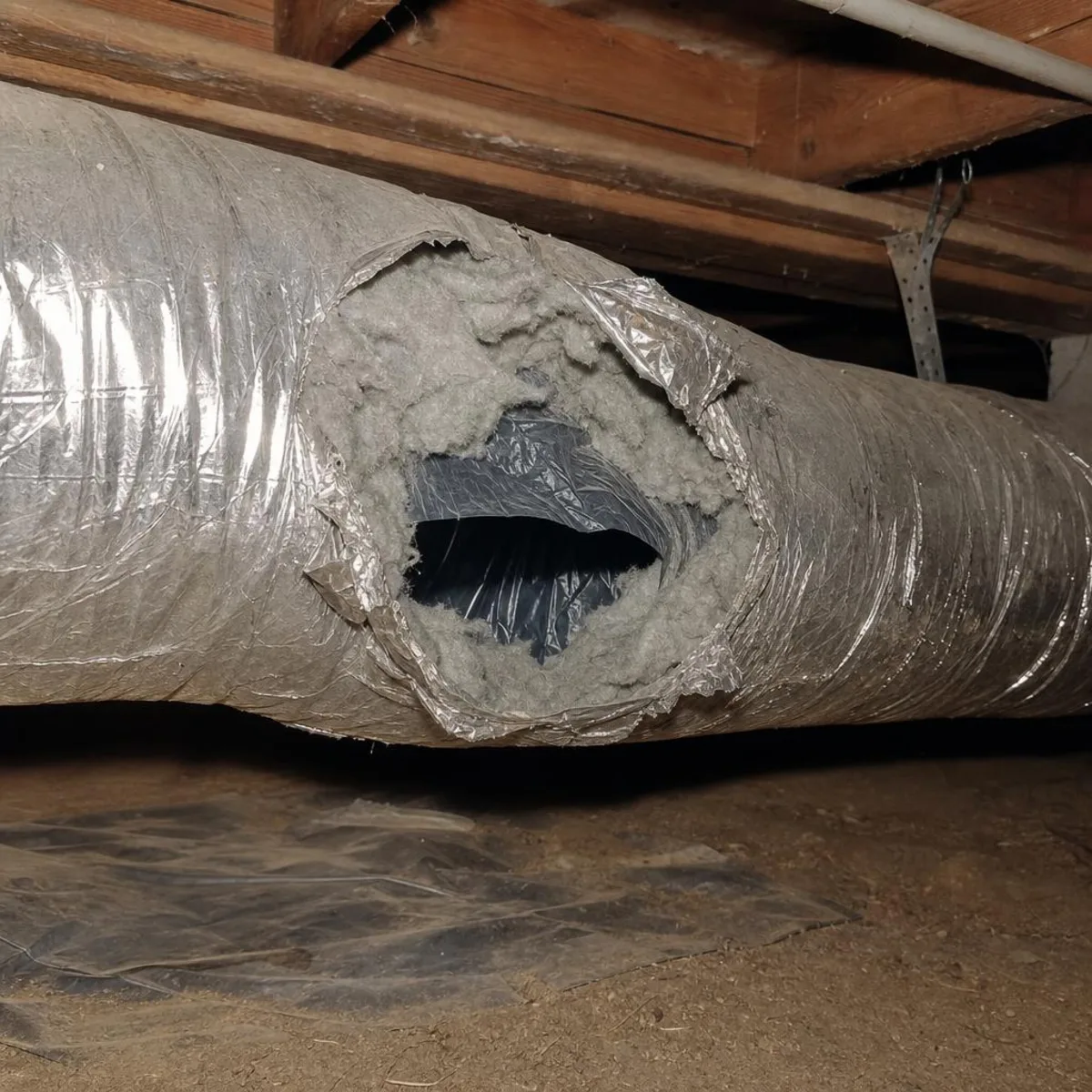
A ragged tear in the flex duct under a Greenbrier home tells a very different story than a collar that has simply slipped off its boot. Knowing which one you are looking at decides everything that comes next — whether you have a rodent problem or just a mechanical one.
How do you tell a chewed flex duct from a connection that just failed?
Look at the edges and the surroundings. A rodent-chewed duct has torn, frayed openings with gnaw marks on the insulation and often droppings or greasy rub trails nearby. A failed connection is clean: the metal collar has pulled loose from the boot or the tape has let go, leaving an intact end and no bite marks. One is an animal; the other is gravity and age.
See duct & dryer vent cleaning
The location of the damage is a second clue. Rodents chew into a run at points that are easy to reach and warm — along the low belly of a sagging duct or where the flex passes close to the sill. A mechanical failure shows up at the fittings, where the system was only ever held together by a clamp and mastic.
If you find shredded insulation packed into the duct's interior or a nest tucked into a torn section, that settles it. Rodents do not just chew through — they move in. Confirming which problem you have is exactly what a crawl space inspection is for before anyone quotes a repair.
What does a torn duct run do to the air in the rooms above?
A torn supply run dumps conditioned air into the crawl space instead of the room it was meant for, so the space above never quite reaches the thermostat setting and the system runs longer to chase it. On a return side, the tear pulls unconditioned crawl-space air — humid, dusty, and carrying whatever the rodents left behind — up into the living space.
Get a free quote in Greenbrier
That is the part homeowners feel without understanding. One room that stays warm in winter or muggy in summer no matter the thermostat often traces back to a run leaking into the crawl space below it. The register is open; the air just escapes before it arrives.
When the breach is on the return side, the concern shifts from comfort to air quality, because the system is actively drawing crawl-space air into the home's circulation. If rodents have been nesting in or around that duct, cleaning the system becomes part of the fix, carried out once the animals are gone.
Why does a chewed duct show up on the power bill?
Every hole in the duct is conditioned air you paid for going somewhere useless. A torn run bleeds heated or cooled air into the crawl space, so the system stays on longer to hit the same temperature, and longer run times mean higher energy use. A single sizable tear can make an HVAC system work noticeably harder without any obvious symptom upstairs.
See duct & dryer vent cleaning
Greenbrier's subdivisions are largely built over crawl spaces, so the ductwork runs out of sight and a slow leak goes unnoticed for a long time. The bill creeps up, one room lags the rest, and the system cycles more than it used to — none of it dramatic enough to trigger a service call on its own.
That hidden quality is why we check the ductwork whenever rodent activity turns up under a house. The crawl-space-built streets on our Greenbrier route share this exact vulnerability, and the pattern repeats across the wider Chesapeake service area.
What is the right order of operations once you find chewed duct?
Get the animals out first, seal the openings second, then clean and repair last. Cleaning or patching duct while rodents are still active simply gives them fresh material to chew and re-soil. The sequence exists so you only pay to restore the system once — after the crawl space is closed to the animals that caused the damage.
Get a free quote in Greenbrier
Step one is removal and exclusion: trap out the current population and close the dime-sized gaps and larger openings around vents, the access door and pipe penetrations, using metal hardware cloth rather than foam, which teeth defeat in an afternoon. That is the core of our pest exclusion and rodent control work.
Step two is cleanup and restoration — vacuuming droppings and debris, replacing soiled insulation, cleaning the affected ductwork, and repairing the torn flex runs. Done in that order, the repaired duct stays repaired rather than becoming next season's nest because the entry points were left open.
| What the duct or vent is doing | What it says about the Greenbrier crawl space | The order to put it right |
|---|---|---|
| Frayed tear with gnaw marks on the flex run | Rodents chew into warm ducts along the accessible low belly of a run | Remove the animals and seal entry points before repairing the duct |
| Clean collar pulled off the boot, no bite marks | Age and gravity let the clamp or mastic release at the fitting | A mechanical reconnection — not a rodent problem at all |
| One room never reaching the thermostat setting | A supply run is leaking conditioned air into the crawl space below it | Locate and repair the torn run, then confirm the register delivers again |
| Musty or dusty air from the vents after the system starts | A return-side tear draws crawl-space air and rodent debris into circulation | Exclude and clean the crawl space, then clean the duct system |
| Rising power bills with no thermostat change | Hidden duct leaks make the HVAC run longer to hit the same temperature | Seal the crawl space, repair the ducts, and cut the wasted run time |
| Shredded insulation packed inside a duct section | Mice nest inside the run itself once they have chewed in | Clear the nest, replace the section, and close the opening they entered by |
Frequently asked questions
Is a chewed flex duct always a sign of an active infestation?
Not always active, but always evidence rodents were present. The chewing itself October be old, and the animals could have moved on or been removed already. What the damage tells you is that there was an entry route into the crawl space and a reason to use it. Confirming whether activity is current means checking for fresh droppings, rub marks and new gnawing near the tear.
See duct & dryer vent cleaning
Can I just tape over the hole in the duct?
Tape on a rodent-chewed run is a short-term patch and little more. If the animals still have access, they will reopen it or chew a fresh spot, and tape does nothing about the droppings and nesting material already inside the run. The durable fix is to exclude the rodents, clean the system, and replace the damaged section rather than bandage it.
Get a free quote in Greenbrier
How much air can one torn duct really waste?
Enough to feel and enough to see on a bill. A sizable tear lets a meaningful share of conditioned air escape into the crawl space instead of reaching the room, so the system runs longer to compensate. The exact loss depends on the size and location of the breach, but a single bad tear on a main run is often behind a room that will not hold temperature.
See duct & dryer vent cleaning
Does cleaning the ducts also close the hole the rodents used?
No. Duct cleaning removes the contamination inside the system, but it does not address the crawl-space openings the animals entered through. Those are a separate exclusion step. Cleaning without sealing leaves the door open for the same problem to return, which is why the order — exclude, then clean and repair — matters.
Explore rodent control in Chesapeake
A torn flex run under a Greenbrier home is worth diagnosing — teeth or a slipped collar — before anyone reaches for tape, because the order of the fix depends on the answer. Once the rodents are out and the entry points sealed, the run that got shredded and the debris pulled into it are what Universal Duct Cleaning cleans and repairs, and any crawl-space insulation the animals soiled on the way in is replaced by Universal Insulation Doctor — in that sequence, so the repair holds. Grab a free quote to get the crawl space and the ductwork looked at together.