The first hard cold snap sends field mice off the farmland and treelines that ring Hickory and Deep Creek straight toward the nearest warm void — and in this part of Chesapeake, that is very often a dirt crawl space, where they burrow up into the subfloor insulation overhead.
Which mice are actually moving into these rural crawl spaces?
Out here it is usually field and deer mice rather than the house mouse of a city block. They live in the surrounding grass, brush and woodline through the warm months, and when night temperatures drop they move indoors for shelter and warmth. A crawl space open to grade is the easiest interior space for them to reach.
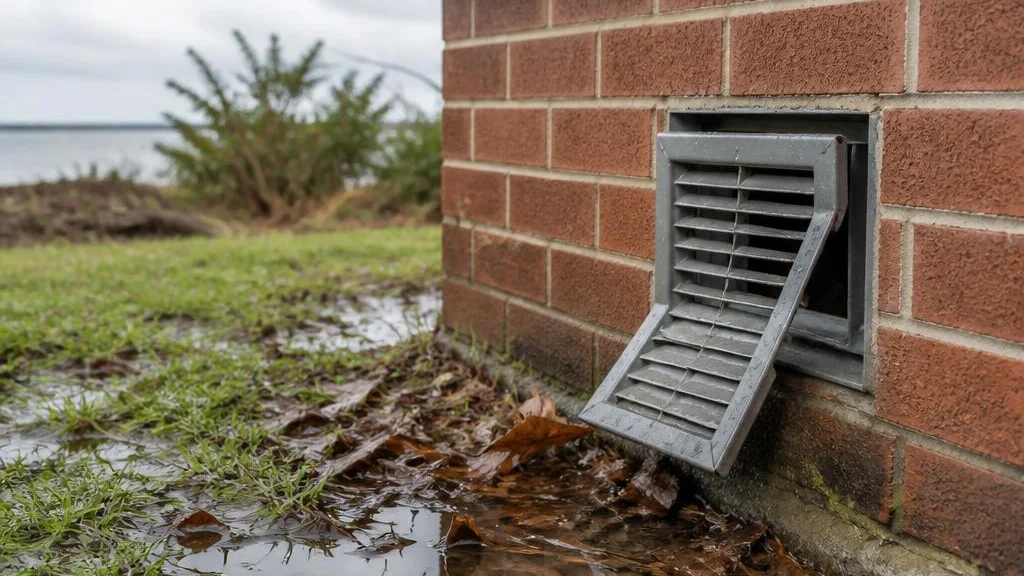
Deer mice are the ones with the white belly and larger dark eyes, common along treelines and old fields. They are strong climbers and jumpers, and the opening they need is small — a dime-width gap is all it takes. In agricultural Chesapeake, the vent and access openings of a crawl space leave that much clearance in easy reach.
The timing is predictable rather than random. It is not that the population explodes overnight; it is that the animals already living around the property relocate inward when the weather turns, and your crawl space is simply the warmest thing nearby. Our rodent control approach starts with that seasonal movement in mind.
What do field mice do to subfloor insulation once they are up there?
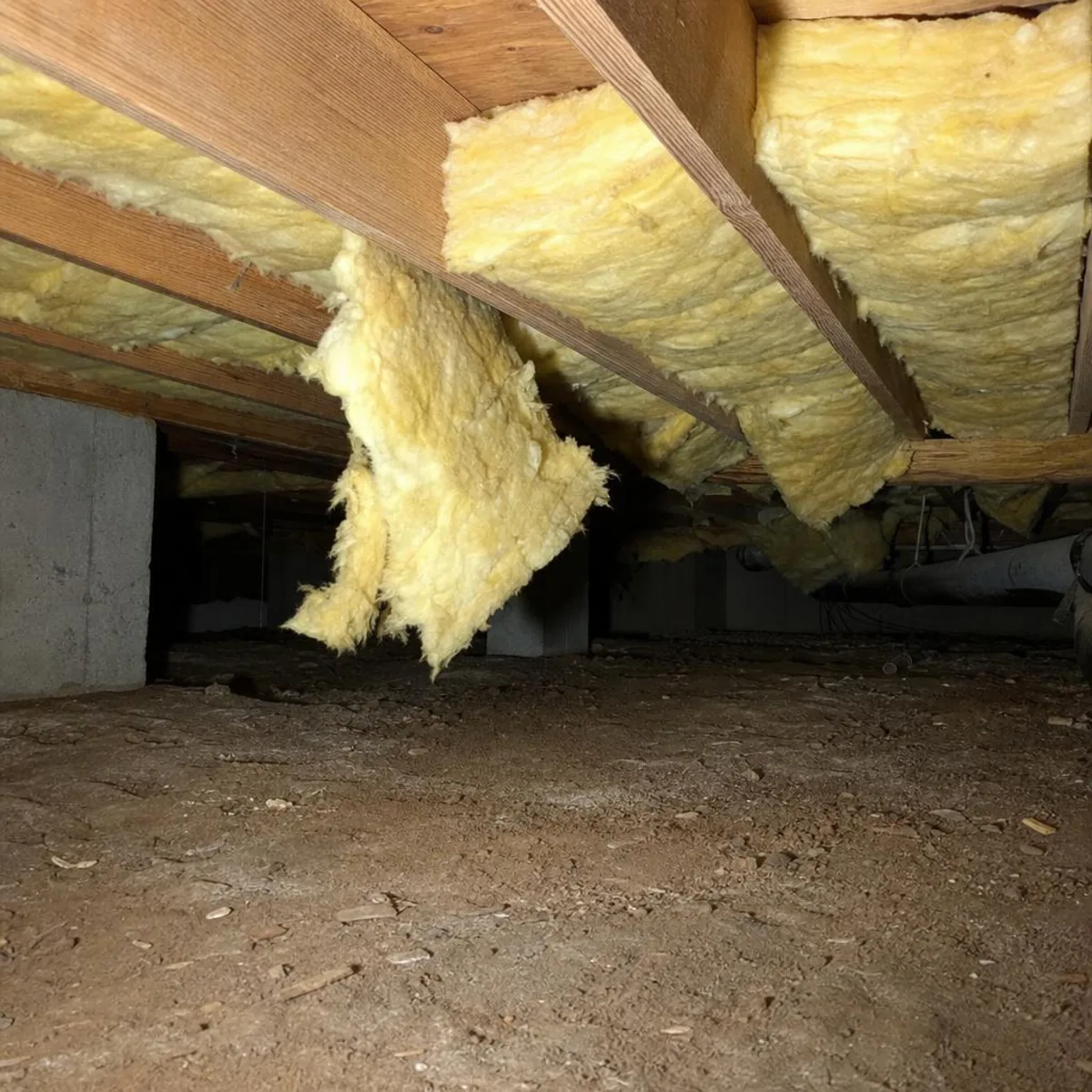
They treat batt insulation between the floor joists as bedding. Mice pull it apart, drag it into nesting balls, and tunnel runways through it, which flattens its loft and destroys its thermal value. Worse, they urinate and defecate throughout, so the insulation becomes soiled and begins carrying odor up into the rooms above.
Fiberglass batts stapled up under the floor are ideal from a mouse's point of view: soft, warm, dry and undisturbed. A colony will shred a run of it in a single season, leaving sections sagging or fallen out of the joist bays entirely. Once the loft is crushed and torn, the insulation no longer slows heat loss through the floor, and the rooms above feel colder for it.
The contamination is the part homeowners underestimate. Soiled subfloor insulation is not just a thermal loss — it is a source of odor and airborne particulate that belongs to the crawl space but does not stay there. Removing and replacing fouled insulation is specialist work, and it is a routine part of putting a rodent-worked crawl space right.
How does a dirt crawl space differ from a sealed one here?
A dirt crawl space is open to the ground and usually to outside air through vents, so it stays humid, and it gives rodents bare soil to burrow along and easy grade-level entry. A sealed, encapsulated crawl space closes the vents, lays a heavy liner over the soil and cuts off both the moisture and the easy paths in. The difference in rodent pressure is large.
Most older Hickory and Deep Creek homes sit over dirt crawl spaces because that was standard pre-slab construction. The high water table and humid summers keep that soil damp, which softens wood, feeds mold and makes the space more attractive to anything looking to nest. A mouse arriving from the field finds soft ground, open vents and warm insulation overhead — everything it wants in one place.
Sealing that space changes the equation. Crawl space encapsulation covers the dirt, seals the vents and drops the humidity, and pairing it with pest exclusion closes the dime-sized openings the animals used. The farmland-edge homes we work in Hickory and out toward Deep Creek tend to sit over exactly this kind of open crawl space, which is why sealing pays off here.
| The clue in the crawl space | The rural-Chesapeake cause | The step that clears it |
|---|---|---|
| Cold floors over one room after the first freeze | Field mice have shredded and flattened the subfloor batts in that joist bay | Remove the fouled insulation, seal the entry, then re-insulate the bays |
| A musty, ammonia-like odor rising through the floor | Soiled insulation and droppings in a humid dirt crawl space carry odor upward | Extract contaminated material and lower crawl-space humidity by sealing it |
| Droppings along the sill and on the vapor barrier | Mice off the treeline are runwaying through an open, grade-level crawl space | Trap out the current animals and close the dime-sized openings they use |
| Nesting balls of fiberglass fallen onto the dirt | Insulation pulled from the joists and dragged down into ground nests | Clear the nests, replace the batts, and cover the soil to remove the nest site |
| Activity spiking with the first cold nights | Field and deer mice relocate indoors from farmland when temperatures drop | Exclude before the cold snap so there is no warm void left open to them |
| Chewed edges on stored boxes under the house | An open dirt crawl space doubles as accessible storage and shelter | Encapsulate the space and keep the sill and vents sealed against re-entry |
Frequently asked questions
Could a field mouse really fit through the gaps around my crawl-space vents?
Yes, and more easily than most people expect. A mouse squeezes through any opening its skull clears, roughly a dime's width, because the skeleton flexes once the head is through. Around a rural crawl space that puts vent margins, sill seams, pipe penetrations and a loose access door all in play. Sealing the one visible hole accomplishes little if another dime-width gap sits a few feet along the same wall.
Can I just replace the chewed insulation and leave it at that?
New insulation in an open dirt crawl space is simply fresh bedding for the next mouse that arrives off the field. Replacement only lasts if the animals are removed first and the openings are sealed so more cannot follow. Sequencing matters: exclude and clean, then re-insulate, otherwise you are paying to re-line a nest.
Does encapsulation really keep mice out?
Encapsulation is not a rodent trap on its own, but it removes most of what draws them — the bare soil, the humidity, and the open vents that served as doorways. When it is done together with sealing the remaining entry points, the crawl space stops being the easy warm shelter it was. The combination is what keeps a rural crawl space clear, not the liner alone.
Why does the problem come back every autumn otherwise?
Because the source never moved. Field and deer mice live around the property year-round, and each cold snap pushes a new wave toward the warmest reachable void. If last winter's entry points are still open, this winter's mice use them. Breaking that cycle means closing the openings once, thoroughly, rather than trapping the same crawl space again each fall.
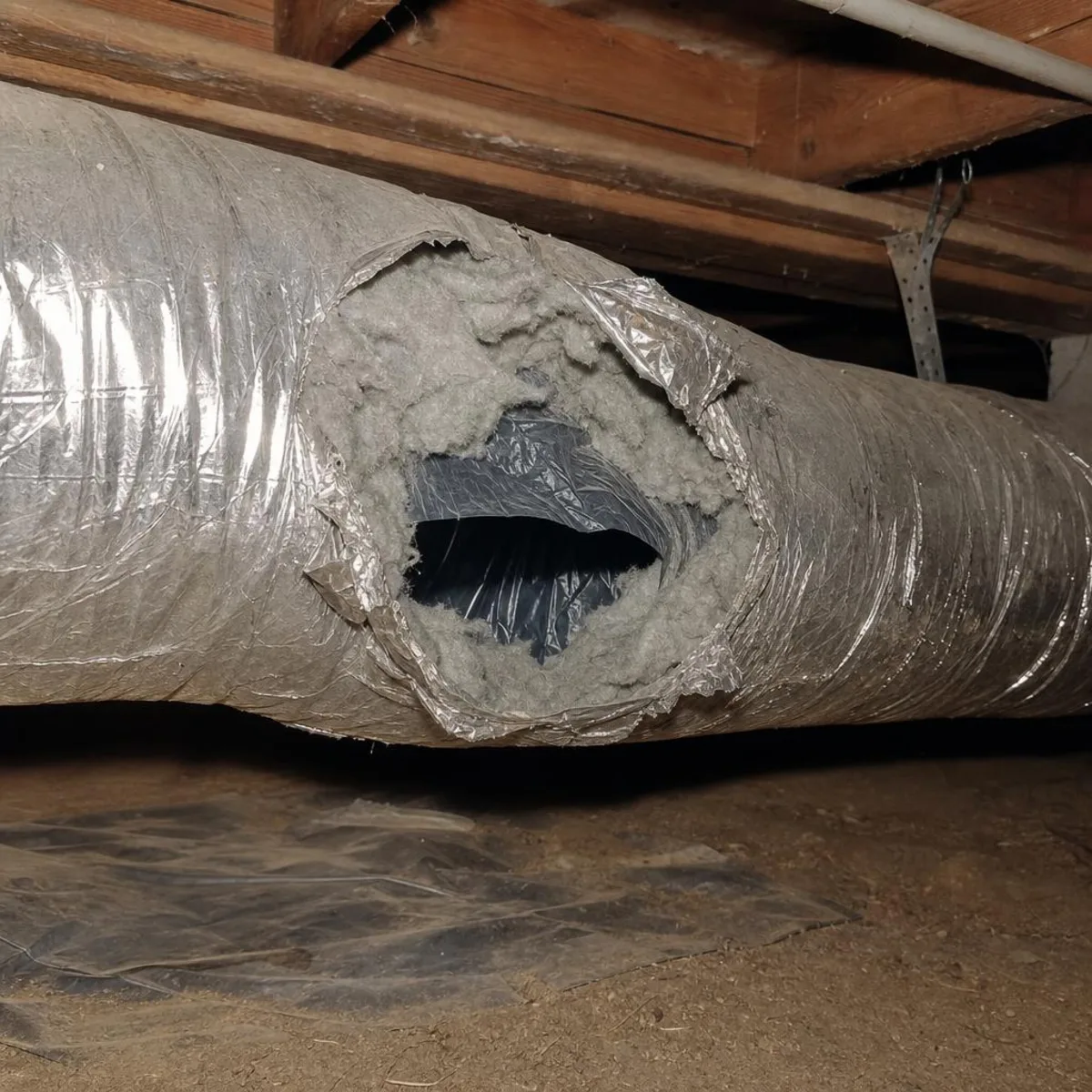
Cold floors over one Hickory or Deep Creek room after the first freeze, or an ammonia edge coming up through the boards, both point down into the crawl space, and the fix is mouse control and sealing before the next cold night sends another wave off the field. The shredded, soiled batts between those joists rarely recover their loft, which is where Universal Insulation Doctor pulls and replaces the fouled runs; and if the mice were nesting against or inside a duct down there, Universal Duct Cleaning clears what got drawn into the system. Get a free quote to have the subfloor looked at before the season turns.