If you live off Rosemont Road and something is moving above your bedroom ceiling after dark, a rat is the likeliest answer — and it is rarely one animal on its own. The Rosemont section of Virginia Beach has a particular combination working against it: low ground drained by canals, streets of mid-century ranches and split-levels whose rooflines were never built to be rodent-tight, and a mature tree canopy that has grown into the gutters over sixty years. Put those together and an attic stops being an attic and becomes shelter.
The clip below is our own footage, filmed during a home inspection in Rosemont by David Shafer, a technician who has been on our crew for more than ten years. Several live rats are moving through the same attic at once, over insulation they have already fouled.
It is worth knowing what that means before you assume one animal wandered in. Rats are social and shelter in groups, so a noise overhead is not evidence of a single visitor, and by the time it is loud enough to keep someone awake the space has usually been in use for a while.
Why do rats end up in Rosemont attics in particular?
Because the ground is low, the drainage is man-made, and the houses are old enough that the roofline has openings. Rats den along canal banks and ditch lines all over this part of Virginia Beach; when the water comes up or the banks are disturbed, they move to the driest, warmest space within reach, and in a one-story ranch with an overgrown oak on the property line, that space is the attic.
Explore rodent control in Virginia Beach
The neighborhoods either side of Rosemont Road — Windsor Woods, Princess Anne Plaza, The Lakes — sit on ground that was undeveloped low land before the subdivisions arrived, and they only drain because a network of canals and ditches carries the water away. That network is excellent rat habitat. Norway rats are burrowers by preference, and a soft, vegetated canal bank a block from a row of kitchens is close to ideal for them.
The road itself explains the rest. Rosemont Road runs nearly five miles from Virginia Beach Boulevard down toward Holland Road, and it is lined the whole way with shopping strips, restaurants and schools. City records trace the name back to Rosemont Dairy and a train stop called Rosemont Station, and the fields where those cows grazed are now parking lots with dumpsters on them. A rat that feeds behind a strip center at 2 a.m. does not need to travel far to find a quiet place to sleep, and the houses backing onto those corridors have the shortest trip between the two.
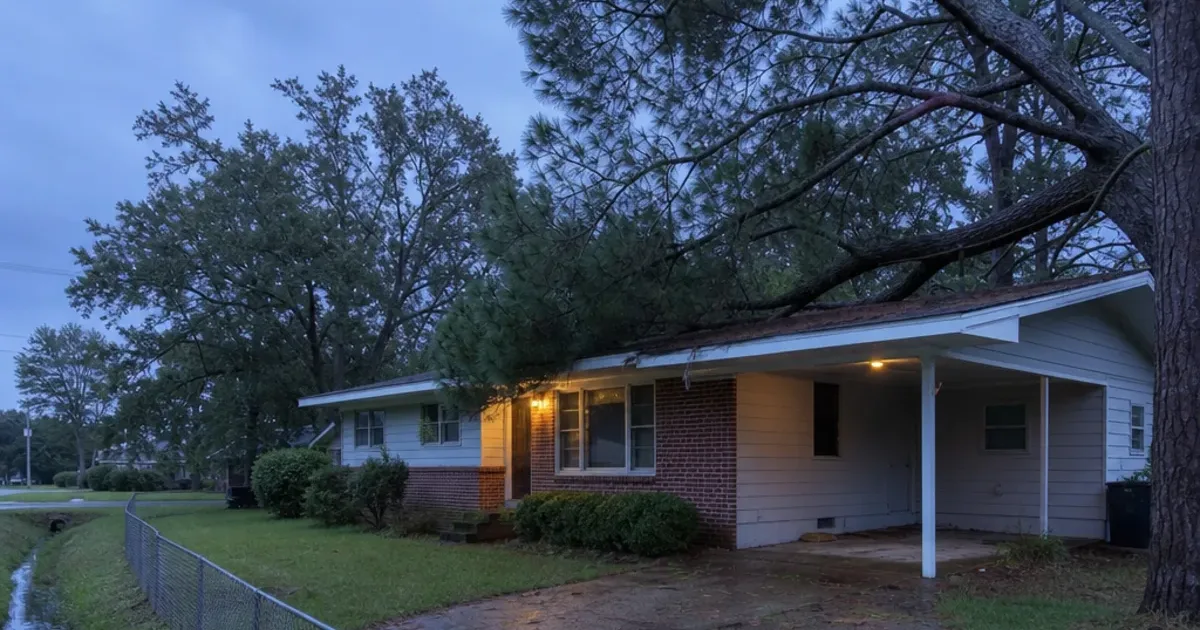
Then there is the canopy. Much of the housing here went up in the late 1950s and 1960s, and the pines and oaks that grew up with those houses are now tall enough to lean over the roofs. A branch resting on a gutter is a bridge, and it puts a rat on the roof deck without it ever having to climb the wall.
Which Rosemont-area neighborhoods have the conditions for it?
The older, lower streets between Virginia Beach Boulevard and Lynnhaven Parkway have the most of what rats need at once — Windsor Woods, Princess Anne Plaza, The Lakes, Bow Creek and the blocks around Rosemont Forest. Thalia and Aragona sit north of the Boulevard rather than in Rosemont proper, but the housing there is of the same era and the roofline details are the same.
Get a free quote in Virginia Beach
| Where | What drives it | What we check first |
|---|---|---|
| Windsor Woods | Canal frontage and low lots; homes of the flood-project era with long, low rooflines | Soffit returns over the porch, gable vents, canal-side fence line |
| Princess Anne Plaza | Ditch network, slab ranches with attached garages, heavy mature canopy | Garage ceiling access, dryer and bath vent terminations, branch contact |
| The Lakes | Standing water and open bank lines within a block of most homes | Roof-to-fence and roof-to-tree bridges, crawl-space vents |
| Bow Creek and the Rosemont corridor | Commercial dumpsters within a short run of residential streets | Ridge vent screening, fascia rot, roof junction gaps |
| Rosemont Forest and the south end | Newer construction, but the same wooded edges and drainage | Ridge and turbine vents, utility penetrations, weep and eave gaps |
| Thalia and Aragona | Same 1950s–60s housing stock, older roofs, tree-lined streets | Fascia and drip-edge separation, chimney chase, attic hatch dust |
A street that is not on that list is not in the clear — the list is about which conditions stack up, not about who has a problem. If you want the diagnosis side in full, our guide to roof rats in Virginia Beach attics covers identification, damage and what the work involves; this article is about why this particular part of the city keeps producing the conditions. City-wide coverage is on our Virginia Beach rodent control page.
How do rats get into a house built in the 1960s?
Almost always at roof height, through an opening that has been there for years. The classic route in this area is an open soffit return — the boxed-in corner where a porch or garage roof meets the wall — followed by rusted or missing vent screening, separated fascia and drip edge, and the gaps where cable, refrigerant lines or plumbing vents pass through the roof.
Explore rodent control in Virginia Beach
Rats do not need much. A gap you could post a letter through is a doorway, and unlike a mouse, a rat will actively enlarge one by gnawing. Two things about the housing here make it easier for them: the eave detailing on ranch and split-level construction of that period leaves a lot of boxed voids, and six decades of coastal weather have opened joints that were tight when the house was new.
The inside of the attic then tells you how long it has been going on. Runways pressed flat into the insulation, droppings concentrated along the top plates, rub marks on the framing, and chewed sheathing around the entry point. Chewed wiring is the one we flag hardest, because that is a fire risk rather than a nuisance. Our rodent removal and structural seal-up service exists for exactly this: trapping empties the attic, and the sealing decides whether it stays empty.
Does the flood and drainage work push rats into houses?
Disturbing a bank displaces whatever is living in it. Per the City of Virginia Beach public works program, the drainage across Windsor Woods, Princess Anne Plaza and The Lakes is being rebuilt with canal dredging, pump stations, tide gates and flood barriers — and any time burrow habitat is dug up, flooded or paved over, the animals in it relocate to the nearest shelter rather than disappearing.
Get a free quote in Virginia Beach
The same thing happens on a smaller scale every time the area takes a hard rain. Water fills the burrow, the rat moves up, and the driest place within a short run is a roof void. That is why rodent pressure here tracks the weather as much as the calendar, and why sealing a roofline is worth more on this ground than in a subdivision sitting higher and drier.
Reading the signs before anyone opens the attic hatch
| What you notice | What it usually means | What to do |
|---|---|---|
| Scratching and scurrying overhead after dark, quiet by morning | Nocturnal rodent activity — rats or mice, not squirrels | Note which side of the house and roughly what time |
| Heavier thumps that travel along one side of the ceiling | A rat rather than a mouse; enough weight to hear the footfall | Do not put poison in the attic; get eyes on the entry point |
| An ammonia or musty smell drifting from the attic hatch | Urine and droppings soaking into the insulation | Plan on cleanup and re-insulation, not just trapping |
| Dark, rice-grain droppings in the garage or on top plates | An established travel route through the structure | Leave them in place for the inspection — they show the runway |
| Fresh gnawing on fascia, soffit board or a vent screen | An active entry point being maintained | Photograph it and note the height and orientation |
| A branch resting on the roof or gutter | A bridge onto the roof deck | Trim it back — the standard is at least a few feet of clearance |
Is it a rat or a squirrel in my attic?
Timing separates them faster than anything else. Squirrels are daytime animals, loudest in the early morning and late afternoon, and they sound like something rolling or dragging. Rats work after dusk and through the night, with lighter, quicker footfalls that stop when you knock on the ceiling. Noise that wakes you in the small hours points to a rodent rather than a squirrel, though a disturbed squirrel can shift in the nest at odd hours too. Our Norway rat identification page covers the differences between the two rat species we deal with here.
Explore rodent control in Virginia Beach
Will the insulation have to come out?
Often, yes, and it depends on how long the attic has been in use. Rodents leave droppings and urine wherever they travel, and in an attic that goes straight down into the insulation underneath them, which absorbs it and holds the odour. There is no surface to wipe and no spray that reaches it, so contaminated material is extracted, the deck is fogged, and fresh insulation is blown back in.
Do traps on their own solve it?
They solve the animals that are in the attic today. They do nothing about the opening those animals used, which is why an attic that has been trapped but not sealed refills — sometimes within weeks. The trapping and the exclusion belong in the same job, in that order, and that is how we quote it.
Get a free quote in Virginia Beach
How much does this cost in Virginia Beach?
Attic work is quoted as whole-home rodent exclusion, and the number depends on how many openings the house has and how hard they are to reach rather than on how many rats are up there. We break the pricing down properly in our rodent exclusion cost guide for Virginia Beach, and the attic-specific version is in roof rats in Virginia Beach attics.
Is there a season for this?
The first cold snap is the trigger people expect, and rodents do push indoors as temperatures drop. On this ground water matters just as much: heavy rain floods burrows and moves rats upward at any point in the year, so a roofline sealed in October is doing useful work long before winter.
Get a free quote in Virginia Beach
Hearing something overhead in Rosemont?
We inspect the roofline first, trap what is inside, seal the way in with material rodents cannot chew, and handle the attic cleanup and re-insulation as part of the same project.