Find swarming termites on the Peninsula and do three things fast: catch a couple of the winged insects or their shed wings for a positive ID, quit writing them off as harmless flying ants, and get the crawl space under an older frame house inspected before the reproductives dig into damp sill wood. A swarm indoors almost always points to an established colony already working under the floor, not a stray blowing in from the yard.
Why the Peninsula's Frame Cottages Are a Target
The age of the housing is what turns this into a local problem instead of a general one. Hilton Village, the 1918 planned community of frame cottages, was built on shallow crawl spaces with the original framing running close to grade — the wood-to-soil contact subterranean termites travel for without ever surfacing. The same pattern repeats through the older frame housing that lines Warwick Boulevard as it runs up toward Denbigh: pier-and-beam floors, decades of settling that opened gaps at the sills, and vented crawls that hold the humidity a colony depends on.
Elevation and water finish the setup. Cottages sitting near the James River shoreline stand on ground where the tidal water table rides high, so the crawl-space dirt beneath them almost never dries out. Push west toward the Fort Eustis area and the low, wet flatwoods soil traps warmth and moisture the same way, which keeps colonies feeding through most of the year instead of stalling out in a hard freeze.
| What you see | What it means | What fixes it |
|---|---|---|
| Winged insects clustered at a sunny window after rain | A mature colony is swarming — straight waist, four equal wings | Positive ID, then inspect the crawl below that room |
| Shed wings on the sill of a Hilton Village cottage | Reproductives paired off under the shallow crawl nearby | Treat the colony below, not the wings on the floor |
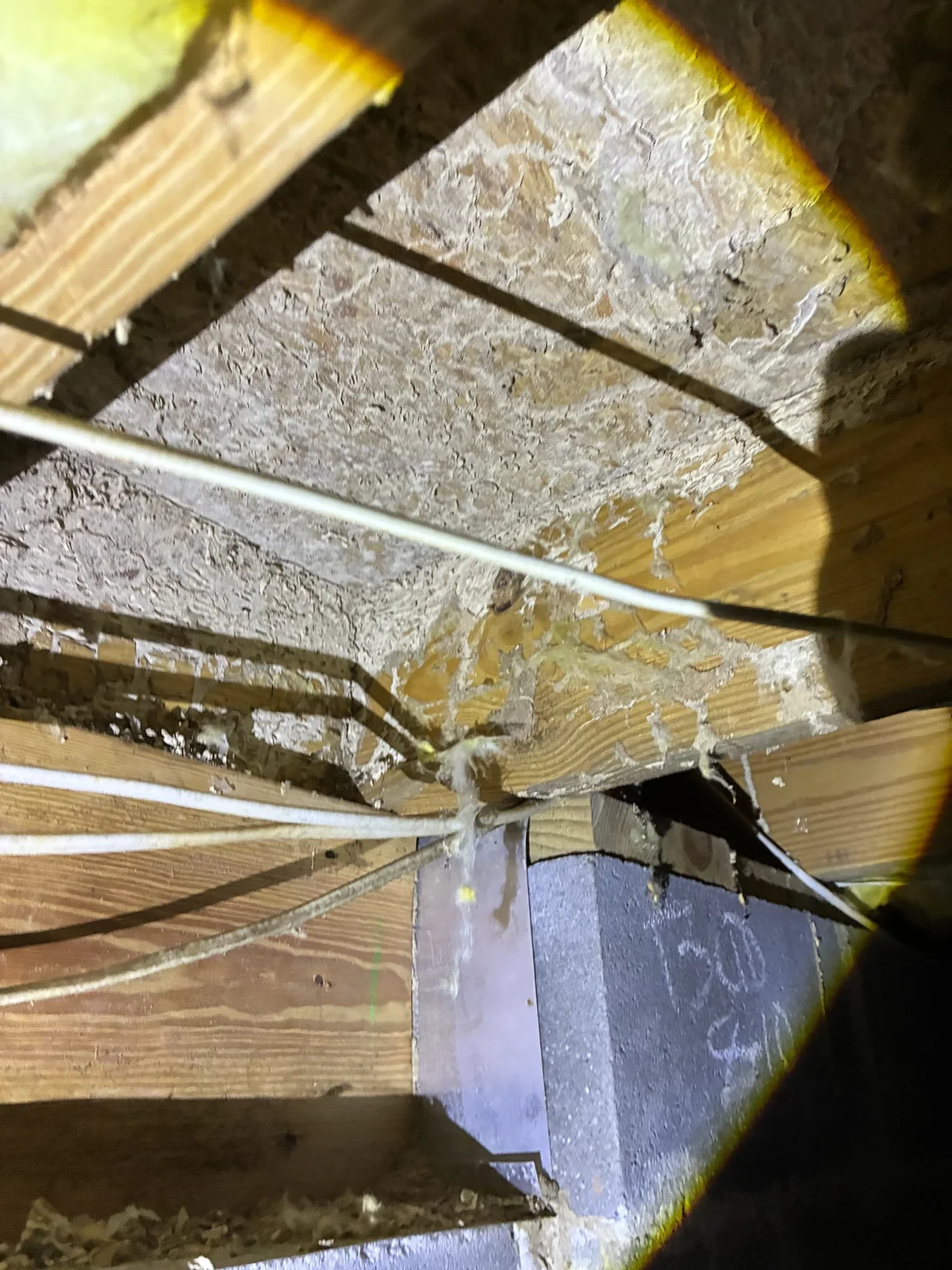
| Floor joists sound hollow off Warwick Boulevard | Wood eaten from the inside in a damp pier-and-beam crawl | Assess structural loss before treatment and repair |
| Crawl-space dirt stays damp near the James River | A high tidal water table feeding the colony year-round | Treat and dry the space so termites don't return |
What Swarming Looks Like and What It Means
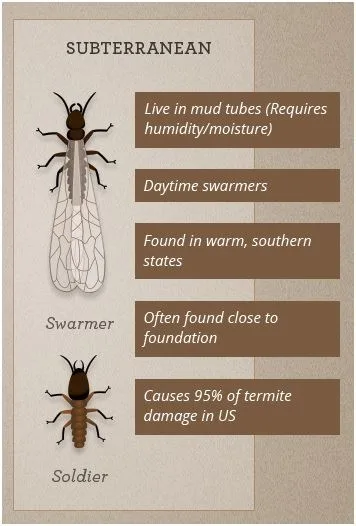
A termite swarm is a mature colony releasing winged reproductives, or alates, to mate and found new nests. Under the older frame homes around Hilton Village, they push up through crawl-space vents and around plumbing lines and gather at the first sunny window they reach, so the opening sign is usually a small pile of shed, silvery wings on an interior sill rather than anything out in the yard.
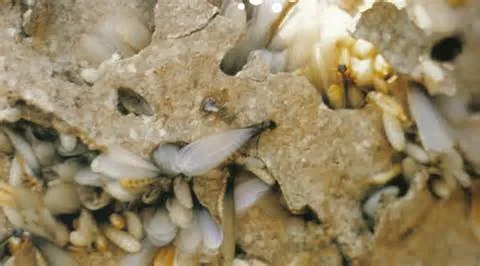
- Winged insects at the window after rain: A colony is swarming. Termites carry a thick, straight-sided waist and four equal-length wings that snap off after they land.
- Shed wings on a sill or floor: Reproductives paired off close by — often under the same shallow crawl. That is a cue to inspect, not to sweep up and forget.
- Soft or hollow-sounding floor joists: Wood hollowed from the inside, common in the low, damp crawls off Warwick Boulevard. The fix starts with an honest look at structural loss.
- Damp crawl dirt near the James River: The high water table feeding the colony. The fix pairs treatment with drying so the termites lose their edge.
What You Should Actually Do
- Save a sample. A few swarmers or shed wings in a bag give a technician a fast, positive ID. Feel free to share a picture for a quick read at info@universalpest.com.
- Don't spray and move on. An aerosol kills the swarmers at the window and never reaches the colony under a Denbigh-area floor.
- Reduce moisture. Keep the crawl dry, and clear decaying wood and mulch off the foundation — especially on the shoreline lots near the James River where the ground stays wet.
- Get a professional assessment. It's worth having pest control professionals evaluate the threat and plan prevention or treatment before the next swarm. A termite inspection reads the crawl these cottages hide their trouble in.
Peninsula Termite FAQ
1. I saw wings on the sill of my Hilton Village cottage. Is that a real problem?
Yes. The shallow crawl spaces under those 1918 frame cottages put sill wood close to damp ground, so shed wings indoors usually mean an established colony under the floor, not a stray from outside.
2. Why do the homes near the James River seem to have more termite activity?
The tidal water table rides high along the shoreline, so the crawl-space dirt stays damp year-round. That steady moisture keeps subterranean colonies active far longer than a drier inland lot.
3. My house off Warwick Boulevard is pier-and-beam. Does that raise my risk?
It does. Vented pier-and-beam crawls in the older Denbigh-area frame homes trap humidity and give termites easy wood-to-soil access along the piers and sill plates.
4. Should I treat it myself or call someone?
Save a sample for ID, but the colony lives under the floor where sprays can't reach. A professional inspection of the crawl space is the step that actually protects the structure.
Universal Pest & Termite Servicing:
- Newport News
- Virginia Beach
- Chesapeake
- Norfolk
- Portsmouth
- Hampton
- Suffolk
- Williamsburg