Hardwood floors add warmth and value to homes in Portsmouth, Virginia. Older neighborhoods near the Elizabeth River often have classic red oak floors that people have refinished many times. Builders designed these floors to last, but subterranean termites can quietly weaken them from below.
Most termite damage begins out of sight in the crawlspace or subfloor. By the time homeowners notice soft spots or a hollow sound underfoot, termite activity may already affect floor joists or other wooden structures. Knowing how termites reach hardwood floors helps homeowners spot a termite infestation.
Professional termite control in Portsmouth focuses on finding hidden entry points, identifying damaged wood, and stopping termite colonies before structural damage spreads. Recognizing early signs can help protect hardwood floors and reduce repair costs.
Key Takeaways
- Subterranean termites often reach hardwood floors through crawlspace framing, floor joists, and the subfloor before damage becomes visible.
- A hollow sound, blistering, or small holes in floorboards can signal termite activity beneath hardwood flooring.
- Professional termite inspections check crawlspaces, baseboards, and hidden wooden structures for termite tubes or frass.
- Early termite control and treatment help stop termite colonies before they damage structural integrity or flooring systems.
How Termites Affect Hardwood Floor Systems
Hardwood flooring is only the visible surface of the floor system below it. Subterranean termites usually begin feeding on lower wooden structures before moving upward toward finished flooring.
Crawlspace and Structural Supports
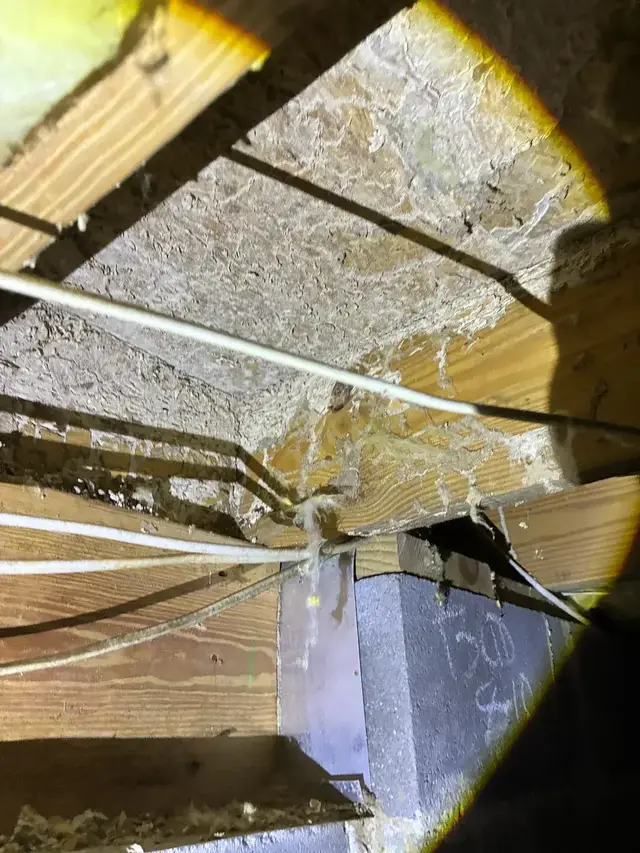
In many Portsmouth homes with termites, hardwood floors sit above a crawlspace that contains floor joists and support beams. Subterranean termites travel through soil and build mud tubes that reach these wooden structures. Once termite colonies reach the crawlspace, they begin feeding on softwood framing.
Over time, damaged wood in floor joists weakens the support beneath hardwood floors. Even if the flooring looks intact, hidden termite damage can weaken structural integrity and cause sagging or uneven areas.
Subfloor Layers
The subfloor sits directly beneath hardwood floors or laminate flooring. Termites frequently reach this layer before touching the finished surface, so termite activity may persist for months without clear warning signs.
When termite damage spreads through the subfloor, homeowners may feel movement in certain areas. The wood floor above may start to produce a hollow sound when stepped on, especially near walls or in older sections.
Finished Hardwood Floorboards
Eventually, termites reach the hardwood floorboards themselves. Dense species like red oak resist damage longer than softwood, but termites can still hollow out the underside of the boards.
In some homes, this leads to thin areas that break under weight. Floorboards may appear intact on top, while termite colonies have already eaten large sections underneath.
The Typical Path From Hidden Activity to Visible Floor Damage
Termite damage rarely appears suddenly. Most infestations begin below the floor system and move upward over time.
Stage 1: Entry Through Soil and Foundation
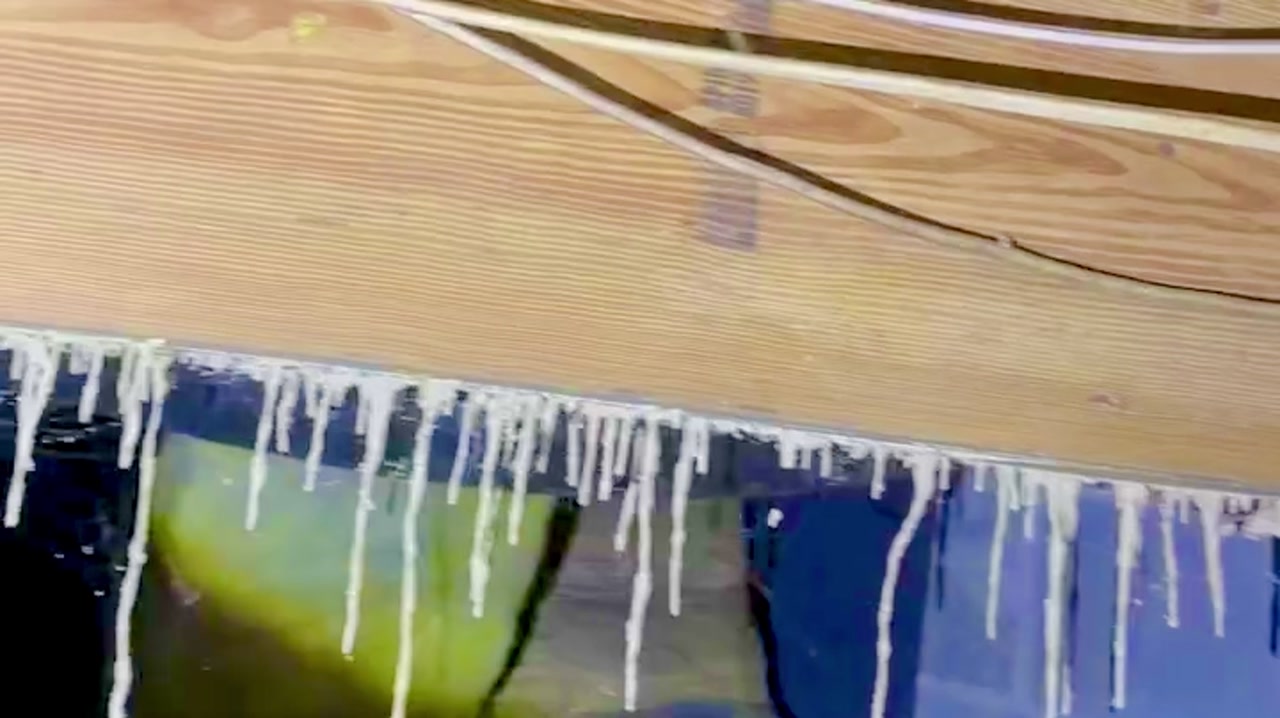
Subterranean termites live underground and build termite tubes to travel between soil and wood. In Portsmouth neighborhoods with high moisture levels, these termite tubes often form along foundation walls or piers.
Professional termite control specialists inspect areas around plumbing penetrations, cracks, and expansion joints where termites may enter crawlspaces and reach exposed wooden structures. In homes with crawlspace upgrades, technicians may also recommend termite treatment before encapsulation to prevent colonies from becoming trapped beneath new moisture barriers.
Stage 2: Feeding Inside Structural Wood
Once termites reach the crawlspace, they begin feeding on floor joists and support beams. This early stage of a termite infestation may produce little visible damage inside the home.
During this period, termite colonies expand and continue moving through connected wood framing. Homeowners may also notice flying termites or flying ants around windows, doors, or light sources as colonies grow and produce swarmers. Excess moisture in the crawlspace often accelerates termite activity.
Stage 3: Spread to Subfloor and Flooring
As termite activity progresses, the insects move upward into the subfloor and eventually the hardwood floors above. Homeowners may notice the first signs of termite damage during this stage.
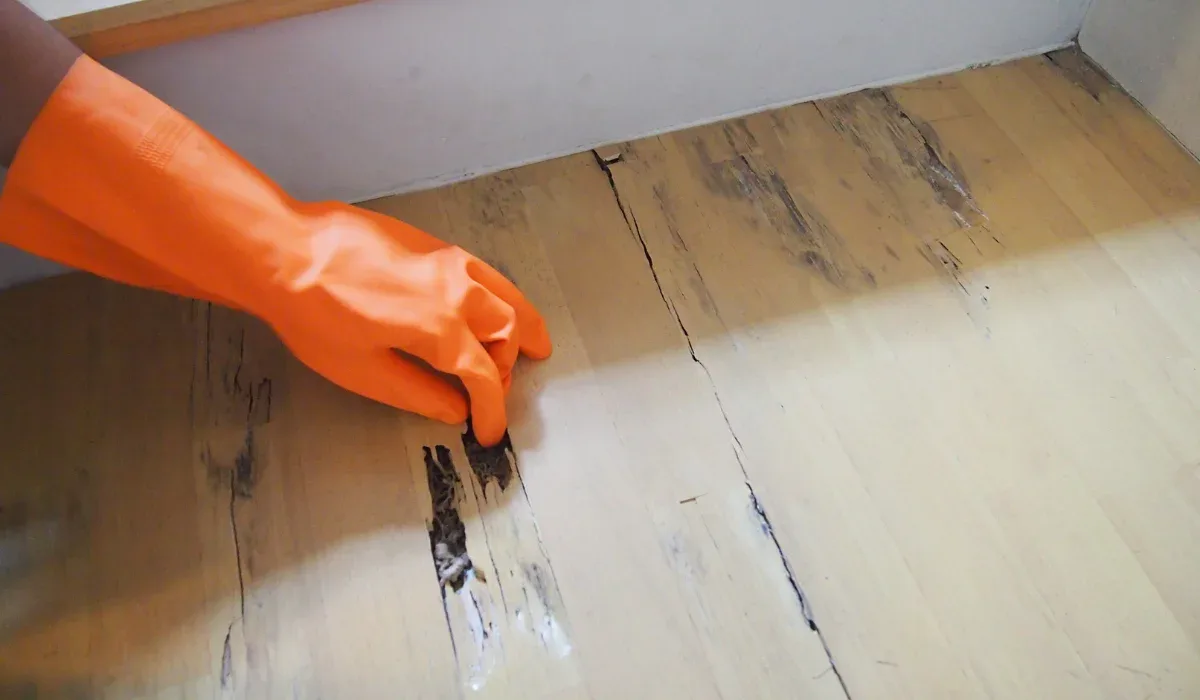
A hollow sound under certain sections of flooring becomes more noticeable. Blistering surfaces or soft spots may appear as termites hollow out the wood beneath.
Stage 4: Visible Floor Damage
In advanced infestations, termite damage becomes visible across the finished flooring. Boards October crack, sink, or separate from surrounding areas.
When homeowners discover termite damage, they may need repairs to damaged flooring or structural wood, along with professional termite control to address the infestation.
Common Signs of Termite Damage in Hardwood Floors
Many Portsmouth homeowners first suspect a termite problem when they notice unusual changes in their wood floor or laminate flooring.
Hollow or Soft Flooring
One of the most common warning signs is a hollow sound when walking across hardwood floors. The hollow sound occurs when termites hollow out the underside of floorboards or the subfloor below them.
Soft spots may appear in areas where the wood has lost internal strength. In severe cases, weakened floorboards may break under weight or feel unstable when stepped on.
Blistering or Uneven Surfaces
Termite damage can cause hardwood floors to develop blistering or raised sections. These changes occur when termites eat wood from underneath, leaving a thin outer layer that begins to lift.
Some homeowners mistake this problem for water damage, especially in kitchens or bathrooms. A professional termite inspection helps determine whether moisture or termite activity is responsible.
Small Holes, Frass, and Debris
Small holes or wood dust around baseboards or flooring edges can signal termite activity. In some cases, frass or debris appears near cracks in floorboards.
Frass is more commonly associated with drywood termites, but small wood debris may appear when termite-damaged wood breaks apart inside flooring systems.
Damage Near Baseboards or Wall Edges
Termites often enter flooring near baseboards or wall framing. Homeowners may notice warped edges, cracked boards, or small gaps between the floor and baseboards.
These areas often connect directly to crawlspace framing, making them common paths for termite tubes and hidden feeding activity.
What a Termite Inspection Checks Around Hardwood Floors
When a termite problem is suspected, a professional termite inspection focuses on both visible flooring and hidden structural components. Understanding what termite inspectors look for during termite inspection can help homeowners recognize why crawlspaces, subfloors, and structural wood receive careful attention.
Crawlspace and Foundation Areas
During a termite inspection, technicians examine crawlspaces for mud tubes, moisture issues, and other signs of subterranean termite activity. These signs often show how subterranean termites enter the structure.
Technicians inspect accessible wooden structures, such as floor joists and support beams, for signs of termite activity or wood damage.
Subfloor and Structural Connections
The next step is to check the subfloor and the connection points between flooring layers. Inspectors look for weakened wood, small holes, or hollow areas that signal termite damage.
Inspectors also check entry points around plumbing and foundation gaps where termites can move from soil into structural framing.
Flooring Surface and Interior Trim
Inside the home, inspectors evaluate hardwood floors, laminate sections, and trim areas for signs of termite damage. Baseboards and wall edges are common areas where termite activity appears first.
If technicians find signs of termite activity, they evaluate the affected areas and recommend appropriate termite control steps.
Schedule a Termite Inspection for Portsmouth Hardwood Floors
Hardwood floors in Portsmouth homes can last for generations with proper care. A termite infestation can shorten that lifespan if hidden activity spreads through the crawlspace and subfloor.
Professional termite control focuses on locating termite colonies, stopping termite activity, and preventing further damage to floors. Treatment plans may involve targeted termite control around foundations and entry points where subterranean termites travel.
If you notice signs of termite damage, such as hollow flooring, blistering, or small holes near baseboards, schedule a termite inspection before refinishing or replacing the floor. Our team at Universal Pest & Termite helps Portsmouth property owners identify termite problems early and protect hardwood floors from further damage.
Contact us today to schedule your inspection or termite control service.