The 2026 ‘False Spring’ Alert: Why Newport News Termites are Swarming Weeks Early
In Newport News, we’re used to the erratic Mid-Atlantic weather, but October 2026 is throwing us a termite curveball.
With temperatures jumping from freezing dips straight into 70-degree “false summer” afternoons, the local ecosystem is waking up way ahead of schedule.
Typically, we don’t see heavy swarming until late October or October. However, the combination of recent heavy rains across the Peninsula followed by these sudden warm spikes has created the “perfect storm” for termite activity right now.
Is it a “Flying Ant” or a Costly Mistake?
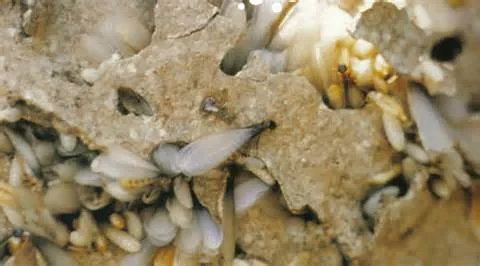
This week, hundreds of Newport News homeowners will walk into their garage or kitchen and see what looks like a cloud of flying ants near a window. Don’t ignore it. Because it’s so early in the season, many people assume these are just harmless “sugar ants” or moisture flies. In reality, these are “swarmers“—the winged reproductive members of a termite colony looking to start a new home.
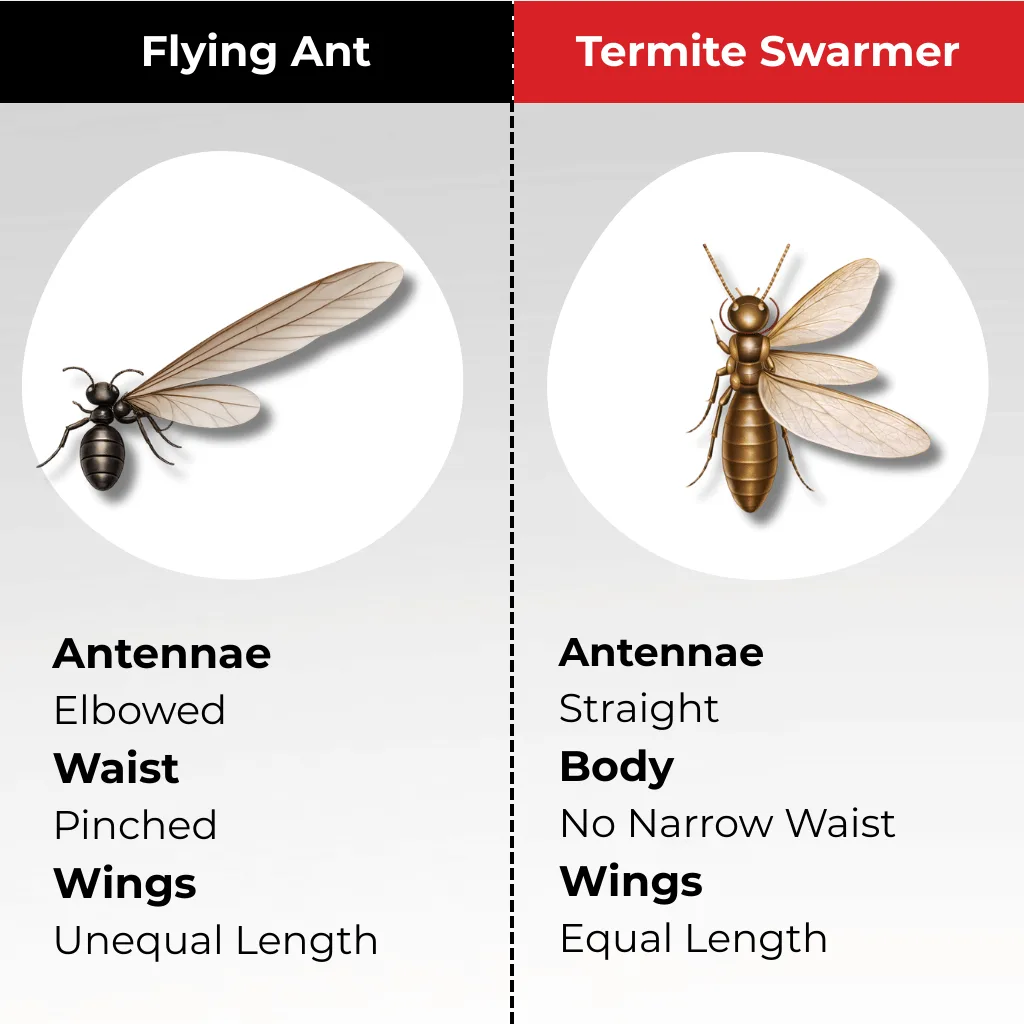
The Waist: Ants have a pinched, wasp-like waist. Termites have a thick, straight body.
The Wings: Termite wings are all the same length and much longer than their body. Ant wings have two different sizes (front wings are longer than the back).
The Antennae: Termites have straight, “beaded” antennae. Ants have bent, “elbowed” antennae.
Why Newport News is at High Risk This Year
Our local geography plays a massive role in termite pressure. From the historic wood-framed homes in Hilton Village to the high-moisture properties along the James River and Warwick River, the soil in our area stays saturated.
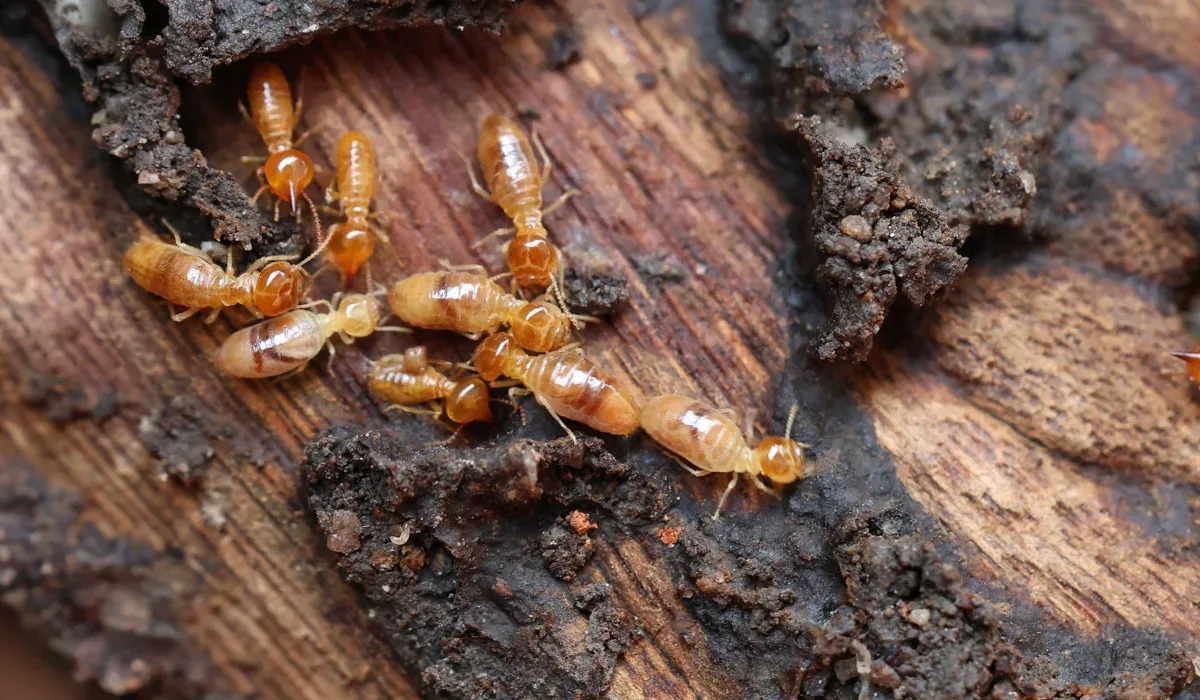
Subterranean termites need two things to survive: moisture and cellulose (wood). When the ground warms up after a big rain, the humidity in the soil rises, signaling the colony that it’s time to expand. If your mulch is up against your foundation or your gutters are still backed up from winter debris, you are essentially putting out a “Welcome” mat.
The 2026 Protection Plan
In this industry, we see it every day: a homeowner waits until they see soft drywall or sagging floors to call for help. By then, the damage is done.
In 2026, the best defense isn’t a “wait and see” approach. It’s a proactive assessment.
Three things you should do this weekend:
Clear the Perimeter: Pull mulch and firewood at least 6 inches away from your foundation.
Check the Spouts: Ensure your downspouts are carrying water at least 3 to 5 feet away from the house.
Inspect the Crawl: Take a flashlight into the crawlspace (or have a pro do it). Look for “mud tubes”—pencil-sized tunnels on the foundation walls that termites use as protected highways.
Don’t Guess. Get the Facts.
A termite swarm is a warning sign, not a death sentence for your home—if you act fast.
We provide a comprehensive professional termite inspection at $0 Charge that goes far beyond a quick walk-around. We identify the specific pressure points of your Newport News property and give you a clear roadmap to keep your home standing strong.
The swarmers are moving early this year. Are you ready?
The True Cost of Delay: 2026 National & Local Averages
When a homeowner ignores a swarm, they aren’t just delaying a treatment; they are opting into a much more expensive repair bill later. Below is a breakdown of what residents are currently seeing for termite-related expenses.
1. By the Numbers: Termite Statistics
$5 Billion+: The estimated annual cost of termite damage and treatment in the U.S.
1 in 30: Approximate number of homes at risk of termite infestation in high-pressure regions like the Tidewater area this year.
2 Million: The population of a single mature Formosan termite colony, which can consume nearly a foot of a 2×4 board in just 25 days.
2. 2026 Treatment Pricing
Professional treatment costs vary based on the home’s perimeter and the type of system used. In Virginia, homeowners typically see the following ranges:
Liquid Soil Barriers: our liquid termite treatment is $395 where activity is confined to one area; a full trenched barrier around the foundation runs $595 to $1,195. Not every home qualifies, and an inspection comes first.
Baiting Systems (e.g., Sentricon): $8 to $12 per linear foot for the initial setup, then $39 per month for ongoing monitoring — usually with little or no money down.
Localized Treatments:$395 on qualifying homes (Only recommended for very minor, isolated activity).
3. Damage Repair Costs (The Real Burden)
If termites reach your structural “skeleton,” the costs escalate quickly because you often need both a pest professional and a licensed contractor.
Structural Joist Repair (Sistering):$150 – $325 per joist.
Full Joist Replacement:$1,000 – $2,000 per joist (depending on accessibility in crawlspaces).
Major Structural Restoration: (Replacing load-bearing walls or main beams) $5,000 – $15,000+
Protection That Fits Your Budget: SmartPay Flexible Financing
We believe that protecting your home shouldn’t be a financial burden. That’s why we offer our exclusive SmartPay, a flexible payment solution designed to help you handle termite treatments and structural repairs without the stress of a large upfront cost. With SmartPay, you can break your project into manageable monthly payments that fit your lifestyle. The application is quick, provides instant decisions, and often requires no credit score for approval. Don’t let a budget concern stand between you and a termite-free home—ask us how SmartPay can help you start your protection plan for as little as $39 to $59 per month.
Frequently Asked Questions
Q: Does my standard homeowners insurance cover termite damage?
A: Almost never. Most insurance companies view termite damage as “preventable maintenance” rather than an “accident” or “act of God.” This is why a proactive $75 inspection is considered the best insurance policy you can buy for your home’s structure.
Q: I only saw a few winged bugs and then they disappeared. Does that mean the problem is gone?
A: No. Swarmers only stay visible for a few hours. Once they shed their wings, they move into the soil or wood to start new colonies. If you see discarded wings on your windowsills, it is a definitive sign that a colony is already established nearby.
Q: If my neighbor gets treated for termites, will they all just move to my house?
A: Not necessarily, but it’s a major red flag. Termite colonies are massive and often span multiple properties. If a neighbor has an active infestation, it’s highly likely the same colony has “foraging” lines reaching toward your foundation. We recommend a “block-watch” approach to termite protection.
Curious what else wakes up early around here? Our Newport News pest control page tracks the city’s full seasonal lineup.
Dealing with pests at home?
We offer communication 24/7, and Olivia is standing by to answer your questions and help schedule appointments. Get a free, no-obligation quote from Hampton Roads' trusted local pest & termite experts.
Request a Free Quote
24/7 Immediate Response for all of the 757 — or call (757) 502-0200
Our agent Olivia will message you via text immediately after you submit this form. She can answer all of your questions and schedule appointments. You can also get immediate assistance via phone or email.
Not every pest control company in Hampton Roads offers the same thing. Here is a straight comparison of what you get with Universal Pest Control and what is common elsewhere in the industry.
Comparison of Universal Pest & Termite, Inc. against common practice among other pest control companies serving Hampton Roads.
What to compare
Universal Pest Control
Most pest control companies
UniGuard ProgramExclusive
Universal Pest ControlUniGuard Program combines termite protection and full pest control in one membership for one low monthly payment — from $63/month, with the termite warranty and quarterly pest service included together.
Most pest control companiesTermite protection and pest control are usually sold as two separate agreements, with two renewals and two bills to keep track of.
SmartPay financingExclusive
Universal Pest Control$0-down payment options on termite treatments, baiting systems, and repairs, so the work can start before payday. Simple, predictable monthly payments.
Most pest control companiesFinancing, where it is offered, is commonly arranged separately through a third-party lender.
Pest Guard Attic Insulation™Exclusive
Universal Pest ControlHampton Roads' only licensed Pest Guard Insulation™ installer, through our sister company Universal Insulation Doctor — insulation manufactured with an EPA-registered pest preventative, so the replacement itself resists the insects that ruined the original.
Most pest control companiesAttic insulation is typically referred out, and standard fiberglass has no pest deterrent built into the material.
Total Home Health Network
Universal Pest ControlPest and termite control, attic insulation, and duct cleaning coordinated under one roof through the Universal family of companies — one point of contact for the whole job, done in the right order.
Most pest control companiesPest control only. Insulation and duct work are usually booked with separate vendors on separate timelines.
A+ BBB rating
Universal Pest ControlBBB accredited since 2007 with an A+ rating, earned through consistent, honest work in the same community.
Most pest control companiesAccreditation and ratings vary by company — worth checking before you book anyone.
26+ years in business
Universal Pest ControlProtecting Hampton Roads homes since 2000 — more than 26 years in the same market, with over 100,000+ homes serviced.
Most pest control companiesTenure in the area varies widely; newer branches and recently opened franchises are common.
Family owned & operated
Universal Pest ControlOwned and run by a family that has lived in Hampton Roads their whole lives. The people who answer the phone and the crews at your door are your neighbors.
Most pest control companiesOwnership varies — many local branches are franchises of national brands, with crews dispatched from outside the area.
Guarantees in writing
Universal Pest ControlPest-Free Guarantee and Termite-Free Guarantee: if pests come back between scheduled visits, so do we, at no extra charge. Free inspections, plus same-day and next-day service.
Most pest control companiesRetreatment terms, callback windows, and what counts as covered differ from contract to contract.
The highlighted Universal Pest & Termite column reflects services we provide directly or through the Universal family of companies. The “Most pest control companies” column describes common industry practice in general terms and is not a statement about any particular company — some companies may offer services that are similar, so ask any provider exactly what their plan, warranty, and quote include before you sign. Financing on approved credit.