Most homeowners find out about crawl space rodents indirectly. A musty smell that will not clear, a cold floor in one room, droppings behind the kitchen toe-kick, a dog that will not leave one corner alone. Nobody goes under the house until something forces them to, and by then the subfloor has usually been occupied for a while.
Why do mice and rats get into crawl spaces in Hampton Roads?
They come under the house for the same reasons we would: it is dry, it is warmer than outside, and nothing bothers them there. In low-lying parts of Chesapeake, Norfolk and Virginia Beach the ground drains slowly, so when a burrow gets saturated the nearest dry shelter is the space under the floor — reached through unsealed foundation vents, warped access doors and pipe penetrations. Sealing those openings is whole-home rodent exclusion, which runs $99 to $1,495 with us.
| Subfloor solution | What it covers | Our price |
|---|---|---|
| Crawl space inspection | Photographed assessment of entry points, moisture and insulation condition | Free |
| Trapping and removal | Interior crawl stations and exterior bait stations | Included in exclusion work |
| Foundation and vent exclusion | Vent covers, access door sealing, pipe penetrations closed with rodent-proof material | $99 – $1,495 |
| Rodent repellent barrier | Standalone perimeter service | $75 |
| Contaminated insulation extraction | Wet or soiled subfloor insulation removed and replaced | Quoted per crawl space |
| Full encapsulation | Vapor barrier, sealed vents, moisture control for the whole crawl space | $3,000 – $10,000 |
| Financing | SmartPay on encapsulation and larger exclusion projects | $0 down, 0% APR options |
Exclusion is priced the same way whether the openings are at the foundation or the roofline — by how many there are and how hard each is to close. The full breakdown lives in our rodent exclusion cost guide.
How the coastal water table drives rodents under your floor
Norway rats are burrowers, and a burrow only works while it stays dry. Where the water table sits close to the surface, a heavy rain can saturate those tunnels, and the animals move to the nearest dry cavity — which, on a crawl space home, is directly beneath the floor joists.
It matches what we take calls for: crawl space rodent work picks up after a wet stretch more than during a cold snap. We see it most in the low, flat parts of the region, places like Greenbrier and Deep Creek in Chesapeake and Ocean View in Norfolk, where the ground does not drain quickly.
Getting in takes very little. A house mouse fits through a quarter-inch gap — about the width of a dime — and a rat needs only about half an inch. Those are the dimensions of ordinary building tolerances: the space around a water line, a vent screen corroded at one corner by salt air, the bottom edge of an access door that has warped away from its frame.
Does a rodent problem under the house affect the air upstairs?
Yes, and this is the part homeowners are most surprised by. Air in a house moves upward — the stack effect — so a meaningful share of what you breathe on the first floor entered through the crawl space first. Urine, droppings and shredded nesting material under the joists do not stay under the joists.
It shows up as a smell people describe as musty and blame on damp. Damp is usually part of it, but a persistent animal odor over a crawl space is rarely just moisture. We wrote separately about what a musty crawl space smell actually indicates, because the causes overlap and the fix depends on which one you have.
The second consequence is insulation. Rodents pull fiberglass batts down between the joists to nest, and once batts are down and soiled the floor above gets cold and the material has to come out rather than be pushed back up. Extraction and replacement is handled by our sister company Universal Insulation Doctor. Where ductwork runs through the crawl space and has been damaged, Universal Duct Cleaning handles that side of the restoration.
What actually stops rodents getting under the house?
Trapping clears what is there, sealing decides whether it comes back, and moisture control decides how attractive the space is in the first place. A crawl space that is dry, sealed and lit is a poor place to live, which is the real objective.
Trapping and eradication. Weather-resistant stations go inside the crawl on the active runs, with exterior bait stations placed around the foundation to intercept the population outside. This is ordinary rodent control work, and on its own it buys a season.
Subfloor exclusion. Foundation vents get heavy-duty covers, the access door is sealed and made to close properly, pipe and utility penetrations are closed with material rodents cannot chew. This is the step that changes the outcome — see pest exclusion for how the work is scoped.
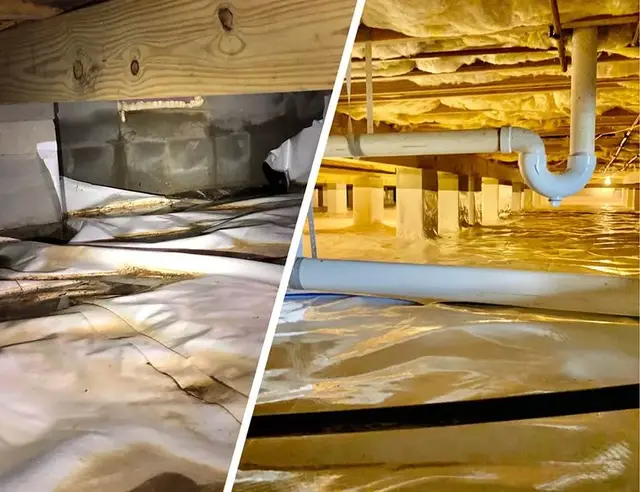
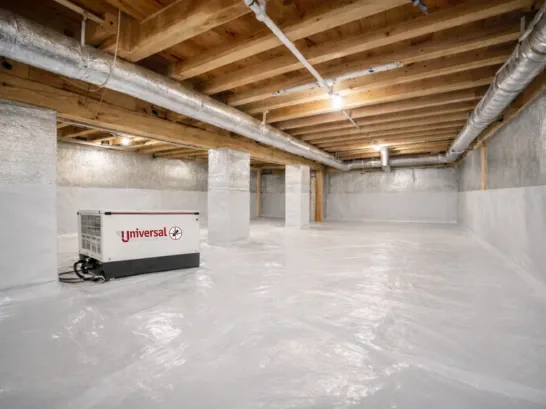
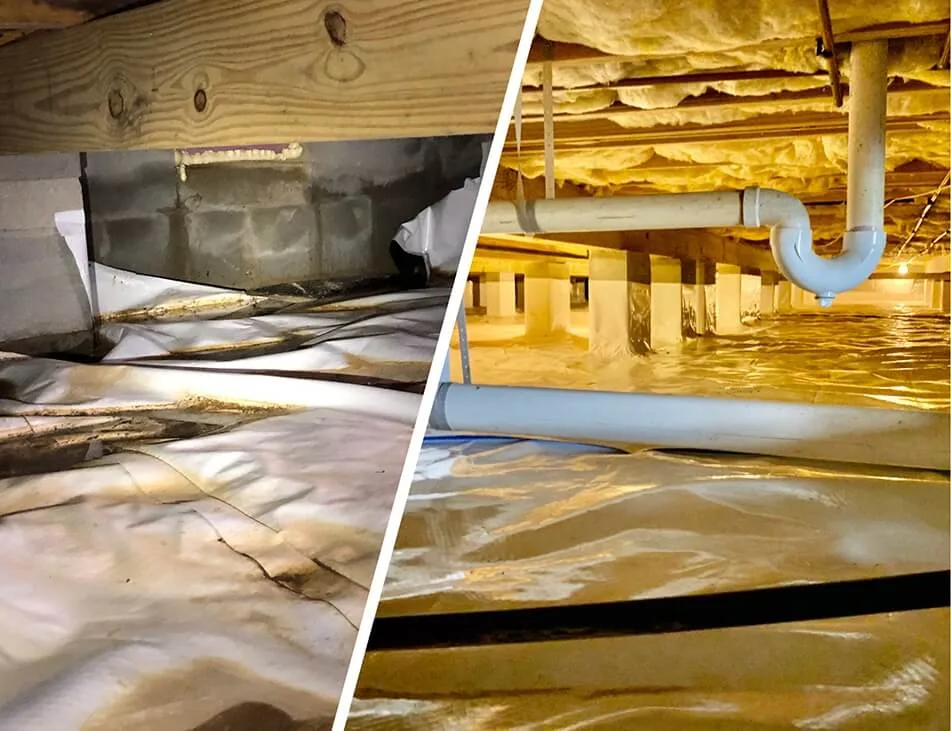
Moisture and insulation control. Wet fiberglass comes out, exposed wood is checked for rot, and the ground is covered. For a space that stays damp, crawl space encapsulation seals the vents and the ground together and holds the humidity down permanently; where water pools, a sump pump goes in first. If you are weighing that decision, our comparison of vented versus encapsulated crawl spaces covers the tradeoffs for this climate.
Frequently asked questions
How can I tell whether rodents are in the crawl space and not the walls?
Location and timing. Crawl space activity is heard low — along baseboards, under the kitchen sink, beneath a bathroom floor — and it is loudest in the evening. Wall activity travels vertically. The reliable check is the crawl space itself: droppings along the sill plate, tunnels through the insulation, or batts hanging down between joists confirm it.
Do foundation vent covers stop rodents on their own?
They close one of the most common openings, but they are not the whole job. On most homes we find the access door and the utility penetrations are just as open as the vents. Sealing one route while leaving the others simply moves the traffic.
Should I replace the crawl space insulation or just remove the rodents?
Remove the rodents and seal the openings first, always. Replacing insulation into an unsealed crawl space means paying for the same batts twice. Once the space is closed, soiled and fallen insulation should come out, because wet or contaminated fiberglass neither insulates nor dries.
Will encapsulation keep rodents out by itself?
It helps considerably, because encapsulation seals the vents and covers the ground, removing both an entry route and the damp conditions that make the space attractive. It is not a substitute for exclusion though. Access doors, pipe penetrations and any gap above the barrier still need closing.
How soon after heavy rain do you tend to see rodents move in?
Usually within a week or two, judging by when the calls arrive. A saturated burrow forces the animal to relocate, and the crawl space is the closest dry option. If yours has taken on water before, that is the moment to look under the house rather than waiting to hear something indoors.
Is crawl space rodent work covered by a service plan?
Quarterly service keeps the perimeter monitored and includes a rodent repellent barrier, which is what holds a house after it has been cleared. Exclusion, insulation extraction and encapsulation are project work quoted separately, with financing available on the larger ones. The tiers are set out on our home health plans page.
Found droppings near the crawl space door or under the sink?
We will go under the house, photograph what is down there, and give you the entry points and the insulation condition in writing.
Book a free crawl space inspection
Or call (757) 502-0200. Serving Chesapeake, Norfolk, Virginia Beach, Suffolk and Portsmouth.